Loading...
Done
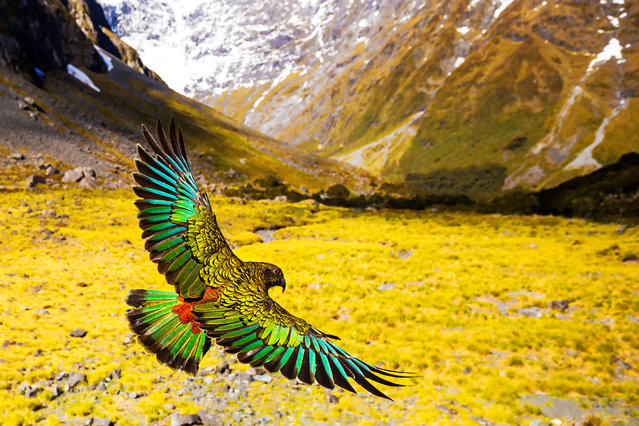
Kea are the only true alpine parrots in the world and thrive as cunning opportunists in the freezing conditions of the Southern Alps. Kea are thought to have developed their wide array of food-finding strategies during the last great ice age, where they learned to adapt using their unusual powers of curiosity. (Photo by Tom Walker/BBC Pictures/The Guardian)

Kea are the only true alpine parrots in the world and thrive as cunning opportunists in the freezing conditions of the Southern Alps. Kea are thought to have developed their wide array of food-finding strategies during the last great ice age, where they learned to adapt using their unusual powers of curiosity. (Photo by Tom Walker/BBC Pictures/The Guardian)
Details
19 Jul 2016 13:03:00
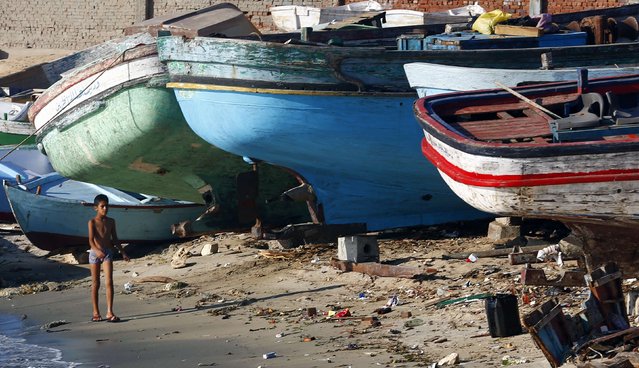
A boy walks past boats docked at the entrance gate of the fishermen's village in the El Max area of the Mediterranean city of Alexandria September 12, 2014.  El Max, where hundreds of boats dart through the canals, has been called the “Venice of Egypt” for its waterways and relaxed atmosphere. Its fishermen, however, worry about how they will make ends meet on meagre earnings they  say are being reduced further by polluted waters that are making fishing more difficult. (Photo by Amr Abdallah Dalsh/Reuters)

A boy walks past boats docked at the entrance gate of the fishermen's village in the El Max area of the Mediterranean city of Alexandria September 12, 2014. El Max, where hundreds of boats dart through the canals, has been called the “Venice of Egypt” for its waterways and relaxed atmosphere. Its fishermen, however, worry about how they will make ends meet on meagre earnings they say are being reduced further by polluted waters that are making fishing more difficult. While the government has tried to fix the state's bloated finances by cutting subsidies and reining in spending, some argue the reforms hurt Egypt's most vulnerable who have long relied on a generous system of fuel and food subsidies to supplement low incomes. (Photo by Amr Abdallah Dalsh/Reuters)
Details
12 Dec 2014 12:42:00
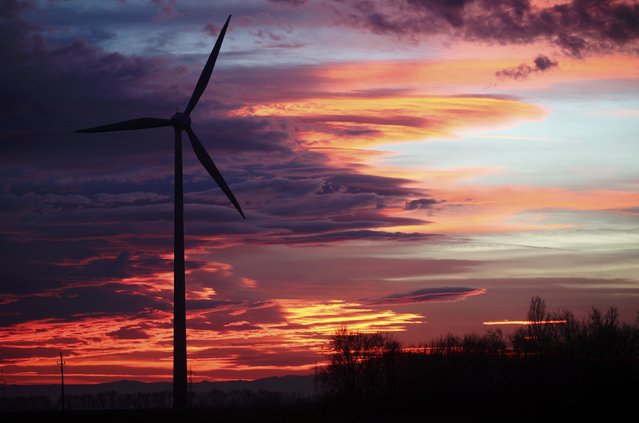
The setting sun illuminates the sky behind wind turbines of a wind park near Neusiedl am See, December 22, 2014. (Photo by Heinz-Peter Bader/Reuters)

The setting sun illuminates the sky behind wind turbines of a wind park near Neusiedl am See, December 22, 2014. (Photo by Heinz-Peter Bader/Reuters)
Details
08 Jan 2015 14:27:00
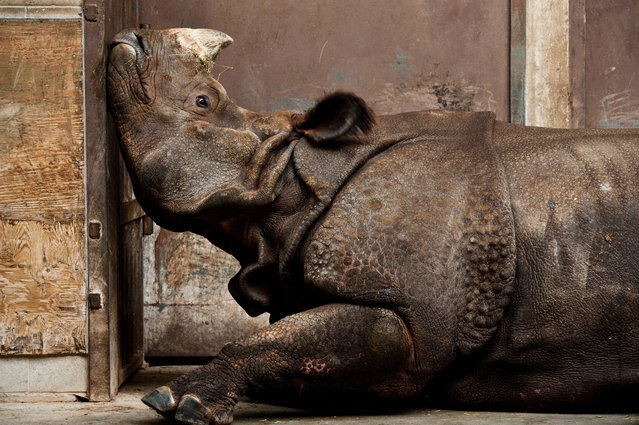
“Honorable Mention”. An Indian rhinoceros, far from home and stuck inside with late-winter blues at the Toronto zoo. Photo location: Toronto, Ontario, Canada. (Photo and caption by Stephen De Lisle/National Geographic Photo Contest)

“Honorable Mention”. An Indian rhinoceros, far from home and stuck inside with late-winter blues at the Toronto zoo. Photo location: Toronto, Ontario, Canada. (Photo and caption by Stephen De Lisle/National Geographic Photo Contest)
Details
20 Dec 2013 10:04:00
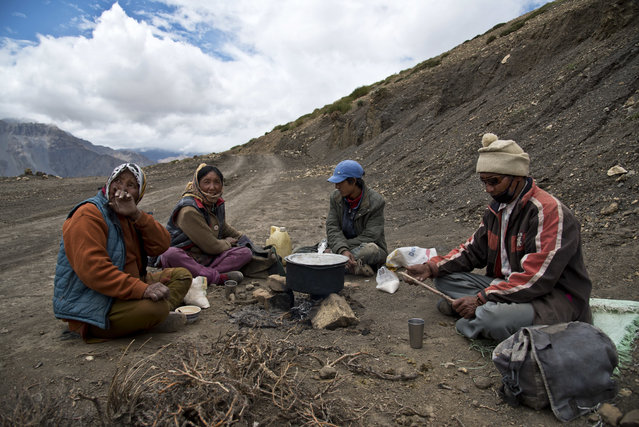
In this August 17, 2016, photo, from left to right, Chhering Chodom, 60, Tashi Yangzom, 50, Lobsang Chhering, 27, and Dorje Tandup, 58, drink milk tea on the side of the road. For centuries, the sleepy valley nestled in the Indian Himalayas remained a hidden Buddhist enclave forbidden to outsiders. Enduring the harsh year-round conditions of the high mountain desert, the people of Spiti Valley lived by a simple communal code – share the Earth's bounty, be hospitable to neighbors, and eschew greed and temptation at all turns. That's all starting to change, for better or worse. Since India began allowing its own citizens as well as outsiders to visit the valley in the early 1990s, tourism and trade have boomed. And the marks of modernization, such as solar panels, asphalt roads and concrete buildings, have begun to appear around some of the villages that dot the remote landscape at altitudes above 4,000 meters (13,000 feet). (Photo by Thomas Cytrynowicz/AP Photo)

In this August 17, 2016, photo, from left to right, Chhering Chodom, 60, Tashi Yangzom, 50, Lobsang Chhering, 27, and Dorje Tandup, 58, drink milk tea on the side of the road. For centuries, the sleepy valley nestled in the Indian Himalayas remained a hidden Buddhist enclave forbidden to outsiders. Enduring the harsh year-round conditions of the high mountain desert, the people of Spiti Valley lived by a simple communal code – share the Earth's bounty, be hospitable to neighbors, and eschew greed and temptation at all turns. That's all starting to change, for better or worse. (Photo by Thomas Cytrynowicz/AP Photo)
Details
15 Sep 2016 09:22:00
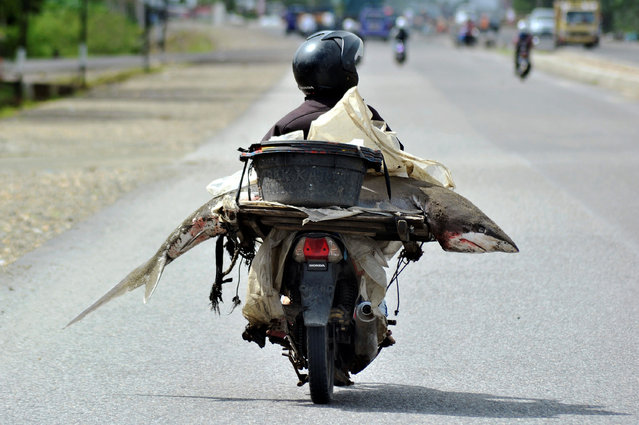
A fishmonger carries a shark on his motorcycle in Padang, West Sumatra, Indonesia August 25, 2016. (Photo by Iggoy el Fitra/Reuters/Antara Foto)

A fishmonger carries a shark on his motorcycle in Padang, West Sumatra, Indonesia August 25, 2016. (Photo by Iggoy el Fitra/Reuters/Antara Foto)
Details
10 Sep 2016 09:10:00
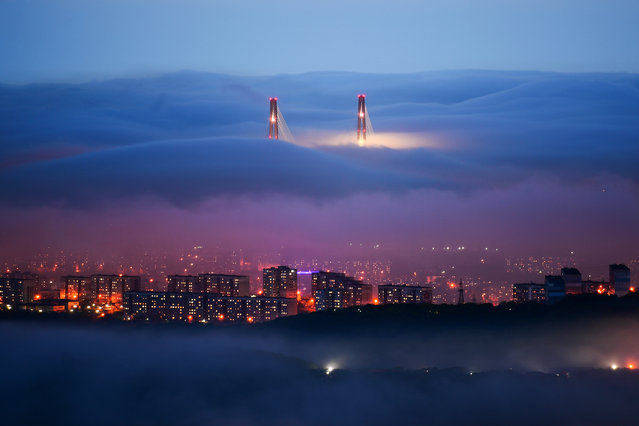
The towers of Russky Bridge are seen over the fog covered Vladivostok, Russia on May 26, 2020. The so-called “fog season” on the Pacific coast and in the south of Russia's Primorye Territory lasts from April till September. (Photo by Yuri Smityuk/TASS)

The towers of Russky Bridge are seen over the fog covered Vladivostok, Russia on May 26, 2020. The so-called “fog season” on the Pacific coast and in the south of Russia's Primorye Territory lasts from April till September. (Photo by Yuri Smityuk/TASS)
Details
03 Sep 2020 00:03:00
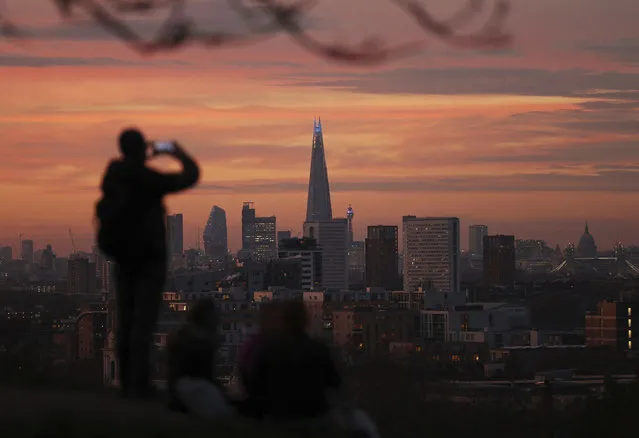
A person takes a photo of the skyline with the Shard building in the center, at sunset, from Greenwich Park in London, Tuesday, November 24, 2020. (Photo by Yui Mok/PA Wire via AP Photo)

A person takes a photo of the skyline with the Shard building in the center, at sunset, from Greenwich Park in London, Tuesday, November 24, 2020. (Photo by Yui Mok/PA Wire via AP Photo)
Details
17 Jan 2021 00:03:00