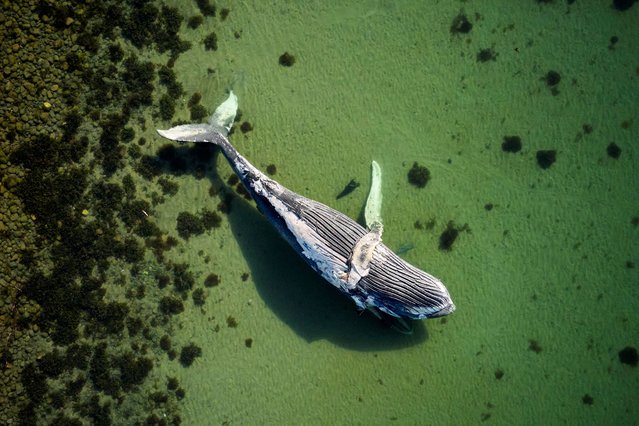
Drone photo of a dead humpback whale at Foelle Strand in Loegten Bay, Djursland, Denmark, on April 2, 2025. (Photo by Mikkel Berg Pedersen/Ritzau Scanpix via Reuters)
Anda Oliveira, 34, enjoys a waterfall in the Tijuca National Park, one of the world's biggest urban forests, marking the World Water Day in Rio de Janeiro, Brazil on March 15, 2024. (Photo by Pilar Olivares/Reuters)
Families and children play at Brimham Rocks during their half term break in North Yorkshire, UK on February 18, 2025. (Photo by James Glossop/The Times & Sunday Times)
Russian army servicewomen march during the Victory Day military parade at the Palace Square in St. Petersburg, Russia, Thursday, May 9, 2024, marking the 79th anniversary of the end of World War II. (Photo by Dmitri Lovetsky/AP Photo)
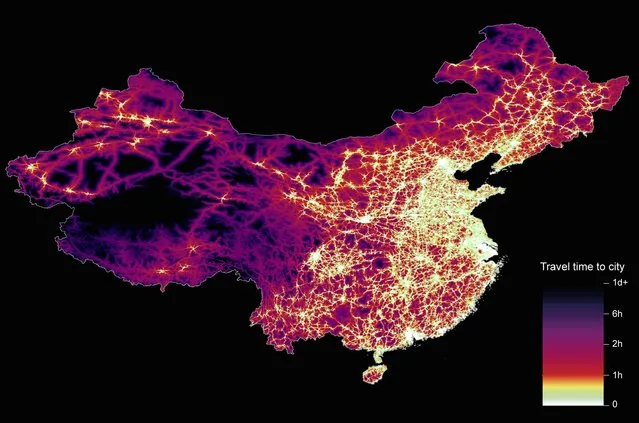
From Britain to China to Mali, new maps showing travel times to the nearest urban centre reveal huge differences between countries. Using Open Street Map and Google, a University of Oxford team have created a visual breakdown that suggests major inequalities when it comes to commuting. Here: China. The dataset used for China was unique as it relied solely on Open Street Map, due to restrictions on accessing Google data. The population is densely concentrated in the east and accessibility is increased, whereas rural provinces in the west remain remote. (Photo by Daniel Weiss/Jennifer Rozier/Malaria Atlas Project/University of Oxford)
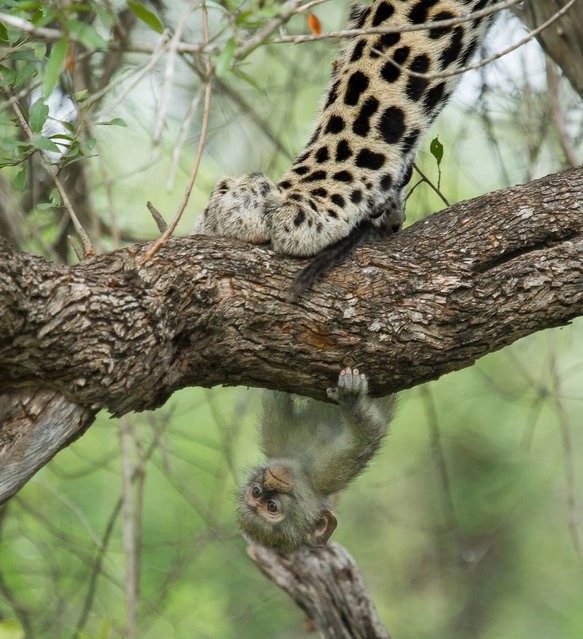
Chris Renshaw has recently been awarded the 2015 Africa Geographic “Photographer of the Year” award. Chris tells that his love “for anything wild and adventurous came from a deep rooted attachment to the African continent. This image shows that timing, a bit of anticipation, and luck allowed this incredible moment in time to be captured”. (Photo by Chris Renshaw)
An elderly man uses a fan to shade himself from the sun as he walks in a public park in Beijing, Tuesday, June 7, 2016. Thursday marks the Duanwu Festival, a public holiday in China celebrated with outdoor activities including dragon boat races. (Photo by Mark Schiefelbein/AP Photo)
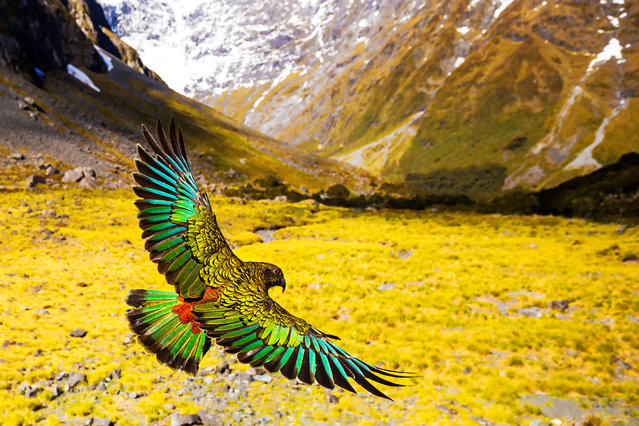
Kea are the only true alpine parrots in the world and thrive as cunning opportunists in the freezing conditions of the Southern Alps. Kea are thought to have developed their wide array of food-finding strategies during the last great ice age, where they learned to adapt using their unusual powers of curiosity. (Photo by Tom Walker/BBC Pictures/The Guardian)