Loading...
Done
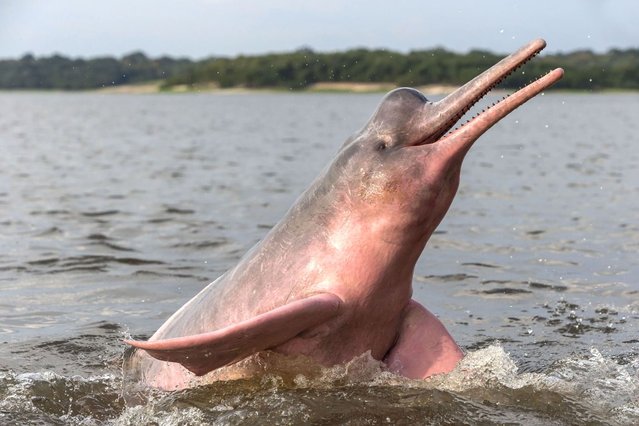
A pink dolphin shows off for the camera in Brazil. (Photo by Michel Watson)

Tourist Michel Watson found this pink dolphin making a splash in Brazil. The unusual creature, which hides deep in the Rio Negro river, was spotted leaping out of the Amazonian water brandishing its bizarre bright bubblegum color. Weighing in at nearly 300 pounds, the curious animal, known as an Amazon Pink River Dolphin, looked unusually agile as it rose above the waves. (Photo by Michel Watson)
Details
26 Jun 2013 05:10:00
Animal rights activists from People for the Ethical Treatment of Animals (PETA) stage a “die-in” to mark World Vegan Day in Piccadilly Circus in London, Monday, November 1, 2021. The demonstration sought to draw attention to the suffering and death of animals in the meat, egg and dairy industries. (Photo by David Cliff/AP Photo)

Animal rights activists from People for the Ethical Treatment of Animals (PETA) stage a “die-in” to mark World Vegan Day in Piccadilly Circus in London, Monday, November 1, 2021. The demonstration sought to draw attention to the suffering and death of animals in the meat, egg and dairy industries. (Photo by David Cliff/AP Photo)
Details
01 Jul 2022 02:50:00
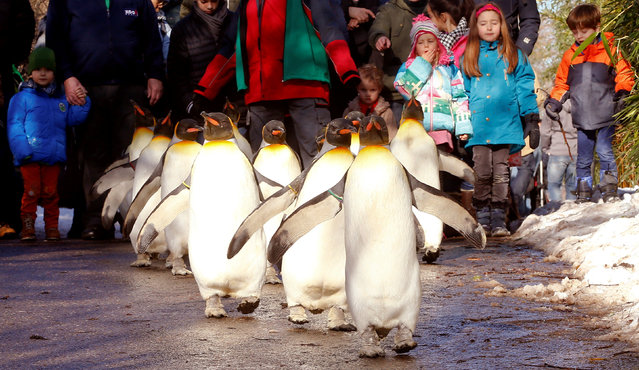
People follow king penguins exploring their outdoor pen, during a so-called 'penguin parade', when the animals walk outside their enclosure and the visitors can walk behind them, at Zurich's Zoo in Zurich, Switzerland January 28, 2017. (Photo by Arnd Wiegmann/Reuters)

People follow king penguins exploring their outdoor pen, during a so-called “penguin parade”, when the animals walk outside their enclosure and the visitors can walk behind them, at Zurich's Zoo in Zurich, Switzerland January 28, 2017. (Photo by Arnd Wiegmann/Reuters)
Details
29 Jan 2017 12:09:00
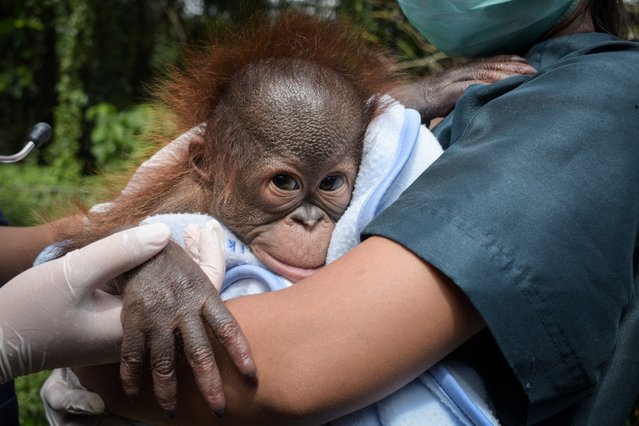
A 71-day-old male Kalimantan orangutan, a critically endangered species, born in the zoo but neglected by its 9-year-old mother Shakila, is held by an animal care taker at Bandung Zoological Gardens in Bandung, West Java on February 21, 2025. (Photo by Timur Matahari/AFP Photo)

A 71-day-old male Kalimantan orangutan, a critically endangered species, born in the zoo but neglected by its 9-year-old mother Shakila, is held by an animal care taker at Bandung Zoological Gardens in Bandung, West Java on February 21, 2025. (Photo by Timur Matahari/AFP Photo)
Details
10 Mar 2025 04:28:00
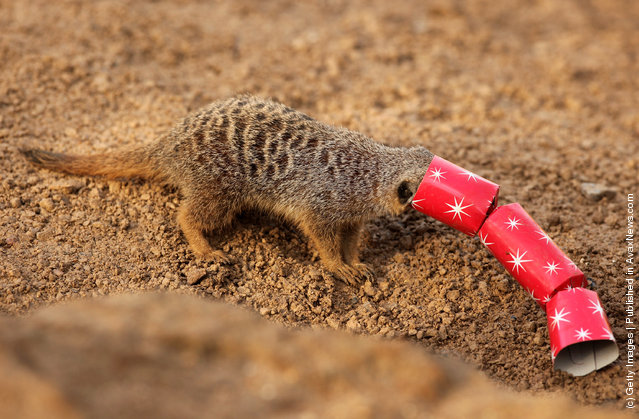
Christmas Treats For Meerkats

Meerkats at ZSL (Zoological Society of London) London Zoo received an early Christmas gift from their keepers of home-made crackers filled with meal worms and locusts on December 17, 2009 in London, England. (Photo by Oli Scarff/Getty Images)
Details
10 Dec 2011 09:55:00
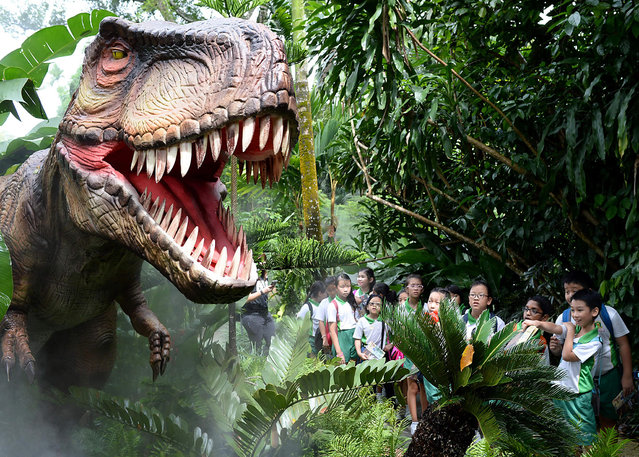
Schoolchildren look at a lifelike animatronics display of a dinosaur at the dinosaur-themed Zoo-rassic Park in Singapore on November 16, 2016. To raise awareness on the sixth mass extinction, the Singapore Zoo and River Safari displayed lifelike dinosaur animatronics where visitors can trail along the Dinosaur Valley which does not involve living animals. (Photo by Roslan Rahman/AFP Photo)

Schoolchildren look at a lifelike animatronics display of a dinosaur at the dinosaur-themed Zoo-rassic Park in Singapore on November 16, 2016. To raise awareness on the sixth mass extinction, the Singapore Zoo and River Safari displayed lifelike dinosaur animatronics where visitors can trail along the Dinosaur Valley which does not involve living animals. (Photo by Roslan Rahman/AFP Photo)
Details
17 Nov 2016 11:47:00


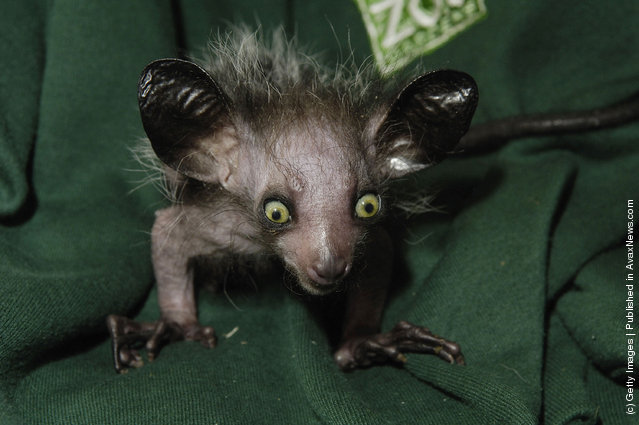
“The aye-aye (Daubentonia madagascariensis) is a lemur, a strepsirrhine primate native to Madagascar that combines rodent-like teeth and a special thin middle finger to fill the same ecological niche as a woodpecker. It is the world's largest nocturnal primate, and is characterized by its unusual method of finding food; it taps on trees to find grubs, then gnaws holes in the wood and inserts its narrow middle finger to pull the grubs out. The only other animal species known to find food in this way is the striped possum. From an ecological point of view the aye-aye fills the niche of a woodpecker as it is capable of penetrating wood to extract the invertebrates within”. – Wikipedia

Photo: In this handout image from Bristol Zoo is seen the first captive bred aye-aye in the UK named “Kintana” (meaning star in Malagasy) April 15, 2005 at Bristol Zoo Gardens, England. The zoo announced today only the second baby aye-aye to be hand-reared in the world (the first was in Jersey Zoo) and has now made his first public appearance since his birth on 11 February 2005. (Photo by Rob Cousins/Bristol Zoo via Getty Images)
Details
13 Apr 2011 13:33:00
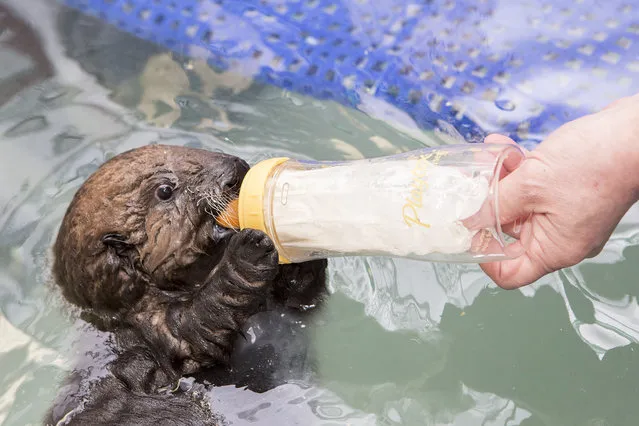
Weighing in at just under 6 pounds and at 22.6 inches long, the female pup arrived at Shedd in late October from Monterey Bay Aquarium in California, where she spent the first four weeks of her life being stabilized. (Photo by Brenna Hernandez/AP Photo)

Weighing in at just under 6 pounds and at 22.6 inches long, the female pup arrived at Shedd in late October from Monterey Bay Aquarium in California, where she spent the first four weeks of her life being stabilized. The pup has been doing well since her arrival, receiving continual care behind the scenes of Shedd’s Abbott Oceanarium. Currently referred to as “Pup 681”, Shedd’s animal care and veterinarian teams are providing the continual, round-the-clock care she needs to thrive. Photos used with permisson from Shedd Aquarium. (Photo by Brenna Hernandez/AP Photo)
Details
09 Nov 2014 09:35:00