Loading...
Done
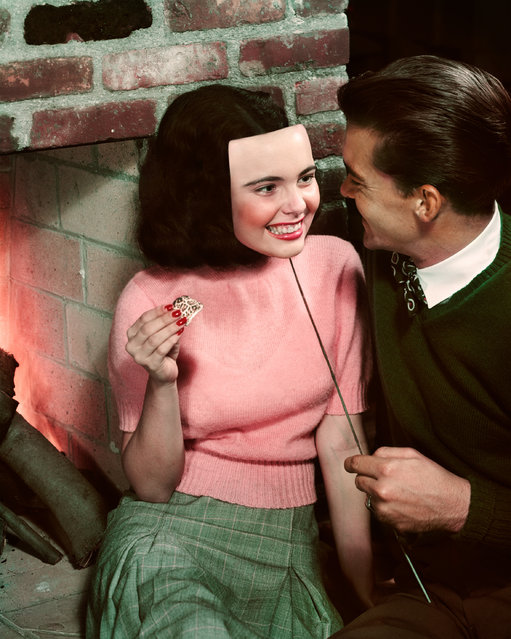
“Untitled #5”. “Family scenes, vacation souvenirs, everyday life, suspended anywhere between truth and fiction. It is hard to figure out whether they are spontaneous or entirely staged”. (Photo by Weronika Gęsicka/The Guardian)

In Weronika Gęsicka’s unsettling images, American archive photography gets distorted into scenes that are both nightmarish yet somehow entirely plausible. Gęsicka is a guest artist at the Circulations festival for young European photographers, Paris, until 5 March. Here: “Untitled #5”. (Photo by Weronika Gęsicka/The Guardian)
Details
23 Jan 2017 10:15:00
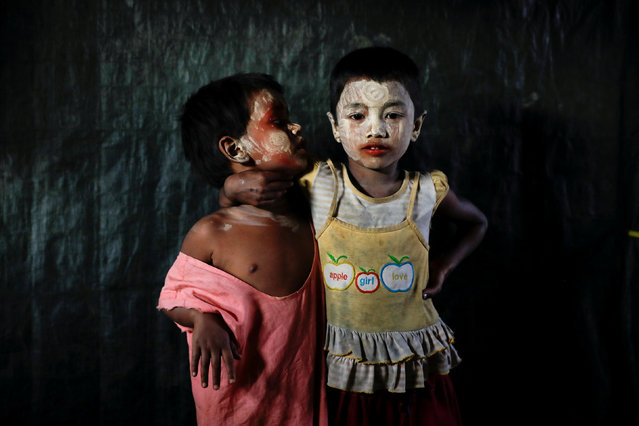
Rohingya refugee sisters Nur Kaida (R) and Ruhana hug each other at their shelter at the Palongkhali refugee camp near Cox's Bazar, Bangladesh December 21, 2017. (Photo by Marko Djurica/Reuters)

Rohingya refugee sisters Nur Kaida (R) and Ruhana hug each other at their shelter at the Palongkhali refugee camp near Cox's Bazar, Bangladesh December 21, 2017. (Photo by Marko Djurica/Reuters)
Details
01 Mar 2018 00:01:00
Andrey Karr from Western Riders Slacklines at sunset above big waves in Nazare, Portugal on December 27, 2017. (Photo by Aidan Williams/National Geographic Travel Photographer of the Year Contest)

Andrey Karr from Western Riders Slacklines at sunset above big waves in Nazare, Portugal on December 27, 2017. (Photo by Aidan Williams/National Geographic Travel Photographer of the Year Contest)
Details
14 May 2018 00:03:00
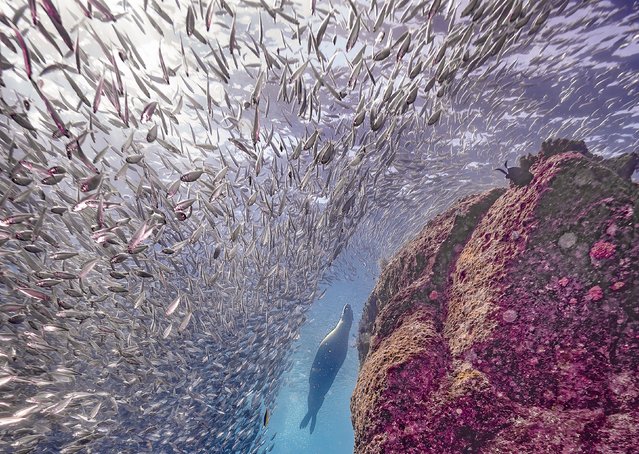
Sea lions make dinner plans in the Gulf of California early July 2024. The gulf is a primary source of sardines and anchovies, two of Mexico’s top marine resources. (Photo by Glenn Ostle/Solent News)

Sea lions make dinner plans in the Gulf of California early July 2024. The gulf is a primary source of sardines and anchovies, two of Mexico’s top marine resources. (Photo by Glenn Ostle/Solent News)
Details
04 Oct 2024 04:04:00
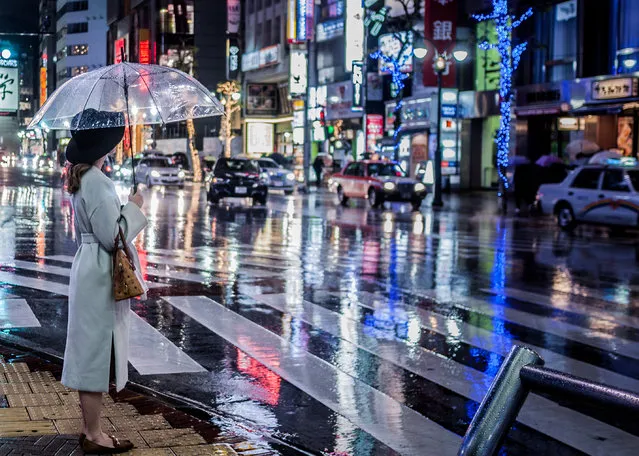
Runner-up. “The heavens opened and the streets around Shibuya, Tokyo, were suddenly drenched in even more colour and movement. I was taking photos (my friend was holding the umbrella) when I noticed this woman at the crossing. I’m pleased with the futuristic feel of the image”. MICK RYAN, JUDGE: “A rich spectrum of colour, neon lights, a glistening street and a woman with an umbrella all combine with great composition to make this a very appealing photograph. Quite nearly perfection, if it wasn’t for the slightly distracting objects top left and bottom right”. (Photo by Katherine Bridgestock/The Guardian)

Runner-up. “The heavens opened and the streets around Shibuya, Tokyo, were suddenly drenched in even more colour and movement. I was taking photos (my friend was holding the umbrella) when I noticed this woman at the crossing. I’m pleased with the futuristic feel of the image”. (Photo by Katherine Bridgestock/The Guardian)
Details
08 Mar 2018 00:01:00
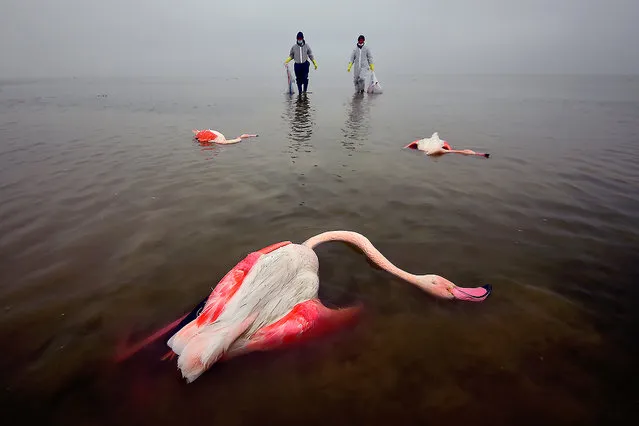
Grand title winner: Environmental photographer of the year. The Bitter Death Of Birds by Mehdi Mohebi Pour. This photo shows the efforts of the environmental forces to collect the bodies and prevent the spread of this disease. The Miankaleh wetland is being destroyed by changes in the climate and it is my duty as a photographer to highlight these problems and create a record for history. I want to prevent the complete destruction of the wetland and the potential environmental disaster by showing the issues and threats to these beautiful natural places. (Photo by Mehdi Mohebi Pour/Environmental Photographer of the Year)

Grand title winner: Environmental photographer of the year. The Bitter Death Of Birds by Mehdi Mohebi Pour. This photo shows the efforts of the environmental forces to collect the bodies and prevent the spread of this disease. The Miankaleh wetland is being destroyed by changes in the climate and it is my duty as a photographer to highlight these problems and create a record for history. I want to prevent the complete destruction of the wetland and the potential environmental disaster by showing the issues and threats to these beautiful natural places. (Photo by Mehdi Mohebi Pour/Environmental Photographer of the Year)
Details
05 Dec 2022 04:27:00
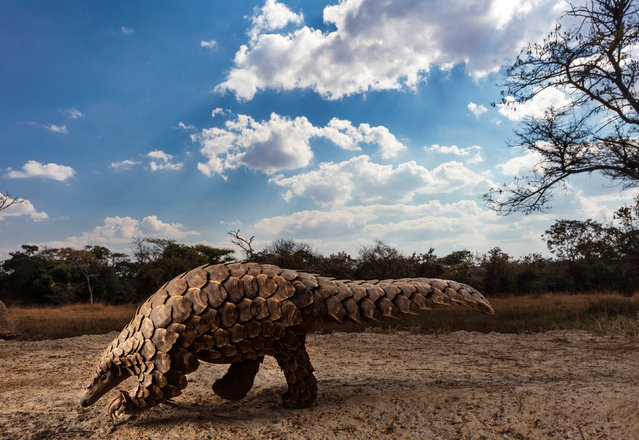
Pangolins in Crisis: Brent Stirton, South Africa; 1st place, Natural world and wildlife. “Pangolins are the world’s most illegally trafficked mammals, with an estimated one million trafficked to Asia in the last 10 years. Their scales are used in traditional Chinese and Vietnamese medicine, and their meat is sold as a high-priced delicacy. As a result, pangolins are listed as critically endangered and anyone who trades or consumes them is breaking the law. This body of work exposes the trade, while exploring aspects of illegality and celebrating the people who are trying to save these animals”. (Photo by Brent Stirton/Sony World Photography Awards 2020)

Pangolins in Crisis: Brent Stirton, South Africa; 1st place, Natural world and wildlife. “Pangolins are the world’s most illegally trafficked mammals, with an estimated one million trafficked to Asia in the last 10 years. Their scales are used in traditional Chinese and Vietnamese medicine, and their meat is sold as a high-priced delicacy. As a result, pangolins are listed as critically endangered and anyone who trades or consumes them is breaking the law. This body of work exposes the trade, while exploring aspects of illegality and celebrating the people who are trying to save these animals”. (Photo by Brent Stirton/Sony World Photography Awards 2020)
Details
11 Jun 2020 00:05:00
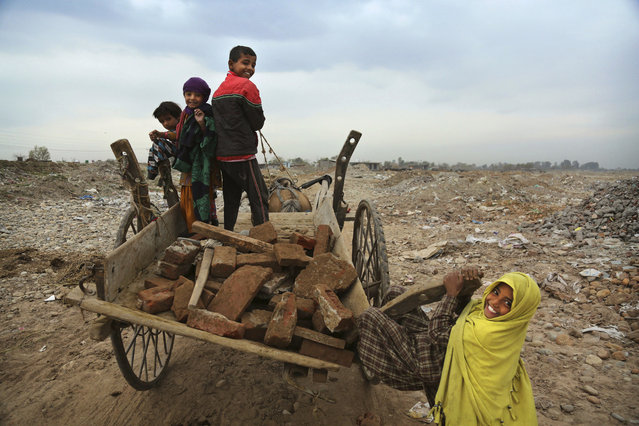
An Indian nomadic Gujjar girl hangs on to a horse cart after collecting bricks from debris on the outskirts of Jammu, India, Tuesday, March 7, 2017. The Gujjar tribal communities are considered by some to be economically and socially backward and the lack of care by the state government has led to resentment amongst the community. The tribe moves to the plains from the hills to escape the cold winters. (Photo by Channi Anand/AP Photo)

An Indian nomadic Gujjar girl hangs on to a horse cart after collecting bricks from debris on the outskirts of Jammu, India, Tuesday, March 7, 2017. The Gujjar tribal communities are considered by some to be economically and socially backward and the lack of care by the state government has led to resentment amongst the community. The tribe moves to the plains from the hills to escape the cold winters. (Photo by Channi Anand/AP Photo)
Details
09 Jun 2017 06:36:00