Loading...
Done
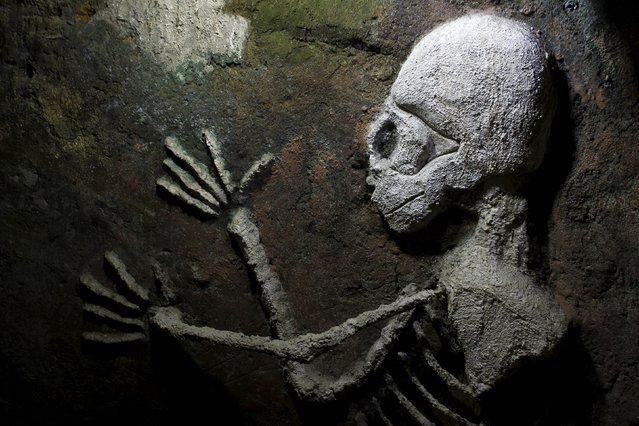
A figure of a skeleton is seen painted in a hallway of the house built underground by Manuel Barrantes in San Isidro de Perez Zeledon, Costa Rica, March 14, 2016. (Photo by Juan Carlos Ulate/Reuters)

A figure of a skeleton is seen painted in a hallway of the house built underground by Manuel Barrantes in San Isidro de Perez Zeledon, Costa Rica, March 14, 2016. Barrantes started digging through red soil and volcanic rock on his farm 12 years ago to build his subterranean house, between 15 and 63 feet (4.57 and 19.2m) underground. The dwelling, which Barrantes says provides a peaceful and comfortable home for him and his family away from noise pollution and the effects of climate change, now covers about 2,000 square feet (185.8 square metres). (Photo by Juan Carlos Ulate/Reuters)
Details
17 Mar 2016 15:34:00
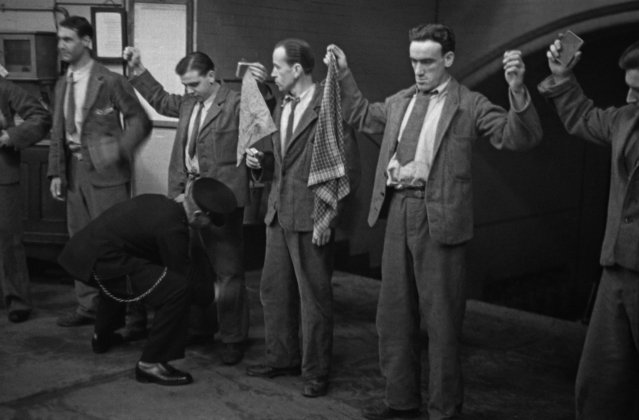
A prison officer frisking prisoners during the “rub-down” at Strangeways Prison in Manchester, UK on November 1948. (Photo by Bert Hardy/Picture Post/Hulton Archive/Getty Images)

Shot by Bert Hardy, the black and white images show prisoners carrying out remedial tasks such as untying knots in post office string and sewing mail bags. Other intriguing shots show lags doing their daily one hour outdoor exercise, being frisked for contraband items by officers during a routine “rub down” and serving evening meals. Strangeways was designed by Alfred Waterhouse and cost £170,000 ($207,910) to build. The prison, famed for its prominent ventilation tower and imposing design, has become a local landmark. Here: A prison officer frisking prisoners during the “rub-down” at Strangeways Prison in Manchester, UK on November 1948. (Photo by Bert Hardy/Picture Post/Hulton Archive/Getty Images)
Details
08 Mar 2017 00:01:00
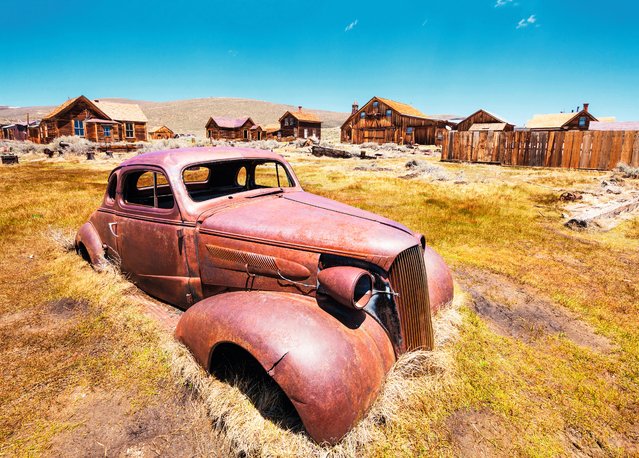
Bodie, Mono County, California. Gold was discovered at Bodie in 1859 (just after the initial California gold rush) and it went from mining camp to boomtown. Its decline began in 1880, when word spread of new boomtowns elsewhere. The Standard Consolidated Mine closed in 1913, and four years later the Bodie Railway was abandoned. By 1940 the population was down to 40. Today, Bodie is maintained in a state of arrested decay as a visitor attraction. (Photo by Alamy Stock Photo)

Kieron Connolly’s new book of photographs of more than 100 once-busy and often elegant buildings gives an idea of how the world might look if humankind disappeared. Here: Bodie, Mono County, California. Gold was discovered at Bodie in 1859 (just after the initial California gold rush) and it went from mining camp to boomtown. Its decline began in 1880, when word spread of new boomtowns elsewhere. The Standard Consolidated Mine closed in 1913, and four years later the Bodie Railway was abandoned. By 1940 the population was down to 40. Today, Bodie is maintained in a state of arrested decay as a visitor attraction. (Photo by Alamy Stock Photo)
Details
07 Sep 2016 09:50:00
Schoolchildren attend their first lesson on Knowledge Day in the town of Turov, Zhytkavichy District, Gomel Region, Belarus on September 1, 2017. Knowledge Day marks the beginning of a new school year in Belarus and is celebrated on September 1. (Photo by Viktor Drachev/TASS via Getty Images)

Though schools around the globe have different start dates, calendars and traditions, the first day of a new term is an exciting time filled with the prospects of gaining more knowledge, making new friends and building community. Here: Schoolchildren attend their first lesson on Knowledge Day in the town of Turov, Zhytkavichy District, Gomel Region, Belarus on September 1, 2017. Knowledge Day marks the beginning of a new school year in Belarus and is celebrated on September 1. (Photo by Viktor Drachev/TASS via Getty Images)
Details
20 Sep 2017 08:00:00
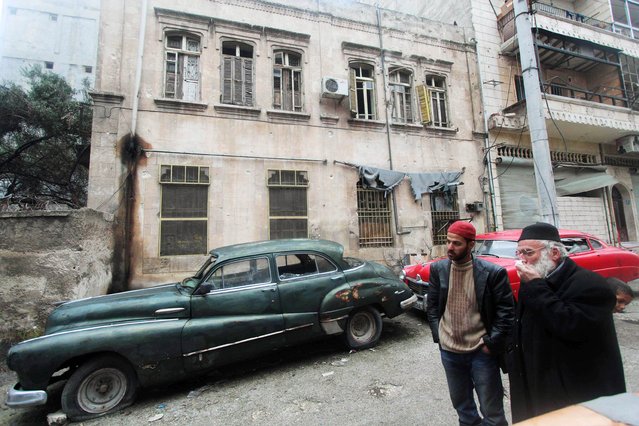
Mohamed Badr al-Din (R) stands in front of his vintage cars along a street where he keeps them, in the al-Shaar neighborhood of Aleppo January 31, 2015. The 66-year-old collector nicknamed Abu Omar inherited the hobby from his father and has a large collection of vintage cars, some of which he says belonged to former Syrian officials and were used in several movies and shows. (Photo by Abdalrhman Ismail/Reuters)

Mohamed Badr al-Din (R) stands in front of his vintage cars along a street where he keeps them, in the al-Shaar neighborhood of Aleppo January 31, 2015. The 66-year-old collector nicknamed Abu Omar inherited the hobby from his father and has a large collection of vintage cars, some of which he says belonged to former Syrian officials and were used in several movies and shows. Before the unrest, Abu Omar planned to open a museum to display his cars, which are guarded from pedestrians by a turkey that he owns. He hopes that the turmoil in the country will end so that he can pursue his hobby and repair his cars, which are heavily damaged from shelling. (Photo by Abdalrhman Ismail/Reuters)
Details
01 Feb 2015 10:34:00
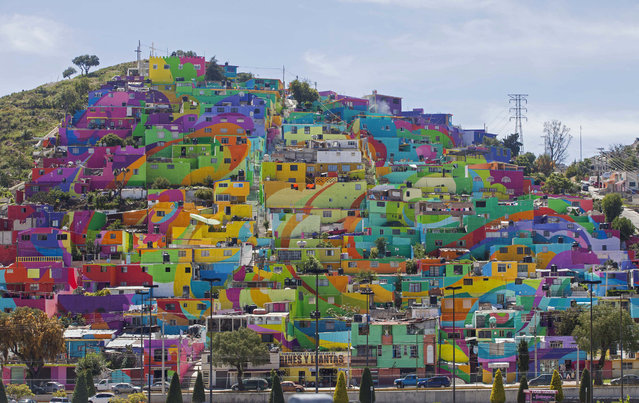
Hundreds of houses painted in bright colors in what organizers claim is Mexico's largest mural, is part of a government-sponsored project is called Pachuca Paints Itself, in the Palmitas neighborhood, in Pachuca, Mexico, Thursday, July 30, 2015. German Crew is the artist collective responsible for painting the mural project. Director Enrique Gomez, who goes by MYBE, said the crew has painted 1,500 square meters with 20,000 liters of paint. (Photo by Sofia Jaramillo/AP Photo)

Hundreds of houses painted in bright colors in what organizers claim is Mexico's largest mural, is part of a government-sponsored project is called Pachuca Paints Itself, in the Palmitas neighborhood, in Pachuca, Mexico, Thursday, July 30, 2015. German Crew is the artist collective responsible for painting the mural project. Director Enrique Gomez, who goes by MYBE, said the crew has painted 1,500 square meters with 20,000 liters of paint. Working hand-in-hand with residents, muralists have painted the facades of 200 homes bright lavender, lime green, incandescent orange – hues more commonly found in a bag of Skittles than in the drab, cement-and-cinderblock neighborhoods where many of Mexico's poor live. The project aims to bring the community together and rehabilitate the area. (Photo by Sofia Jaramillo/AP Photo)
Details
03 Aug 2015 12:02:00
A photo made avialable on 05 August 2015 shows an Indian woman collecting drinking water from a water pump in the submerged village of Sreerampur, some 150 kilometers north of Calcutta, India, on 04 August 2015. At least 215 people have died in floods and a landslide following monsoon rains in India over the past week, 83 deaths were reported from the western state of Gujarat and 69 from eastern West Bengal. The worst-affected states were West Bengal, Gujarat and Rajasthan, the Home Ministry said. (Photo by Piyal Adhikary/EPA)

A photo made avialable on 05 August 2015 shows an Indian woman collecting drinking water from a water pump in the submerged village of Sreerampur, some 150 kilometers north of Calcutta, India, on 04 August 2015. At least 215 people have died in floods and a landslide following monsoon rains in India over the past week, 83 deaths were reported from the western state of Gujarat and 69 from eastern West Bengal. The worst-affected states were West Bengal, Gujarat and Rajasthan, the Home Ministry said. (Photo by Piyal Adhikary/EPA)
Details
08 Aug 2015 12:04:00
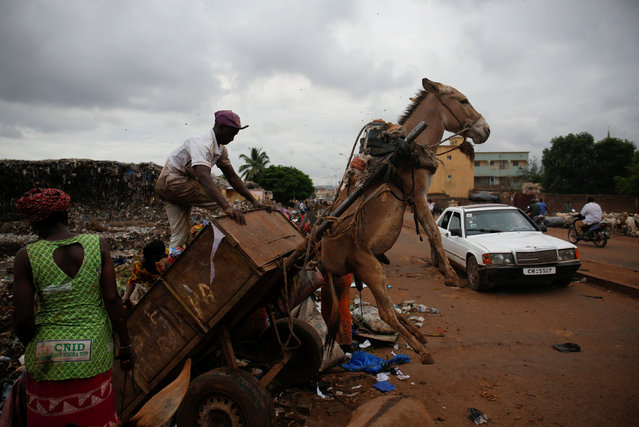
A waste picker unloads garbage at a waste transfer station in Bamako, Mali, August 19, 2018. In the Malian capital of Bamako, donkey carts driven by young men like 19-year-old Arouna Diabate play a vital role battling the fast-growing city's waste problem. Every morning before dawn, Diabate hitches his donkey to a cart and sets off on his rounds, going door-to-door to collect household garbage which he delivers to a local waste transfer station for a monthly salary of around $35. “I won't be picking up trash with a donkey cart for the rest of my life, but for now people appreciate us because we help clean up the homes of Bamako”, Diabate said. (Photo by Luc Gnago/Reuters)

A waste picker unloads garbage at a waste transfer station in Bamako, Mali, August 19, 2018. In the Malian capital of Bamako, donkey carts driven by young men like 19-year-old Arouna Diabate play a vital role battling the fast-growing city's waste problem. Every morning before dawn, Diabate hitches his donkey to a cart and sets off on his rounds, going door-to-door to collect household garbage which he delivers to a local waste transfer station for a monthly salary of around $35. “I won't be picking up trash with a donkey cart for the rest of my life, but for now people appreciate us because we help clean up the homes of Bamako”, Diabate said. (Photo by Luc Gnago/Reuters)
Details
18 Sep 2018 00:01:00