Loading...
Done
Vandenberg Project by Andreas Franke

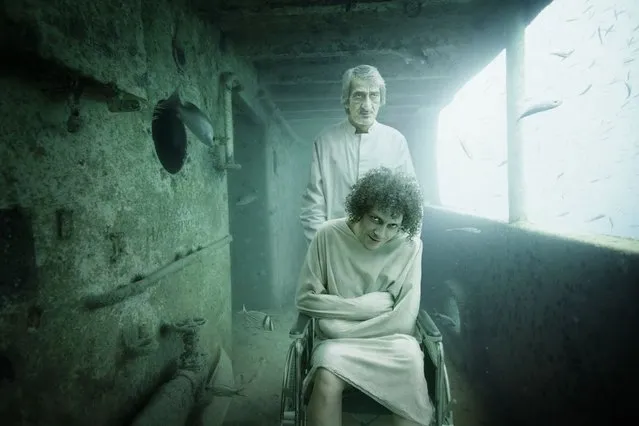
“24.27 N, 81.44 W. These coordinates mark the spot of the final resting place of an old brave soldier, the USS General Hoyt S. Vandenberg. In 2009 it underwent a complete change when the creaky steel monster became a mystical bearer of secrets. In May of that year, the Vandenberg was lowered down into the darkness of the ocean off the coast of Florida to become an artificial reef, where it would dwell in rigor mortis at a depth of 130 feet. This lively, animate, secretive nothingness, this menacing, wild emptiness would haunt and seduce the renowned Austrian photographer and passionate diver Andreas Franke...”. – The Sinking World (Photo by Andreas Franke)
Details
07 Apr 2013 09:50:00
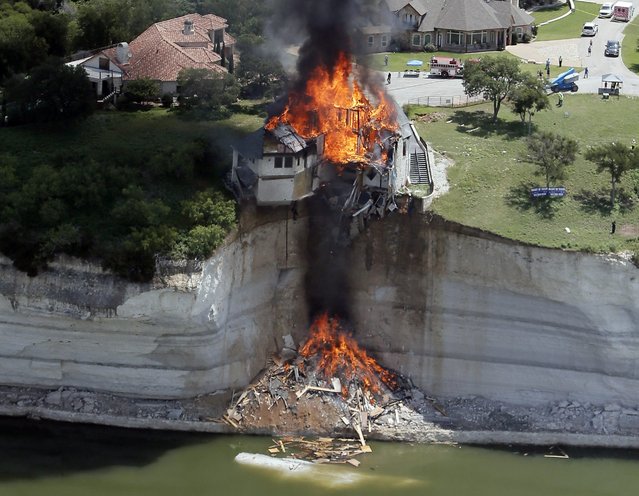
Smoke rises from a house days after part of the ground it was resting on collapsed into Lake Whitney, Texas in this June 13, 2014 file photo. I was covering the controlled burn of a house slowly falling into Lake Whitney due to the decaying cliff underneath.  Asked to take photos from an aerial perspective, an instructor and I took off from Grand Prairie Municipal Airport around 9am. (Photo and caption by Brandon Wade/Reuters)

Smoke rises from a house days after part of the ground it was resting on collapsed into Lake Whitney, Texas in this June 13, 2014 file photo. I was covering the controlled burn of a house slowly falling into Lake Whitney due to the decaying cliff underneath. Asked to take photos from an aerial perspective, an instructor and I took off from Grand Prairie Municipal Airport around 9am. The burn, scheduled to start an hour later, was delayed. I love flying, but patience proved challenging as circling for nearly three hours gets boring fast. Once the fire started we only had 15 minutes to take photos because the plane was booked at 1pm. The owners invested their retirement savings in the house and were even advised by geologists that the ground was stable. To watch your investment literally go up in flames must take its toll emotionally. The owners said they don't expect their insurance to cover the loss. (Photo and caption by Brandon Wade/Reuters)
Details
27 Nov 2014 15:01:00
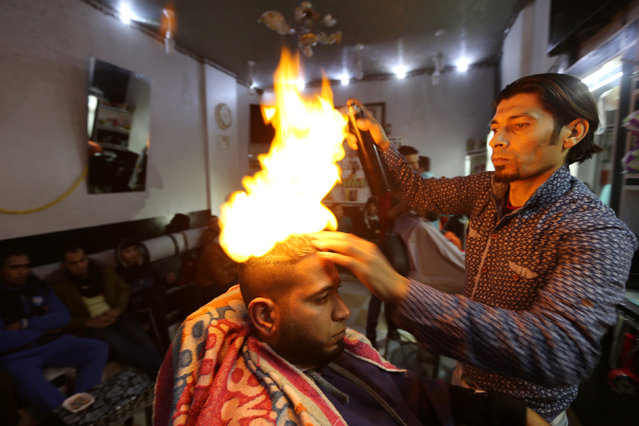
Palestinian barber Ramadan Odwan styles and straightens the hair of a customer with fire at his salon in Rafah, in the southern Gaza Strip February 2, 2017. In Ramadan Odwan's barbershop in Gaza, hair isn't just blow-dried, it's blowtorch-dried. “People have gone crazy about it, many people are curious to go through the experience and they are not afraid”, he told Reuters. “People here love adventures”. Odwan, 37, is not the first stylist in the world to use flame to straighten hair, but his craft is unique in the Gaza Strip. In his salon in the southern Gaza town of Rafah, Odwan applied what he described as a protective liquid coating to a customer's hair – he declined to disclose its contents – before aiming for the head and pressing the button on a small blowtorch. “I control how long I apply fire, I keep it on and off for 10 seconds or 15 seconds. It is completely safe and I have not encountered any accident since I started it two months ago”, Odwan added. Odwan charges 20 shekels ($5.20) for a haircut and fire-straightening. A barber for the past 18 years, he said part of the reason he uses the technique is to show that Palestinian barbers are as “professional as those out there around the world”. (Photo by Ibraheem Abu Mustafa/Reuters)

Palestinian barber Ramadan Odwan styles and straightens the hair of a customer with fire at his salon in Rafah, in the southern Gaza Strip February 2, 2017. In Ramadan Odwan's barbershop in Gaza, hair isn't just blow-dried, it's blowtorch-dried. “People have gone crazy about it, many people are curious to go through the experience and they are not afraid”, he told Reuters. “People here love adventures”. (Photo by Ibraheem Abu Mustafa/Reuters)
Details
11 Feb 2017 00:05:00
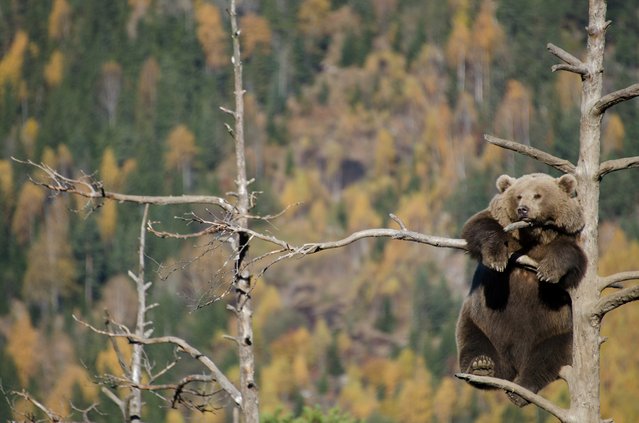
“Just hanging out”. As full autumn hits the valley of Hallingdal in Norway, this bear chills out in a tree which seems to barely cover its weight. Photo location: Flå, Hallingdal, Norway. (Photo and caption by Jorgen Tharaldsen/National Geographic Photo Contest)

“Just hanging out”. As full autumn hits the valley of Hallingdal in Norway, this bear chills out in a tree which seems to barely cover its weight. Photo location: Flå, Hallingdal, Norway. (Photo and caption by Jorgen Tharaldsen/National Geographic Photo Contest)
Details
30 Apr 2014 07:35:00
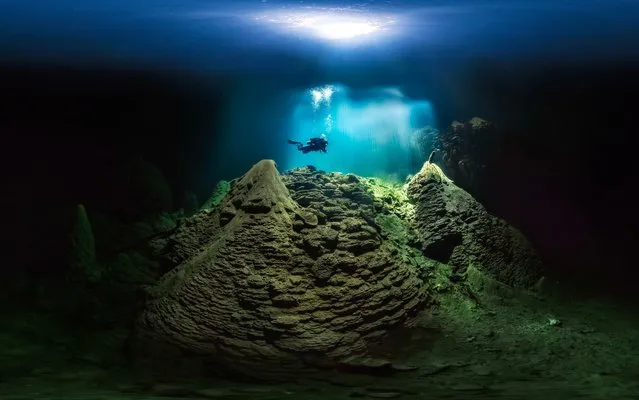
Cave Diver, Anhumas Abyss, Bonito, Brazil: The Anhumas Abyss is an underground cavern with a crystal-clear lake below, more than 260 feet (79 m) deep. A visitor must enter through a narrow opening at the top of the chamber and rappel into the cave. Snorkeling and scuba diving in the lake reveal amazing scenery. Distinctive, conical limestone stalagmites and stalactites occupy the lake and the surrounding area, some reaching 65 feet (20 m) high. “One must rappel about 235 feet (72 m) to get down into this deep lake. The photo was taken at a depth of 50 feet (15 m). It was a challenge to create the image because of the high contrast, plus the diver could not see into the darkness, making communication impossible”. (Photo by Marcio Cabral/Nature’s Best Photography Awards 2017)

Cave Diver, Anhumas Abyss, Bonito, Brazil: The Anhumas Abyss is an underground cavern with a crystal-clear lake below, more than 260 feet (79 m) deep. A visitor must enter through a narrow opening at the top of the chamber and rappel into the cave. Snorkeling and scuba diving in the lake reveal amazing scenery. Distinctive, conical limestone stalagmites and stalactites occupy the lake and the surrounding area, some reaching 65 feet (20 m) high. (Photo by Marcio Cabral/Nature’s Best Photography Awards 2017)
Details
26 Oct 2017 08:10:00
Taylor's sister, who works in an animal rescue center, found this baby jackdaw who was in need of a little extra love and attention before being released into the wild

Mark Taylor may not have any training as a photographer, but that doesn’t stop him from taking amazing animal photos. From his studio in Southeast England, Taylor has made a big business out of photographing man’s best friends, following in the footsteps of his late mother, Jane Burton. Most of the animals he works with are babies, who are more comfortable in front of the camera than older animals.

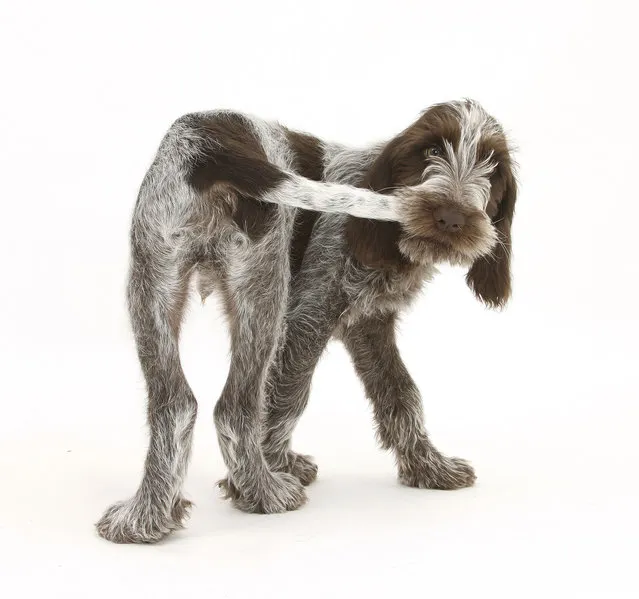
Photo: Taylor often uses animals that belonged to friends of his late mother, including this Italian Spinone puppy chewing his tail. Baby animals make ideal subjects, as the older dogs and cats get, the warier they are of spending time in a studio. And his trick for getting this small subject to pose? Dog treats, of course. (Photo by Mark Taylor/Rex Features)
Details
27 Apr 2012 13:45:00
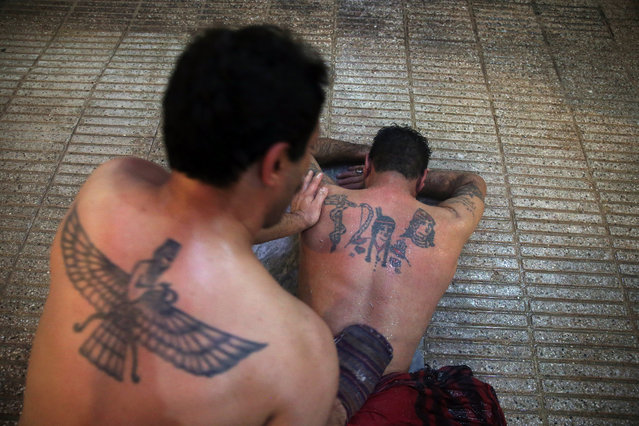
In this Friday, January 9, 2015 photo, bathhouse worker Omid Riahi, 39, scrubs a man to remove dead skin, at the Ghebleh public bathhouse, in Tehran, Iran. The steamy air and curved tiled walls of Iran's famed public bathhouses, some rinsing and massaging patrons for hundreds of years, slowly may wash away as interest in them wanes. (Photo by Ebrahim Noroozi/AP Photo)

In this Friday, January 9, 2015 photo, bathhouse worker Omid Riahi, 39, scrubs a man to remove dead skin, at the Ghebleh public bathhouse, in Tehran, Iran. The steamy air and curved tiled walls of Iran's famed public bathhouses, some rinsing and massaging patrons for hundreds of years, slowly may wash away as interest in them wanes. The bathhouses, known as “hammams” in Persian, find themselves in rough financial times as modern conveniences now allow showers and baths in most homes across the Islamic Republic. (Photo by Ebrahim Noroozi/AP Photo)
Details
03 Apr 2015 12:40:00
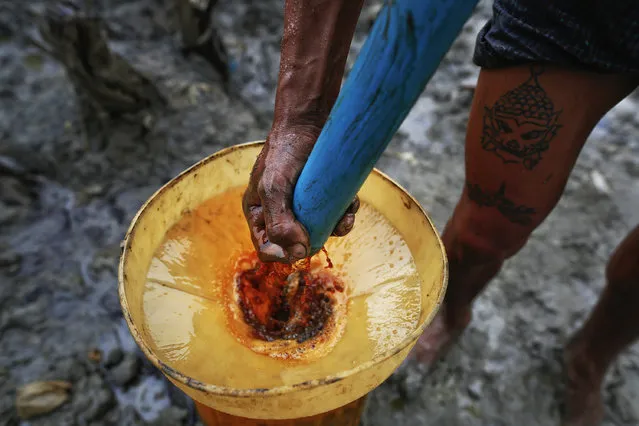
Ko Min, 26, manually extracts oil from one of three 300 feet deep wells he works on in the Minhla township of the Magwe district October 27, 2013. Everyday, Ko Min makes around $30 extracting crude oil from three small wells after he bought rights to use them for close to $1000 from a farmer who owns the land. (Photo by Damir Sagolj/Reuters)

Ko Min, 26, manually extracts oil from one of three 300 feet deep wells he works on in the Minhla township of the Magwe district October 27, 2013. Everyday, Ko Min makes around $30 extracting crude oil from three small wells after he bought rights to use them for close to $1000 from a farmer who owns the land. In Myanmar, an impoverished country rich with natural resources, people from poor communities find ways to supplement their income by exploiting such resources, such as the Minhla township, traditionally rich with oil, often using primitive and dangerous methods. (Photo by Damir Sagolj/Reuters)
Details
21 Apr 2014 10:06:00