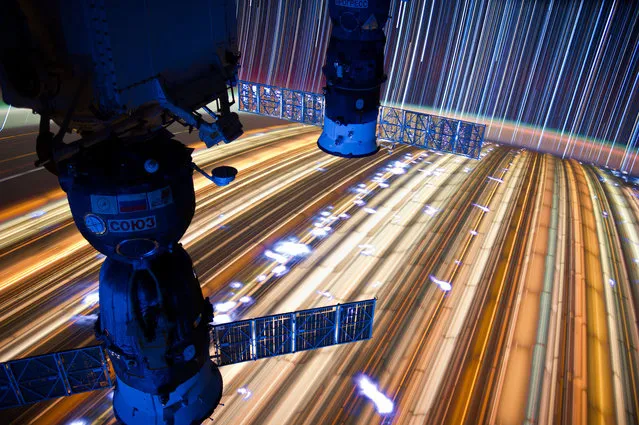
Long-exposure photography or time-exposure photography involves using a long-duration shutter speed to sharply capture the stationary elements of images while blurring, smearing, or obscuring the moving elements. The paths of moving light sources become clearly visible.
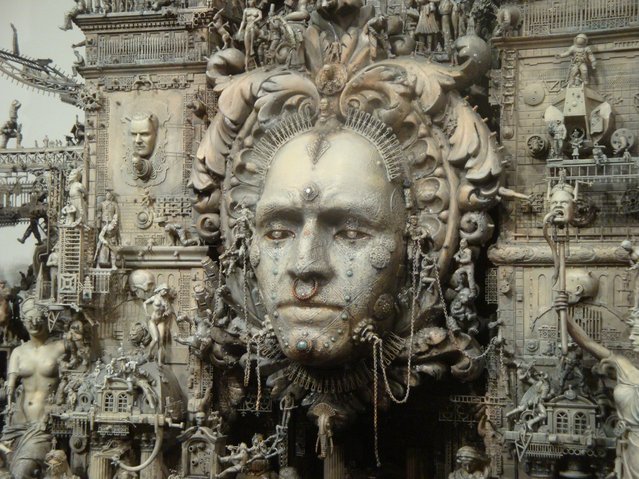
A post-industrial Rococo master, Kris Kuksi obsessively arranges characters and architecture in asymmetric compositions with an exquisite sense of drama. Instead of stones and shells he uses screaming plastic soldiers, miniature engine blocks, towering spires and assorted debris to form his landscapes.
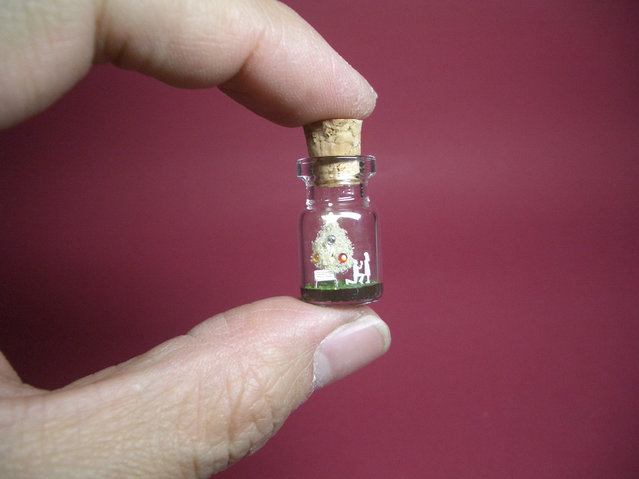
These tiny worlds created in a tiny glass bottle, literally, are the work of Akinobu Izumi.
Akinobu uses paper, clay, wax and resin among other materials to create these intricate miniature worlds.
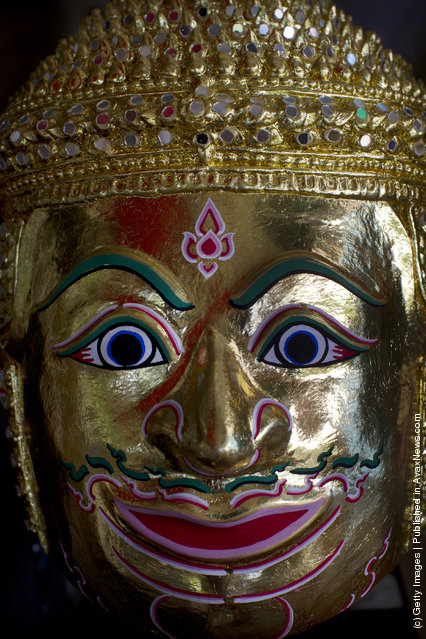
A close up of a Khon mask July 8, 2011 in Angthong, Thailand. The paper mache Khon masks, are part of the ornate glittering costumes used in the stylized classical Thai dance form known as Khon. (Photo by Paula Bronstein/Getty Images)
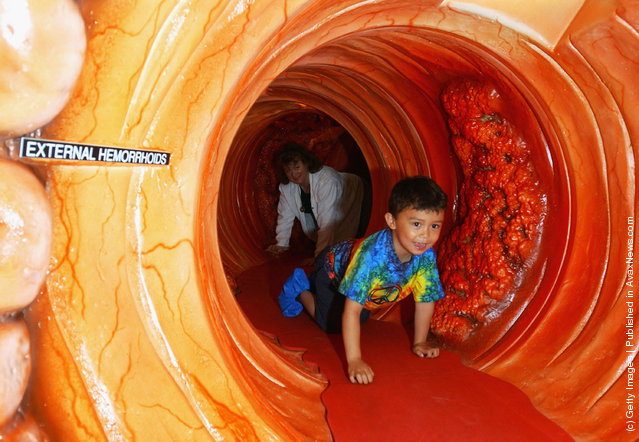
Five year old Michael Esteban and his mother Kari Esteban, crawl through a 40-foot long, 4-foot high replica of a human colon on July 11, 2003 in Seattle. The colon is used to educate people on colorectal cancer. (Photo by Ron Wurzer/Getty Images)
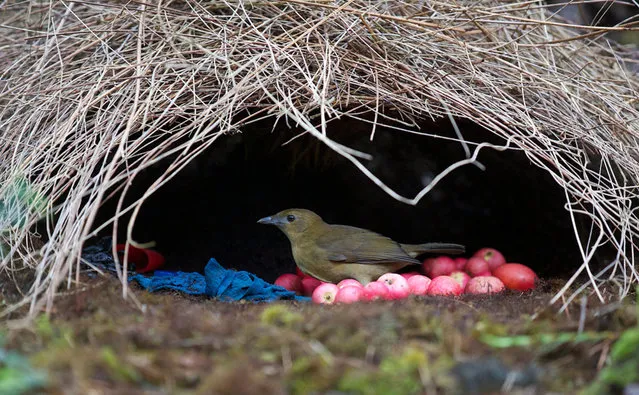
Turkeys strut, peacocks preen, and bowerbirds design. Of all the strange things that male birds do to attract a mate, the bowerbird's ritual is the only one that could make it into the MoMA. They use two distinct types of "architecture" and have a keen eye for color as well.
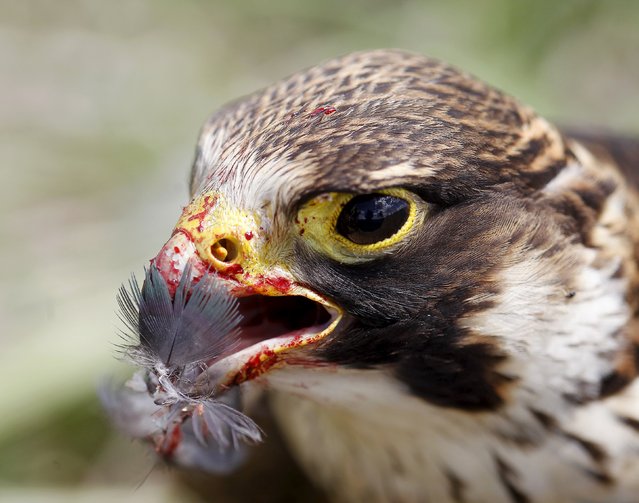
A Peregrin Falcon is pictured at the Mariscal Sucre Airport in Quito, Ecuador November 14, 2015. They are used to control fauna to avoid bird strikes during takeoffs and landings. (Photo by Guillermo Granja/Reuters)