Loading...
Done
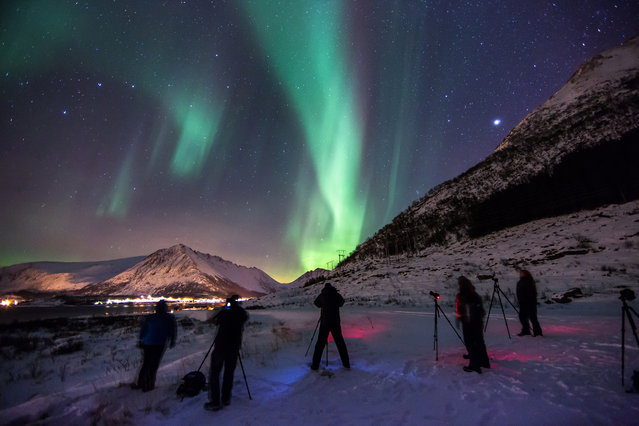
“Aurora Hunters”. Photographers taking part in a photography tour on the Lofoten Islands in Norway, pull over on the side of the road to take a photo of their first ever Aurora Borealis after spotting it from their tour bus. Photo location: Rystad, Lofoten Islands, Norway. (Photo and caption by Mark Gee/National Geographic Photo Contest)

“Aurora Hunters”. Photographers taking part in a photography tour on the Lofoten Islands in Norway, pull over on the side of the road to take a photo of their first ever Aurora Borealis after spotting it from their tour bus. Photo location: Rystad, Lofoten Islands, Norway. (Photo and caption by Mark Gee/National Geographic Photo Contest)
Details
17 Jun 2014 10:08:00
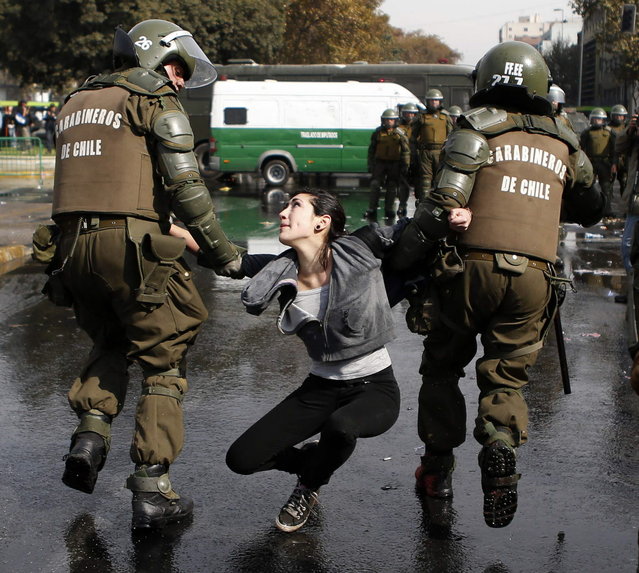
A demonstrator is detained during May Day rallies in Santiago May 1, 2013. (Photo by Ivan Alvarado/Reuters)

A demonstrator is detained during May Day rallies in Santiago May 1, 2013. (Photo by Ivan Alvarado/Reuters)
Details
03 May 2013 07:59:00
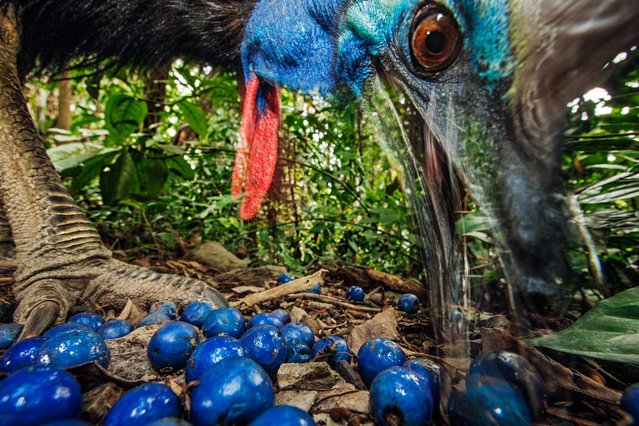
“Cassowaries are large, flightless birds related to emus and (more distantly) to ostriches, rheas, and kiwis”, writes Olivia Judson in the September issue of National Geographic magazine. (Photo by Christian Ziegler/National Geographic)

“Cassowaries are large, flightless birds related to emus and (more distantly) to ostriches, rheas, and kiwis”, writes Olivia Judson in the September issue of National Geographic magazine. How large? People-size: Adult males stand well over five foot five and top 110 pounds. Females are even taller, and can weigh more than 160 pounds. Dangerous when roused, they’re shy and peaceable when left alone. But even birds this big and tough are prey to habitat loss. The dense New Guinea and Australia rain forests where they live have dwindled. Today cassowaries might number 1,500 to 2,000. And because they help shape those same forests – by moving seeds from one place to another – “if they vanish”, Judson writes, “the structure of the forest would gradually change” too. (Photo by Christian Ziegler/National Geographic)

Details
06 Jan 2014 12:21:00
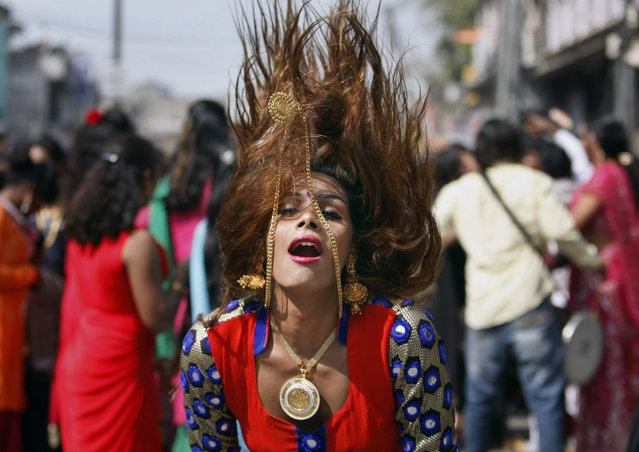
A eunuch dances during a rally to mark the congregation of thousands of eunuchs from different parts of India, in Jammu, India, Friday, March 13, 2015. The term eunuchs is used in India to describe transvestites, transsexuals and others who identify themselves as neither male nor female but as a member of a third gender. They traditionally survive by begging, dancing at weddings or blessing newborn babies and are frequently subjected to discrimination. (Photo by Channi Anand/AP Photo)

A eunuch dances during a rally to mark the congregation of thousands of eunuchs from different parts of India, in Jammu, India, Friday, March 13, 2015. The term eunuchs is used in India to describe transvestites, transsexuals and others who identify themselves as neither male nor female but as a member of a third gender. They traditionally survive by begging, dancing at weddings or blessing newborn babies and are frequently subjected to discrimination. (Photo by Channi Anand/AP Photo)
Details
21 Mar 2015 12:33:00
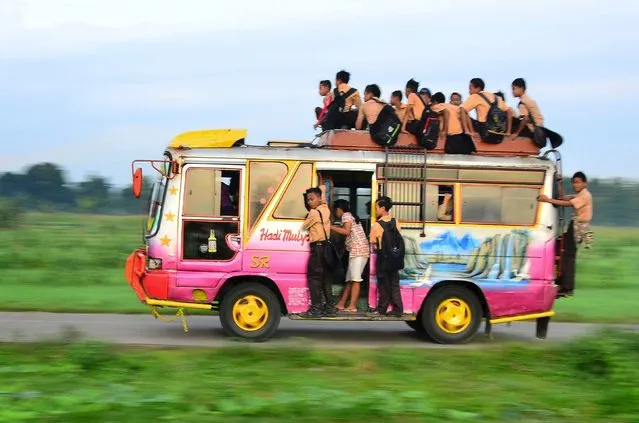
A group of students sit on top of a bus at Kemusu street in Boyolali, Central Java of Indonesia, March 20, 2015 in this picture taken by Antara Foto. (Photo by Yusuf Nugroho/Reuters/Antara Foto)

A group of students sit on top of a bus at Kemusu street in Boyolali, Central Java of Indonesia, March 20, 2015 in this picture taken by Antara Foto. (Photo by Yusuf Nugroho/Reuters/Antara Foto)
Details
21 Mar 2015 12:49:00
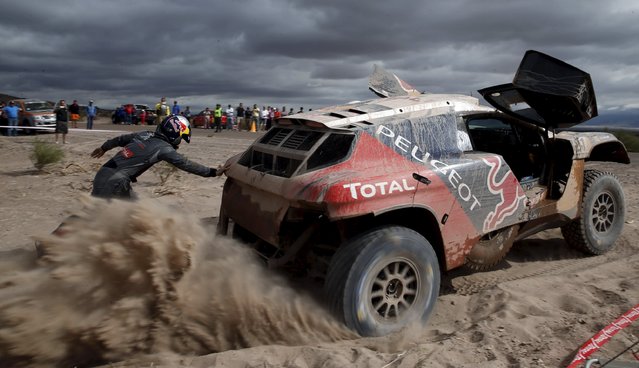
Cyril Despres of France tries to get his Peugeot out of the sand as co-pilot David Castera pushes the car during the 10th stage of the Dakar Rally 2016 near Fiambala, Argentina, January 13, 2016. (Photo by Marcos Brindicci/Reuters)

Cyril Despres of France tries to get his Peugeot out of the sand as co-pilot David Castera pushes the car during the 10th stage of the Dakar Rally 2016 near Fiambala, Argentina, January 13, 2016. (Photo by Marcos Brindicci/Reuters)
Details
17 Jan 2016 08:03:00
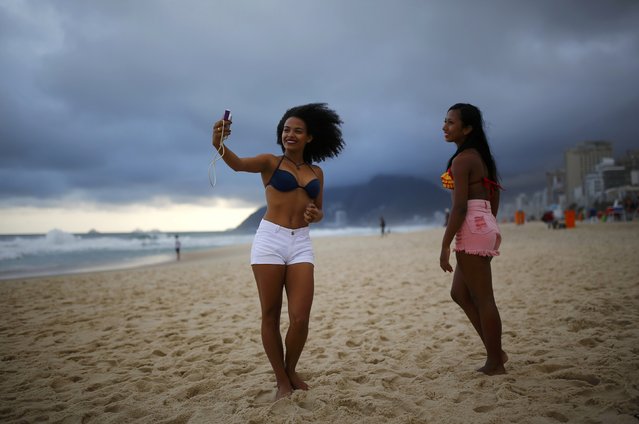
Women pose for a selfie at Ipanema Beach in Rio de Janeiro, Brazil on July 30, 2016. (Photo by Nacho Doce/Reuters)

Women pose for a selfie at Ipanema Beach in Rio de Janeiro, Brazil on July 30, 2016. (Photo by Nacho Doce/Reuters)
Details
31 Jul 2016 11:19:00
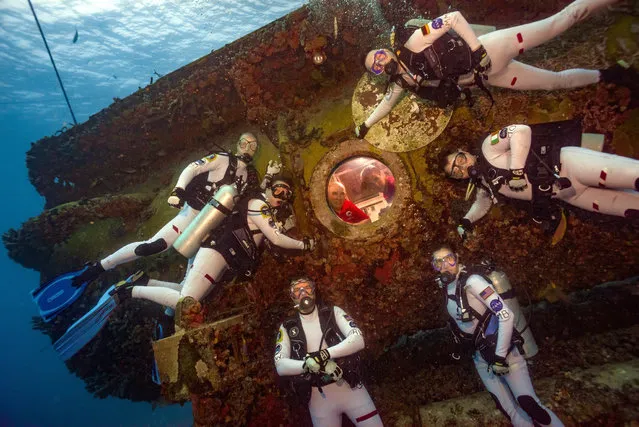
The NASA Extreme Environment Mission Operations (NEEMO) 21 mission began on July 21 as an international crew of aquanauts splashed down to the undersea Aquarius Reef Base, located 62 feet below the surface of the Atlantic Ocean in the Florida Keys National Marine Sanctuary. The NEEMO 21 crew will perform research both inside and outside the habitat during a 16-day simulated space mission. During simulated spacewalks carried out underwater, they will evaluate tools and mission operation techniques that could be used in future space missions, including journeys to Mars. (Photo by Karl Shreeves/NASA)

The NASA Extreme Environment Mission Operations (NEEMO) 21 mission began on July 21 as an international crew of aquanauts splashed down to the undersea Aquarius Reef Base, located 62 feet below the surface of the Atlantic Ocean in the Florida Keys National Marine Sanctuary. The NEEMO 21 crew will perform research both inside and outside the habitat during a 16-day simulated space mission. During simulated spacewalks carried out underwater, they will evaluate tools and mission operation techniques that could be used in future space missions, including journeys to Mars. (Photo by Karl Shreeves/NASA)
Details
31 Jul 2016 11:29:00