Loading...
Done


“Dog meat refers to edible parts and the flesh derived from (predominantly domestic) dogs. Human consumption of dog meat has been recorded in many parts of the world, including ancient China, ancient Mexico, and ancient Rome. According to contemporary reports, dog meat is consumed in a variety of countries such as Switzerland, China, Vietnam, the Philippines, and Korea. In addition, dog meat has also been used as survival food in times of war and/or other hardships”. – Wikipedia

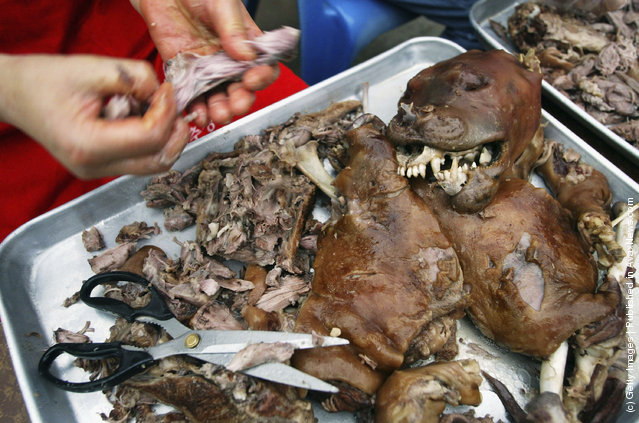
Photo: A chef prepares dog meat at a restaurant on July 4, 2005 in Gwacheon, South Korea. Dog meat is a traditional dish in Korea dating back to the Samkuk period (period of the three kingdoms BC 57 – AD 668). Although many recipes existed historically for dog meat, now chefs only make soups, or dishes using boiled or roasted meat. Koreans traditionally eat dog meat on the hottest day of the summer, for it's reputed benefits of virility, invigoration and health. (Photo by Chung Sung-Jun/Getty Images)
Details
24 Jul 2011 13:21:00
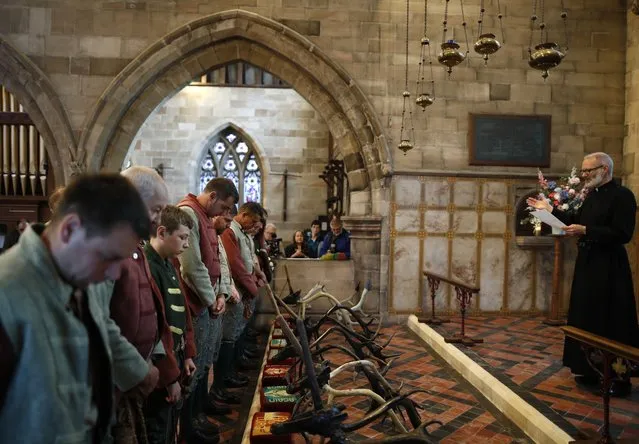
Reverend Simon Davis prays with the dancers before the Abbots Bromley Horn Dance in Abbots Bromley, Britain, September 12, 2016. The Abbots Bromley Horn Dance is an English folk dance dating back to the Middle Ages. The dance takes place each year in Abbots Bromley, a village in Staffordshire, England. The modern version of the dance involves reindeer antlers, a hobby horse, Maid Marian, and a Fool. According to some, the use of antlers suggests an Anglo-Saxon origin along with other native Anglo-Saxon traditions that have survived into modern times in various forms. (Photo by Darren Staples/Reuters)

Reverend Simon Davis prays with the dancers before the Abbots Bromley Horn Dance in Abbots Bromley, Britain, September 12, 2016. The Abbots Bromley Horn Dance is an English folk dance dating back to the Middle Ages. (Photo by Darren Staples/Reuters)
Details
13 Sep 2016 09:36:00


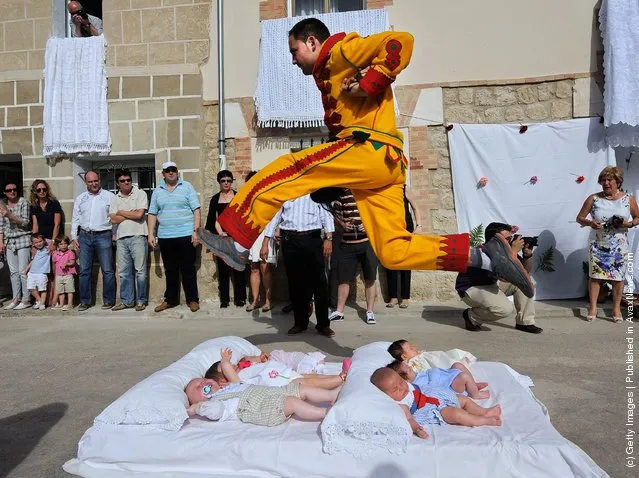
“Baby jumping (El Colacho) is a traditional Spanish practice dating back to 1620 that takes place annually to celebrate the Catholic feast of Corpus Christi in the village of Castrillo de Murcia near Burgos. During the act – known as El Salto del Colacho (the devil's jump) or simply El Colacho – men dressed as the Devil (known as the Colacho) jump over babies born during the previous twelve months of the year who lie on mattresses in the street. ... The festival has been rated as one of the most dangerous in the world”. – Wikipedia

Photo: A man representing the devil leaps over babies during the festival of El Colacho on June 26, 2011 in Castrillo de Murcia near Burgos, Spain. The festival, held on the first Sunday after Corpus Cristi, represents the devil taking away original sin from the newly born babies by leaping over them. (Photo by Denis Doyle/Getty Images)
Details
27 Jun 2011 09:20:00
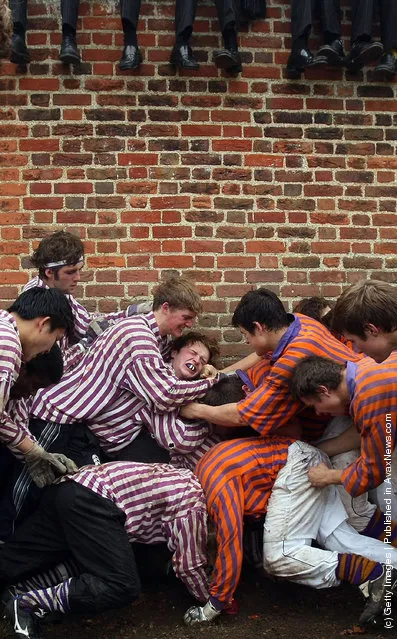
Eton Wall Game

“The Eton wall game is a game similar to football and Rugby Union, that originated from and is still played at Eton College. It is played on a strip of ground 5 metres wide and 110 metres long next to a slightly curved brick wall, erected in 1717”. – Wikipedia

Photo: The “Collegers” and the “Oppidans” of Eton College take part in the “Wall Game” as boys in their traditional school uniform watch from on top of the wall on November 17, 2007 in Eton, near Windsor, Berkshire, England. The first recorded “Wall Game” took place in 1766 with competition between the two houses at the boarding school remaining as fierce as ever on the annual St. Andrew's day event. The object of the game is to get the ball to either end of the wall and score a goal, which has not happened since 1909. As well as scoring a goal the players can win points with a “shy”, where the ball is held against the wall and touched by the hand and awarded one point. (Photo by Christopher Furlong/Getty Images)
Details
22 Sep 2011 11:01:00
Smoke rises from the sauna as Eda Veeroja walks past with birch twigs at Mooska farm near the village of Haanja December 20, 2014. Smoke saunas are usually built without chimney and have a stove that rest on boulders where firewood is burnt until the room heats up. When the smoke is gone and the room reaches the right temperature, people sit inside and whisk each other with birch twigs. (Photo by Ints Kalnins/Reuters)

Smoke rises from the sauna as Eda Veeroja walks past with birch twigs at Mooska farm near the village of Haanja December 20, 2014. Smoke saunas are usually built without chimney and have a stove that rest on boulders where firewood is burnt until the room heats up. When the smoke is gone and the room reaches the right temperature, people sit inside and whisk each other with birch twigs. The tradition of the smoke sauna in Voromaa vicinity, in the south of Estonia, is enlisted in the UNESCO representative list of the intangible cultural heritage of humanity. (Photo by Ints Kalnins/Reuters)
Details
25 Dec 2014 13:37:00
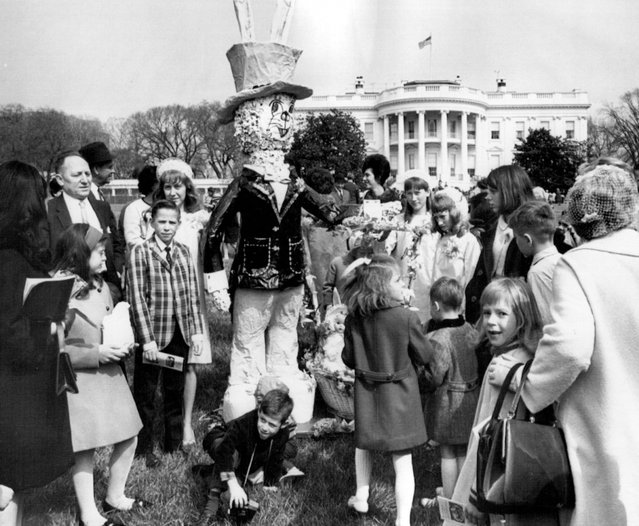
March 28, 1967 Egg Roll; A large bunny attracted the attention of children and their parents during the annual Easter egg roll Monday on the south lawn of the White House. The bunny was made by Fred Johansen, Silver Spring, Md. (Photo by Minneapolis Star Tribune)

March 28, 1967. Egg Roll; A large bunny attracted the attention of children and their parents during the annual Easter egg roll Monday on the south lawn of the White House. The bunny was made by Fred Johansen, Silver Spring, Md. Nearly 17,000 youngsters and adults took part in the egg rolling. The President and Mrs. John-son were not at the festivities because they were in Camp David, Md. The tradition of egg rolling was begun in 1878 during the administration of Rutherford B. Hayes. (Photo by Minneapolis Star Tribune)
Details
05 Apr 2015 10:51:00
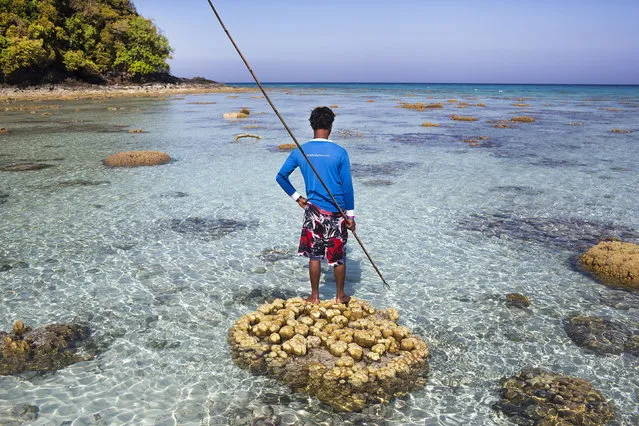
Hook, an indigenous Moken man, holds a three-pronged throwing spear and searches for fish in the waters of Ko Surin National Park. March 1, 2013 – Ko Surin, Thailand. (Photo by Taylor Weidman/zReportage via ZUMA Press)

“For centuries, the Moken sea nomads have traveled the islands between Thailand and Myanmar fishing and foraging for food on the sea floor. Throughout the Mergui Archipelago, Moken migrate in flotillas of Kabangs (traditional boat of the Moken people), stopping at different islands and beaches. Expert freedivers, the Moken have adapted physically to an aquatic life, developing unique characteristics that let them see better and hold their breath longer while underwater”. – Taylor Weidman. Photo: Hook, an indigenous Moken man, holds a three-pronged throwing spear and searches for fish in the waters of Ko Surin National Park. March 1, 2013 – Ko Surin, Thailand. (Photo by Taylor Weidman/zReportage via ZUMA Press)
Details
24 Mar 2014 06:45:00
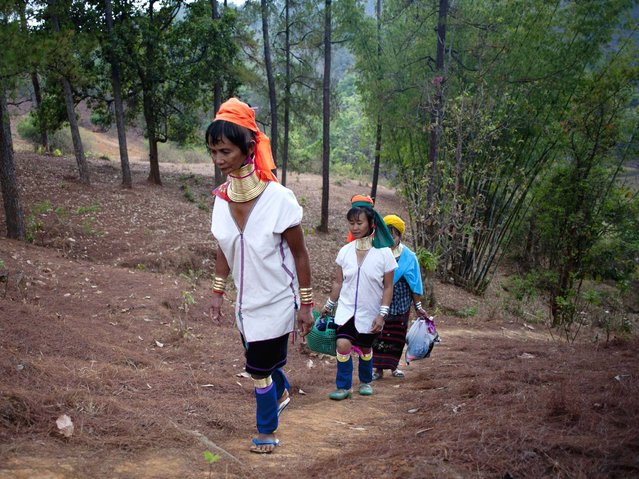
One of the theories says that the coils originate from the desire to look more attractive by exaggerating sexual dimorphism, as women have more slender necks than men. (Photo by Ye Aung Thu/AFP Photo)

This photo taken on April 16, 2014 shows ethnic Kayan women wearing traditional clothes and bronze rings around tbeir neck in Panpet village, Demoso township in Kayah state, eastern Myanmar. Some ethnic Kayan women, also known as Padaung, begin wearing the bronze rings on their neck and legs from a young age. Usually they start wearing six to ten rings when they are five to ten-years-old and then they put on one more ring a year for years after then. (Photo by Ye Aung Thu/AFP Photo)
Details
23 Apr 2014 08:56:00