Loading...
Done
Two women wearing nun outfits drink beer while watching the 2014 Tim Hortons Brier curling championships in Kamloops, British Columbia in this March 8, 2014 file photo. (Photo and caption by Ben Nelms/Reuters)

Two women wearing nun outfits drink beer while watching the 2014 Tim Hortons Brier curling championships in Kamloops, British Columbia in this March 8, 2014 file photo. Although some people might conclude that a curling event could produce a dull atmosphere, it is actually far from it. Some of the most energetic and loyal fans are committed to showing their colours at tournaments around the world. There was a lull in the games that were being held on this day and I remember spotting these nuns sitting in their seats earlier. Although them just sitting there didn't produce a picture, I kept my eye on them for the entire match. As soon as I spotted them with beer in their hands, I slowly turned my camera towards them and waited for them to take a drink. One of the challenges of shooting this image was to not have everyone notice me taking the photo. I had a longer lens on and was right in the middle of the rink. I slowly turned my lens, not to make my intentions too obvious, and waited until they drank from their beers together. (Photo and caption by Ben Nelms/Reuters)
Details
27 Nov 2014 14:39:00
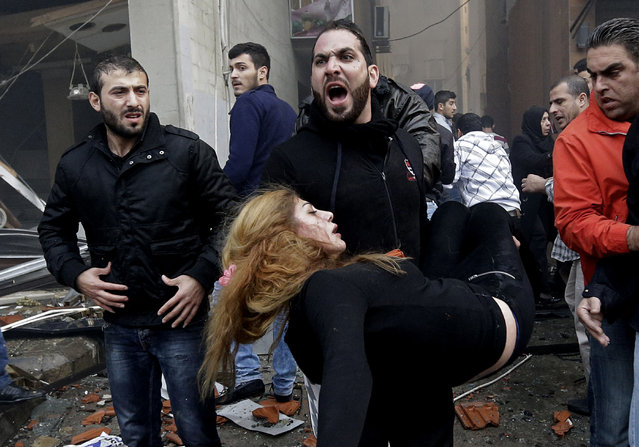
A Lebanese man carries an injured woman away from the site of a car bomb explosion in a Shiite area and stronghold of the Lebanese militant group Hezbollah at the southern suburb of Beirut, Thursday January 2, 2014. A large explosion has rocked a stronghold of the Shiite Hezbollah group in the southern suburbs of the Lebanese capital. (Photo by Hussein Malla/AP Photo)

A Lebanese man carries an injured woman away from the site of a car bomb explosion in a Shiite area and stronghold of the Lebanese militant group Hezbollah at the southern suburb of Beirut, Thursday January 2, 2014. A large explosion has rocked a stronghold of the Shiite Hezbollah group in the southern suburbs of the Lebanese capital. (Photo by Hussein Malla/AP Photo)
Details
04 Jan 2014 14:47:00
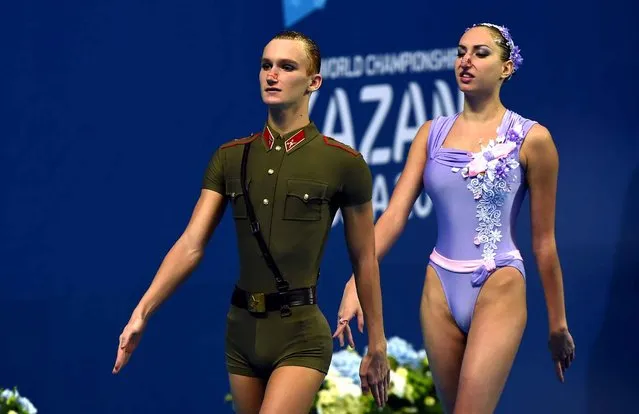
Russia's synchronised swimming duet Aleksandr Maltsev (L) and Darina Valitova compete in the Mixed Duet Technical preliminary during the synchronised swimming competition at the 2015 FINA World Championships in Kazan on July 25, 2015. (Photo by Christophe Simon/AFP Photo)

Russia's synchronised swimming duet Aleksandr Maltsev (L) and Darina Valitova compete in the Mixed Duet Technical preliminary during the synchronised swimming competition at the 2015 FINA World Championships in Kazan on July 25, 2015. (Photo by Christophe Simon/AFP Photo)
Details
25 Jul 2015 13:06:00
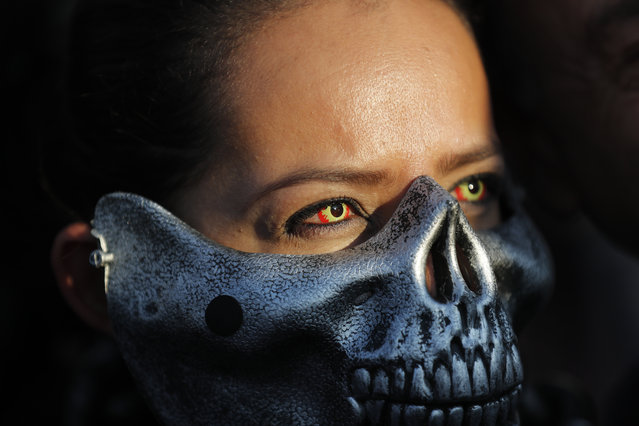
A dressed up Oakland Raiders fan poses for photos as she arrives at Azteca stadium in Mexico City, Monday, November 21, 2016. The Oakland Raiders face the Houston Texans at a sold out Azteca stadium. (Photo by Dario Lopez-Mills/AP Photo)

A dressed up Oakland Raiders fan poses for photos as she arrives at Azteca stadium in Mexico City, Monday, November 21, 2016. The Oakland Raiders face the Houston Texans at a sold out Azteca stadium. (Photo by Dario Lopez-Mills/AP Photo)
Details
23 Nov 2016 12:42:00
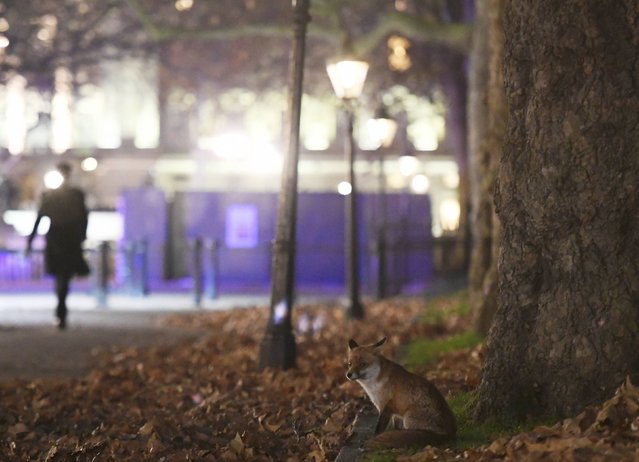
An urban fox walks alongside the Mall in central London, Britain, November 29, 2016. (Photo by Toby Melville/Reuters)

An urban fox walks alongside the Mall in central London, Britain, November 29, 2016. (Photo by Toby Melville/Reuters)
Details
30 Nov 2016 14:04:00
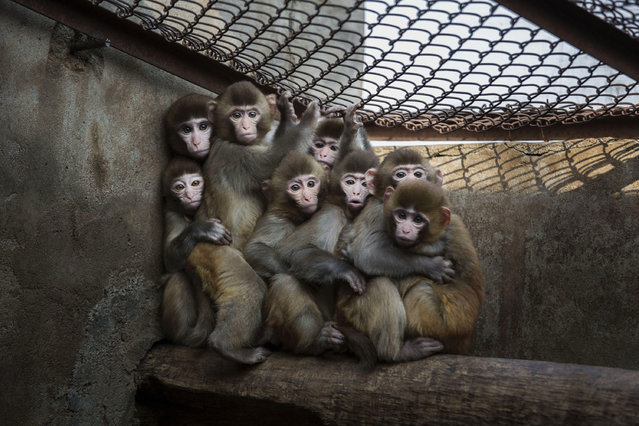
Macaque monkeys crowd together in their cage at a monkey farm on February 3, 2016 in Xinye county, Henan province, China. The area boasts a centuries-long and lucrative history of raising and training monkeys for performance. In Xinye, villagers are seeing an increase in business with the lunar calendar's “Year of the Monkey”. Farmers say most of the monkeys are bred and raised for domestic zoos, circuses, and performing groups, but add that some are also sold for medical research in China and the United States. Despite the popularity of the tradition, critics contend the training methods and conditions constitute animal cruelty. (Photo by Kevin Frayer/Getty Images)

Macaque monkeys crowd together in their cage at a monkey farm on February 3, 2016 in Xinye county, Henan province, China. The area boasts a centuries-long and lucrative history of raising and training monkeys for performance. In Xinye, villagers are seeing an increase in business with the lunar calendar's “Year of the Monkey”. Farmers say most of the monkeys are bred and raised for domestic zoos, circuses, and performing groups, but add that some are also sold for medical research in China and the United States. Despite the popularity of the tradition, critics contend the training methods and conditions constitute animal cruelty. (Photo by Kevin Frayer/Getty Images)
Details
31 Dec 2016 09:56:00
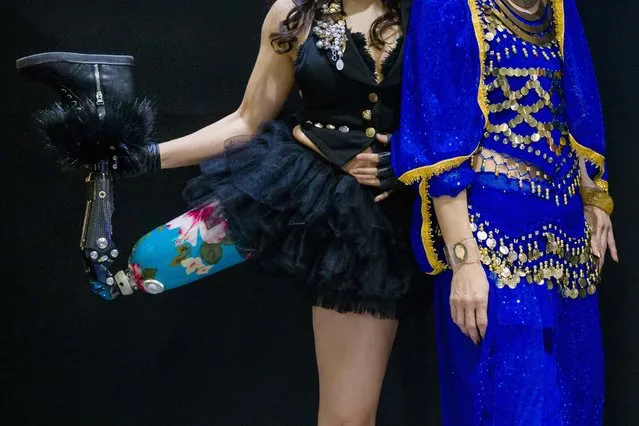
Women wearing prosthetic legs participate in a public photo session at the Hasselblad and Profoto booth, during the CP+ camera and imaging equipment trade fair in Yokohama south of Tokyo, February 14, 2015. (Photo by Thomas Peter/Reuters)

Women wearing prosthetic legs participate in a public photo session at the Hasselblad and Profoto booth, during the CP+ camera and imaging equipment trade fair in Yokohama south of Tokyo, February 14, 2015. Japanese prosthetist Fumio Usui inspired the event after collaborating with photographer Takao Ochi in the book project “Amputee Venus” that portrays 11 Japanese women with artificial legs, local media reported. (Photo by Thomas Peter/Reuters)
Details
21 Feb 2015 11:12:00
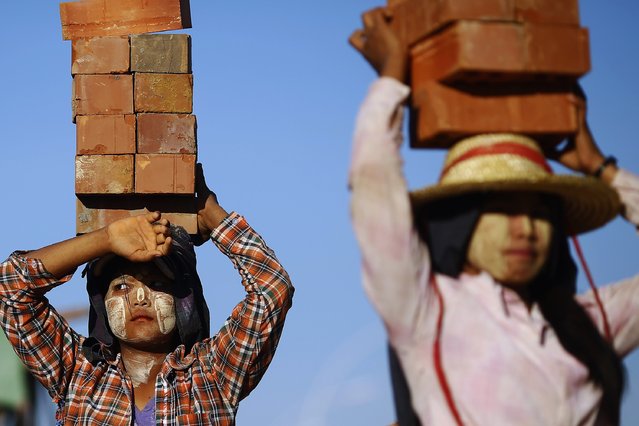
Construction workers carry bricks on their heads near the country's parliament building in Naypyitaw November 11, 2014. Yangon lost its status as Myanmar's capital in 2005, after the former military junta carved a new seat of government from a parched wilderness some 380 km (236 miles) to the north and called it Naypyitaw (“Abode of Kings”). (Photo by Damir Sagolj/Reuters)

Construction workers carry bricks on their heads near the country's parliament building in Naypyitaw November 11, 2014. Yangon lost its status as Myanmar's capital in 2005, after the former military junta carved a new seat of government from a parched wilderness some 380 km (236 miles) to the north and called it Naypyitaw (“Abode of Kings”). (Photo by Damir Sagolj/Reuters)
Details
15 Nov 2014 12:29:00