A person wearing a face mask holds a cat on Swanston Street after cases of the coronavirus were confirmed in Melbourne, Victoria, Australia, January 29, 2020. (Photo by Andrew Kelly/Reuters)
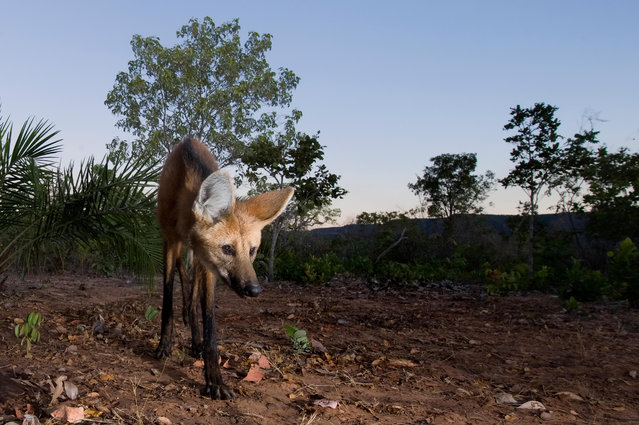
Global wildlife populations will decline by 67% by 2020 unless urgent action is taken to reduce human impact on species and ecosystems, warns the biennial Living Planet Index report from WWF (World Wide Fund for Nature) and ZSL (Zoological Society of London). From elephants to eels, here are some of the wildlife populations most affected by human activity. Here: The maned wolf is among the large mammals in the Brazilian Cerrado that are threatened by the increasing conversion of grasslands into farmland for grazing and growing crops. (Photo by Ben Cranke/Nature Picture Library/Alamy Stock Photo)
A Sotheby's employee poses with a “Return of the Jedi” promotional C-3PO Helmet 1983, estimated at £15,000-£25,000 created by George Lucas' visual effects company during a photocall at Sotheby's in London, Britain on December 6, 2019. (Photo by Thomas Mukoya/Reuters)
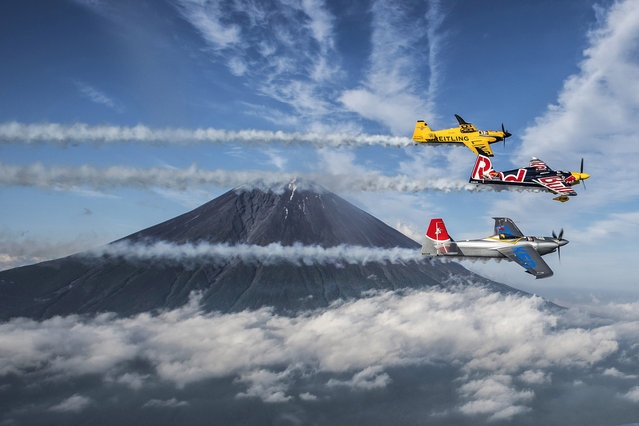
A handout picture provided by Global newsroom of Czech Martin Sonka (C) leading Nigel Lamb (top) of Great Britain and Yoshihide Muroya of Japan (down) along the Mount Fuji prior the third stage of the Red Bull Air Race World Championship in Chiba, Japan on June 1, 2016. (Photo by Predrag Vockovic/EPA/Global Newsroom)
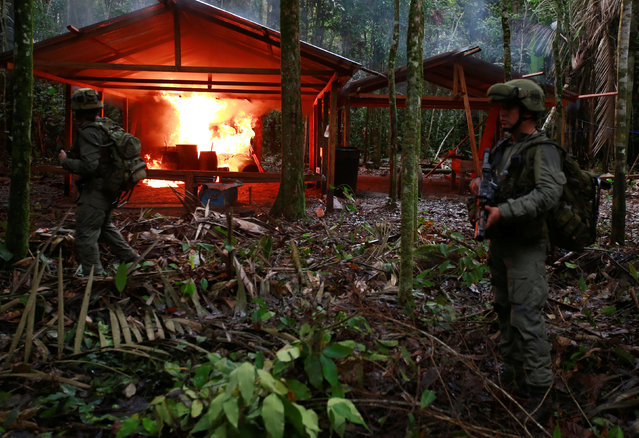
A Colombian anti-narcotics policeman stands guard after burning a cocaine lab, which police said belongs to criminal gangs, in a rural area of Calamar in Guaviare state, Colombia, August 2, 2016. Colombian law enforcement has destroyed 104 cocaine laboratories capable of producing some 100 tonnes of the drug annually, the head of the anti-narcotics police said on Tuesday. (Photo by John Vizcaino/Reuters)
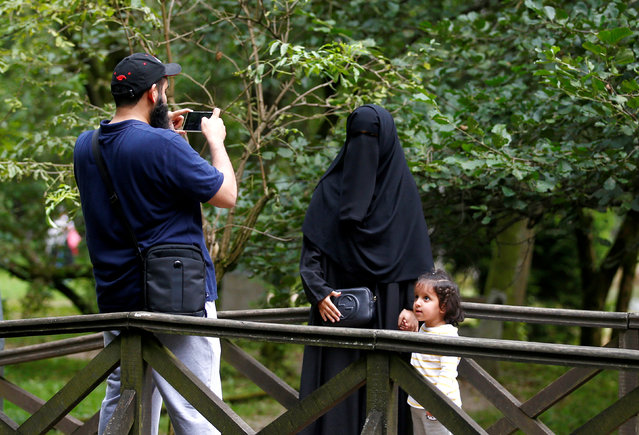
Tourists from the Middle East take pictures at Vrelo Bosne nature park in Ilidza near Sarajevo, Bosnia and Herzegovina, August 19, 2016. They discovered mountainous Bosnia, where half the population is Muslim, after the Arab Spring which destabilized many traditional holiday destinations such as Libya, Tunisia and Egypt. (Photo by Dado Ruvic/Reuters)
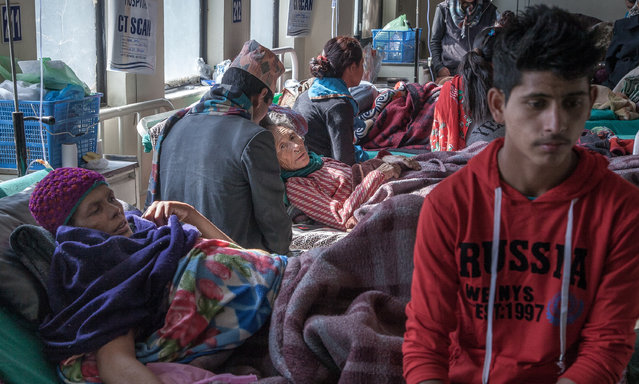
One of the most significant challenges related to cancer in Nepal is the lack of awareness around the prognosis of the disease, as many patients, their families and even healthcare professionals consider cancer to be an incurable disease at any stage. This results in significant delays in bringing patients to hospitals, and high rates of advanced stage cancers and mortality. (Photo by Omar Havana)