Loading...
Done
Baby Fennec Fox

“The fennec fox is a small nocturnal fox found in the Sahara of North Africa. Its most distinctive feature is unusually large ears. The name “fennec” comes from the Arabic word for fox, and the species name zerda has a Greek origin that refers to its habitat. The fennec is the smallest species of canid in the world; coat, ears and kidney functions have adapted to a high-temperature, low-water, desert environment. In addition, its hearing is sensitive enough to hear prey moving underground”. – Wikipedia

Photo: A Baby Fennec is seen at Sunshine International Aquarium on June 24, 2009 in Tokyo, Japan. The small nocturnal fox babies were born on May 17 2009. (Photo by Junko Kimura/Getty Images)
Details
16 Sep 2011 12:02:00
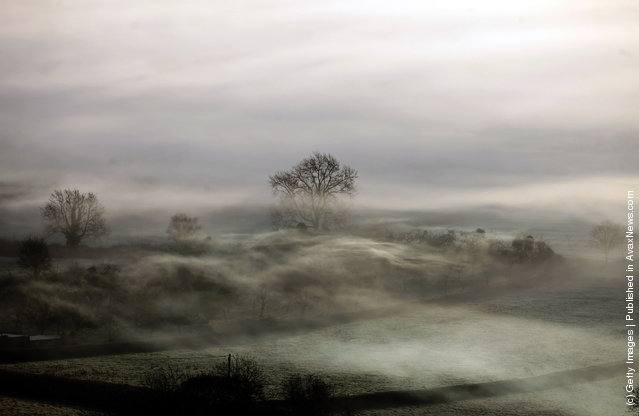
Mist and fog covers fields as the sun rises over the Somerset Levels in Glastonbury, England

Mist and fog covers fields as the sun rises over the Somerset Levels on January 13, 2012 in Glastonbury, England. (Photo by Matt Cardy/Getty Images)
Details
14 Jan 2012 12:53:00
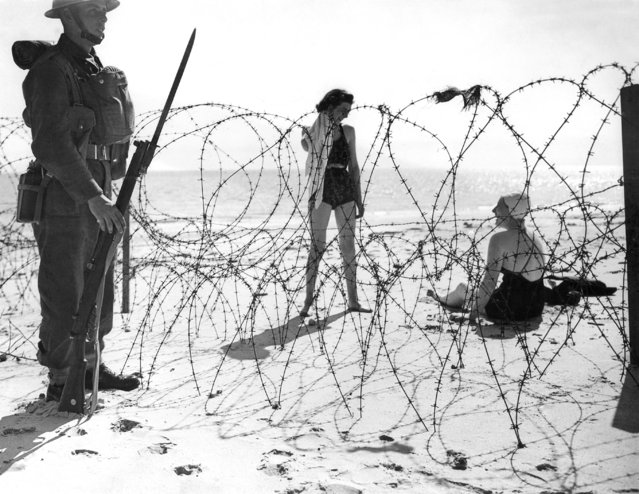
Two female holidaymakers relax on an unidentified beach of England, September 21, 1940, as a soldier, eyes straight ahead, stands guard at a barrier built as a defense against possible invasion by Germany. (Photo by AP Photo)

Two female holidaymakers relax on an unidentified beach of England, September 21, 1940, as a soldier, eyes straight ahead, stands guard at a barrier built as a defense against possible invasion by Germany. (Photo by AP Photo)
Details
22 Sep 2015 10:37:00
A Palestinian woman paints a mural, depicting a masked Palestinian holding a knife, in support of Palestinians committing stabbing attacks against Israelis, in Rafah in the southern Gaza Strip November 3, 2015. (Photo by Ibraheem Abu Mustafa/Reuters)

A Palestinian woman paints a mural, depicting a masked Palestinian holding a knife, in support of Palestinians committing stabbing attacks against Israelis, in Rafah in the southern Gaza Strip November 3, 2015. (Photo by Ibraheem Abu Mustafa/Reuters)
Details
06 Nov 2015 08:00:00
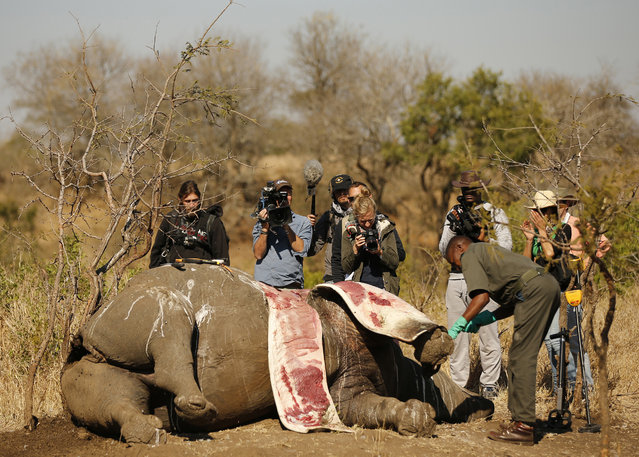
Members of the media film as a ranger performs a post mortem on the carcass of a rhino after it was killed for its horn by poachers at the Kruger national park in Mpumalanga province August 27, 2014. Rhino poachers in South Africa now risk giving themselves away when they shoot thanks to a high-tech, gunfire-detection system being piloted in the country's flagship Kruger National Park. (Photo by Siphiwe Sibeko/Reuters)

Members of the media film as a ranger performs a post mortem on the carcass of a rhino after it was killed for its horn by poachers at the Kruger national park in Mpumalanga province August 27, 2014. Rhino poachers in South Africa now risk giving themselves away when they shoot thanks to a high-tech, gunfire-detection system being piloted in the country's flagship Kruger National Park. The stakes are high, for rhinos are being slain in escalating numbers for their prized horns, alarming both conservationists and the government since wildlife in South Africa is an important tourist draw. (Photo by Siphiwe Sibeko/Reuters)
Details
07 Nov 2015 08:03:00
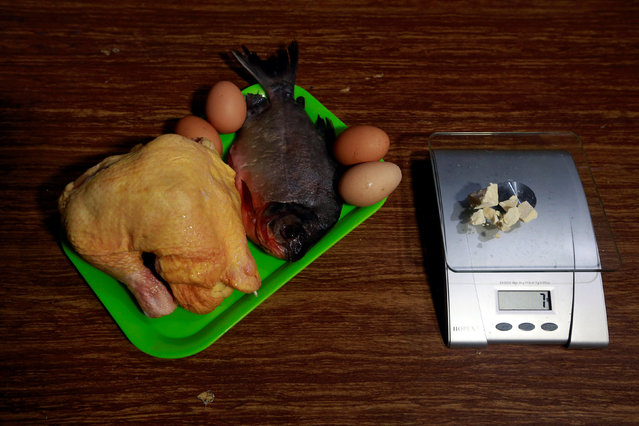
Chicken, fish and eggs lie next to coca paste worth $14,000 Colombian pesos at a local store in Guyabero Region, Guaviare, Colombia, May 24, 2016. (Photo by John Vizcaino/Reuters)

Chicken, fish and eggs lie next to coca paste worth $14,000 Colombian pesos at a local store in Guyabero Region, Guaviare, Colombia, May 24, 2016. As the government nears a historic peace deal with the rebels of the Revolutionary Armed Forces of Colombia (FARC), the nation's authorities are struggling to tame an increase in farming of coca, the raw material used to make cocaine. In the Guyabero Region, where many people work on coca plantations, locals barter coca paste to buy groceries at the local shop. (Photo by John Vizcaino/Reuters)
Details
03 Jun 2016 12:46:00
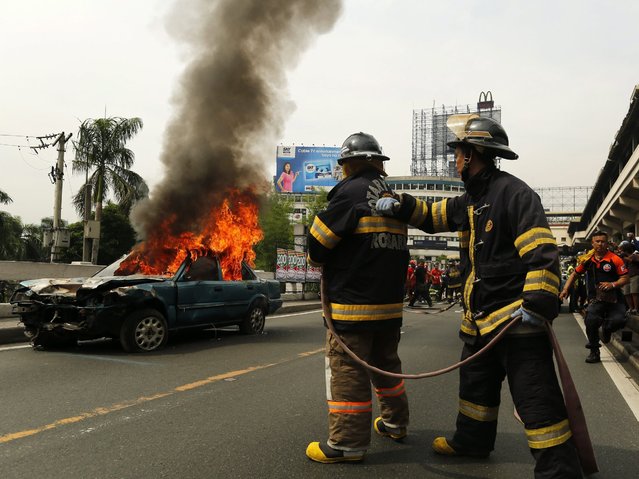
Filipino firemen extinguish a burning vehicle during an earthquake preparedness drill in Makati city, south of Manila, Philippines, 22 June 2016. Thousands of people participated in the Metro Manila earthquake drill to prepare residents of nearly 12 million for a feared magnitude-7.2 quake that could kill thousands and displace millions, Emerson Carlos head of the Metropolitan Manila Development Authority (MMDA) said. Philippines sits on the Pacific Ring of Fire, an area prone to seismic shifts that spark earthquakes and volcanic activity. (Photo by Francis R. Malasig/EPA)

Filipino firemen extinguish a burning vehicle during an earthquake preparedness drill in Makati city, south of Manila, Philippines, 22 June 2016. Thousands of people participated in the Metro Manila earthquake drill to prepare residents of nearly 12 million for a feared magnitude-7.2 quake that could kill thousands and displace millions, Emerson Carlos head of the Metropolitan Manila Development Authority (MMDA) said. Philippines sits on the Pacific Ring of Fire, an area prone to seismic shifts that spark earthquakes and volcanic activity. (Photo by Francis R. Malasig/EPA)
Details
23 Jun 2016 12:11:00
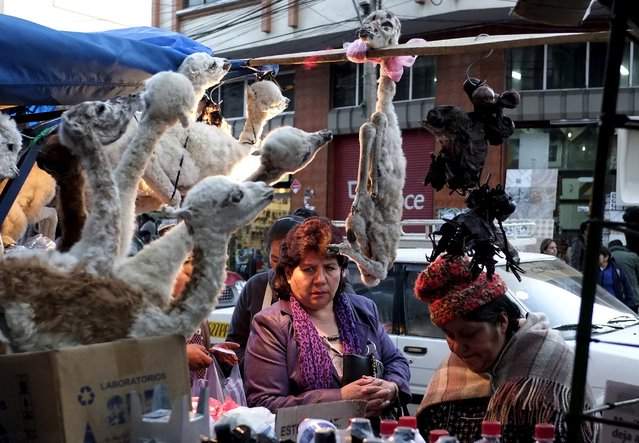
A woman (C) shops for an offering at the witch doctor's street in La Paz, July 31, 2015. (Photo by David Mercado/Reuters)

A woman (C) shops for an offering at the witch doctor's street in La Paz, July 31, 2015. According to Andean culture, the all the month of August is a time to give offerings to “Pachamama” to give thanks for their farms and health. The Aymaras use coca leaves, candies, animal fat, llama fetuses, some dried fruits, powdered minerals and alcohol during these rituals. (Photo by David Mercado/Reuters)
Details
02 Aug 2015 12:27:00