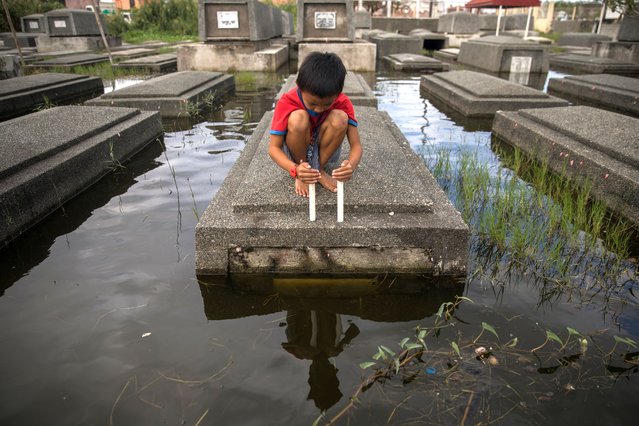
A boy attempts to keep a candle lit in a flooded cemetery following Typhoon Molave, in Masantol, Pampanga, Philippines, October 27, 2020. (Photo by Eloisa Lopez/Reuters)
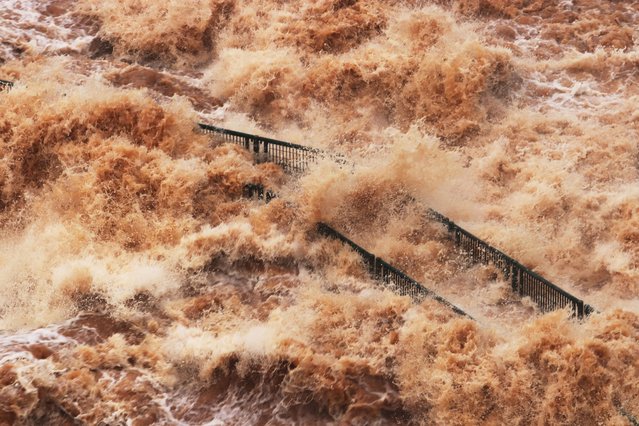
View of the visitor walkway at the Iguazu Falls, which was destroyed by the strong current of the river on the triple border between Brazil, Argentina and Paraguay, on October 30, 2023. The Falls are flowing at over 24 million liters of water per second, according to hydrological monitoring by Companhia Paranaense de Energia (Copel). This is the second highest flow since 1997, when monitoring became automatic and was measured hourly. (Photo by Christian Rizzi/AFP Photo)
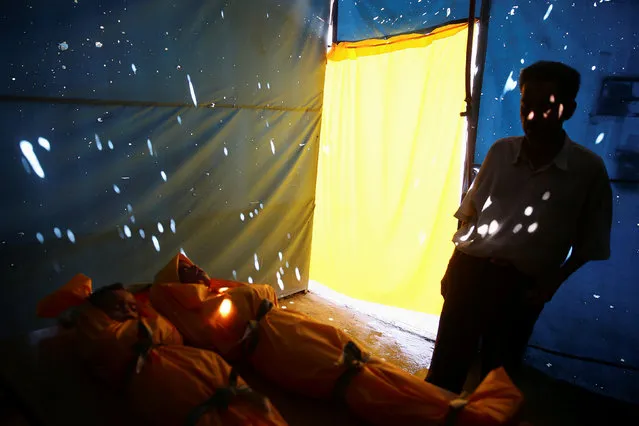
A man stands near bodies of his young relatives after an airstrike in the rebel held Douma neighbourhood of Damascus, Syria August 22, 2016. (Photo by Bassam Khabieh/Reuters)
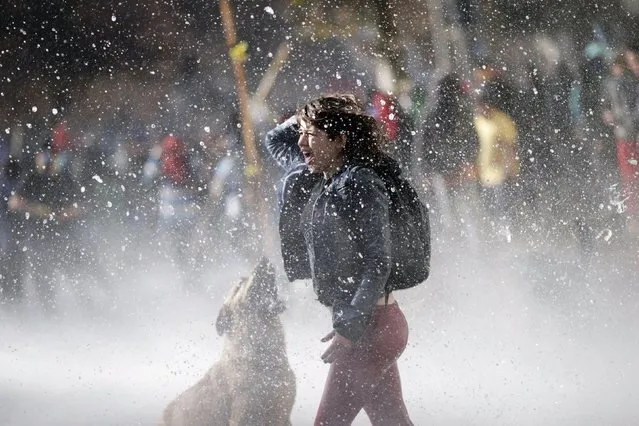
A protester reacts as police use water cannon during a demonstration to demand changes in the Chilean education system in Santiago, Chile June 25, 2015. (Photo by Ueslei Marcelino/Reuters)
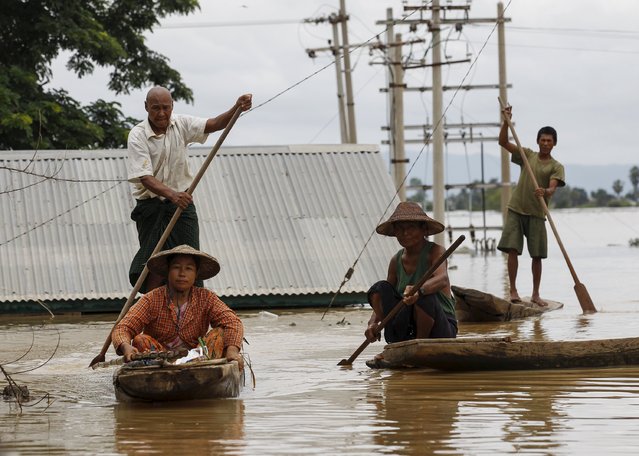
People row their canoes on a flooded street at a village in Kawlin township, Sagaing division, Myanmar, July 21, 2015. Heavy rains caused flooding over 20,000 acres of rice field and in about a hundred villages, killing at least eight people, according to local media. (Photo by Soe Zeya Tun/Reuters)
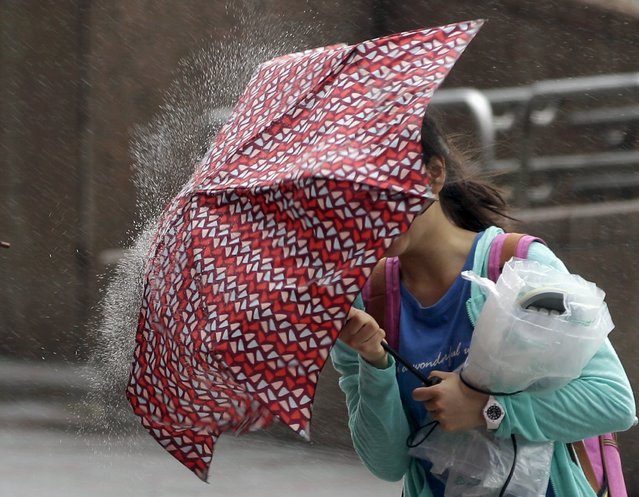
A woman holds her umbrella while walking against strong winds as Typhoon Chan-hom approaches Taiwan, in Taipei, July 10, 2015. (Photo by Pichi Chuang/Reuters)
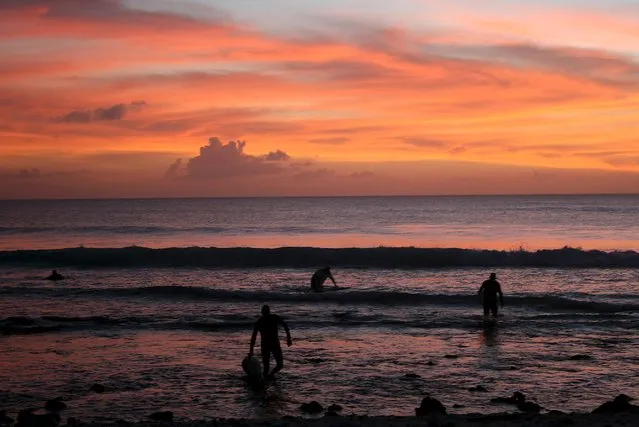
Kiritimati is a far-flung outpost of the Republic of Kiribati. The world's largest coral atoll, Kiritimati has just one flight a week to either Fiji or Hawaii, four-and-a-half hours in either direction. Tarawa, the capital of Kiribati lies nearly 3,300 km (2,000 miles) to the west – about three weeks by boat. No lawyers are based on Kiritimati and the High Court only comes once or twice a year to clear a backlog of the most serious cases, bringing a public lawyer for defendants who can't afford their own. (Photo by Lincoln Feast/Reuters)