Loading...
Done
“Untitled #5”. “Family scenes, vacation souvenirs, everyday life, suspended anywhere between truth and fiction. It is hard to figure out whether they are spontaneous or entirely staged”. (Photo by Weronika Gęsicka/The Guardian)

In Weronika Gęsicka’s unsettling images, American archive photography gets distorted into scenes that are both nightmarish yet somehow entirely plausible. Gęsicka is a guest artist at the Circulations festival for young European photographers, Paris, until 5 March. Here: “Untitled #5”. (Photo by Weronika Gęsicka/The Guardian)
Details
23 Jan 2017 10:15:00
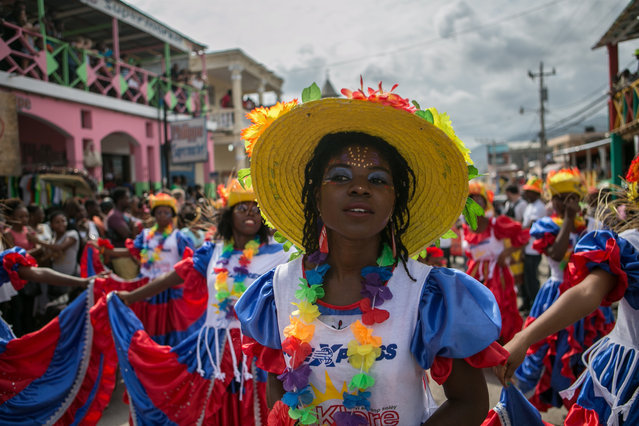
Haitians dressed in costumes dance during the Haitian National Carnival in Jacmel, Haiti, 19 February 2017. Locals and foreigners gathered to enjoy the colorful carnival in which parades are full of art, music and dance. (Photo by Bahare Khodabande/EPA)

Haitians dressed in costumes dance during the Haitian National Carnival in Jacmel, Haiti, 19 February 2017. Locals and foreigners gathered to enjoy the colorful carnival in which parades are full of art, music and dance. (Photo by Bahare Khodabande/EPA)
Details
22 Feb 2017 00:04:00
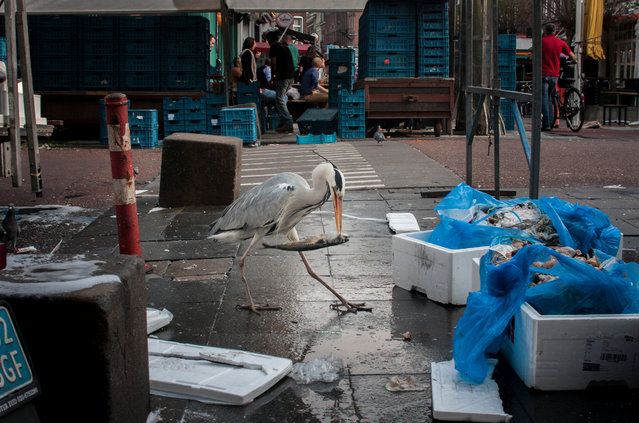
Hundreds of herons come to the city during winter to find food and shelter. (Photo by by Julie Hrudova/The Guardian)

Over the years a large population of grey herons have made an unlikely home in urban Amsterdam. Julie Hrudova documents how the birds integrate into city life. Here: Hundreds of herons come to the city during winter to find food and shelter. (Photo by by Julie Hrudova/The Guardian)
Details
07 Jun 2017 07:19:00
Ray Collins is a colorblind Australian coal miner who is in love with the ocean. He spends his off days photographing it. (Photo by Ray Collins)

Ray Collins is a colorblind Australian coal miner who is in love with the ocean. He spends his off days photographing it. Collins says he enjoys capturing the moment before the moment, the anticipation, not knowing how the end of the wave's journey will play out. (Photo by Ray Collins)
Details
29 Mar 2015 12:40:00
A restaurant in Chelsea is giving customers the ultimate post-pub treat – by selling a burger for £1,100. The world's most expensive burger, dubbed the “Glamburger”, is stuffed with a burger patty made from 220 grams of Kobe Wagyu beef minced with 60 grams of New Zealand venison and seasoned with smoked Himalayan salt. (Photo by Groupon)

A restaurant in Chelsea is giving customers the ultimate post-pub treat – by selling a burger for £1,100. The world's most expensive burger, dubbed the “Glamburger”, is stuffed with a burger patty made from 220 grams of Kobe Wagyu beef minced with 60 grams of New Zealand venison and seasoned with smoked Himalayan salt. (Photo by Groupon)
Details
15 Oct 2014 13:27:00
In a picture taken with an underwater camera, a couple stands in front of a Polynesian priest during their underwater wedding ceremony on October 25, 2014 in Bora-Bora, in French Polynesia. The ceremony lasts twenty minutes and costs around 2700 euros. (Photo by Ben Thouard/AFP Photo)

In a picture taken with an underwater camera, a couple stands in front of a Polynesian priest during their underwater wedding ceremony on October 25, 2014 in Bora-Bora, in French Polynesia. The ceremony lasts twenty minutes and costs around 2700 euros. (Photo by Ben Thouard/AFP Photo)
Details
12 Nov 2014 14:15:00
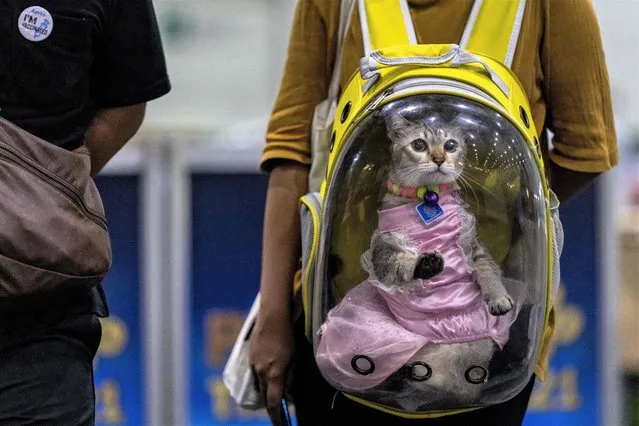
A cat wearing a dress is carried around in a transparent rucksack at the annual Pet Expo Thailand 2021 in Bangkok on November 25, 2021. (Photo by Jack Taylor/AFP Photo)

A cat wearing a dress is carried around in a transparent rucksack at the annual Pet Expo Thailand 2021 in Bangkok on November 25, 2021. (Photo by Jack Taylor/AFP Photo)
Details
10 Dec 2021 09:05:00
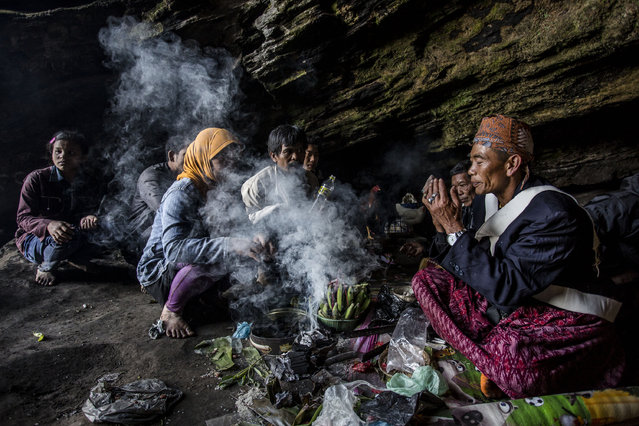
A Tenggerese shaman praying for worshippers at Widodaren cave during the Tenggerese Hindu Yadnya Kasada festival on July 31, 2015 in Probolinggo, East Java, Indonesia. The festival is the main festival of the Tenggerese people and lasts about a month. On the fourteenth day, the Tenggerese make the journey to Mount Bromo to make offerings of rice, fruits, vegetables, flowers and livestock to the mountain gods by throwing them into the volcano's caldera. (Photo by Ulet Ifansasti/Getty Images)

A Tenggerese shaman praying for worshippers at Widodaren cave during the Tenggerese Hindu Yadnya Kasada festival on July 31, 2015 in Probolinggo, East Java, Indonesia. The festival is the main festival of the Tenggerese people and lasts about a month. On the fourteenth day, the Tenggerese make the journey to Mount Bromo to make offerings of rice, fruits, vegetables, flowers and livestock to the mountain gods by throwing them into the volcano's caldera. The origin of the festival lies in the 15th century when a princess named Roro Anteng started the principality of Tengger with her husband Joko Seger, and the childless couple asked the mountain Gods for help in bearing children. The legend says the Gods granted them 24 children but on the provision that the 25th must be tossed into the volcano in sacrifice. The 25th child, Kesuma, was finally sacrificed in this way after initial refusal, and the tradition of throwing sacrifices into the caldera to appease the mountain Gods continues today. (Photo by Ulet Ifansasti/Getty Images)

Details
01 Aug 2015 12:07:00