Loading...
Done
A tourist struggles in the water, before standing up and wading away, after a wave strengthened by the influence of Typhoon Dujuan hit a river bank in Hangzhou, Zhejiang province September 29, 2015. (Photo by Reuters/China Daily)

A tourist struggles in the water, before standing up and wading away, after a wave strengthened by the influence of Typhoon Dujuan hit a river bank in Hangzhou, Zhejiang province September 29, 2015. (Photo by Reuters/China Daily)
Details
01 Oct 2015 08:05:00
Nyaueth by Peter Zelewski – £2,000 third prize winner. This was taken near London’s Oxford Street as part of Zelewski’s series Beautiful Strangers. Zelewski explains: ‘The aim of Beautiful Strangers is to challenge the concept of traditional beauty with a series of spontaneous street portraits of everyday citizens who show character, uniqueness and a special inner quality’. (Photo by Peter Zelewski/Taylor Wessing Portrait Prize 2015)

Nyaueth by Peter Zelewski – £2,000 third prize winner. This was taken near London’s Oxford Street as part of Zelewski’s series Beautiful Strangers. Zelewski explains: ‘The aim of Beautiful Strangers is to challenge the concept of traditional beauty with a series of spontaneous street portraits of everyday citizens who show character, uniqueness and a special inner quality’. (Photo by Peter Zelewski/Taylor Wessing Portrait Prize 2015)
Details
23 Nov 2015 08:00:00
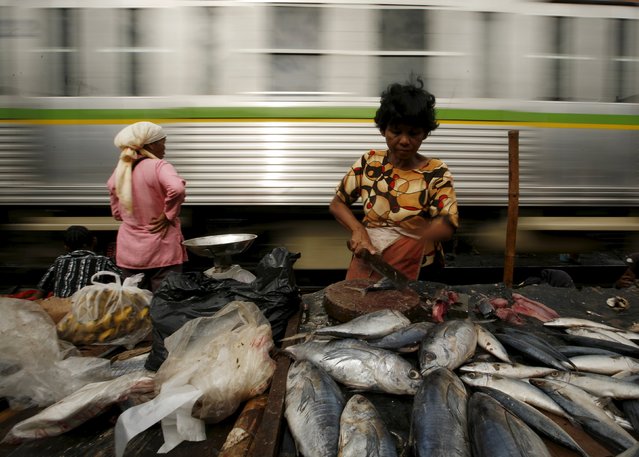
A woman chops a fish at her stall as a train passes by at a morning market near Duri train station in Jakarta in this February 12, 2009 file photo. (Photo by Reuters/Beawiharta)

A woman chops a fish at her stall as a train passes by at a morning market near Duri train station in Jakarta in this February 12, 2009 file photo. (Photo by Reuters/Beawiharta)
Details
01 Mar 2016 10:14:00
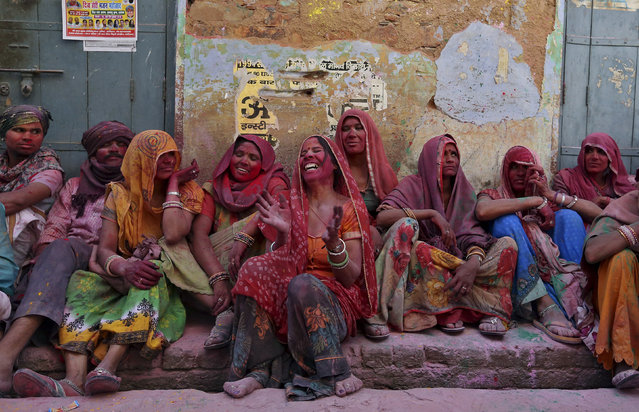
Hindu devotees laugh as they watch the religious festival of Lathmar Holi, where women beat the men with sticks, in the town of Barsana in the Uttar Pradesh region of India, March 17, 2016. (Photo by Cathal McNaughton/Reuters)

Hindu devotees laugh as they watch the religious festival of Lathmar Holi, where women beat the men with sticks, in the town of Barsana in the Uttar Pradesh region of India, March 17, 2016. During Lathmar Holi the women of Barsana beat the men from Nandgaon, the hometown of Krishna, with wooden sticks in response to their teasing. (Photo by Cathal McNaughton/Reuters)
Details
18 Mar 2016 11:35:00
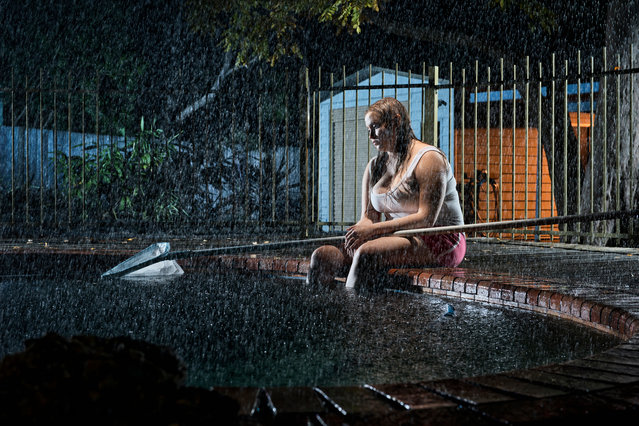
Each of them appears caught in contemplation or ennui as everyday life goes on around them. (Photo by Alec Dawson)

In his series of untitled photographs Nobody Claps Anymore, the Mexican-American photographer Alec Dawson portrays ordinary people in their homes in a downbeat, ultra-stylised manner. Staring into space as they watch TV or water the garden, the real-life subjects of photographer hint at vast reserves of boredom and regret. (Photo by Alec Dawson)
Details
26 Mar 2016 12:53:00
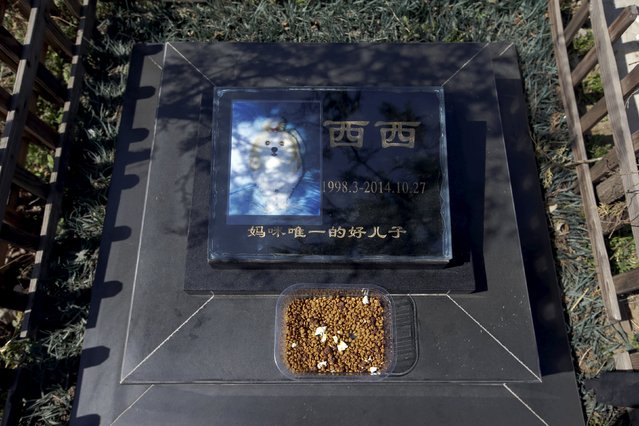
Food is placed on the tomb of pet dog Xixi at Baifu pet cemetery ahead of the Qingming Festival on the outskirts of Beijing, China March 26, 2016. The Chinese characters on the gravestone read: “Mommy's only good son”. (Photo by Jason Lee/Reuters)

Food is placed on the tomb of pet dog Xixi at Baifu pet cemetery ahead of the Qingming Festival on the outskirts of Beijing, China March 26, 2016. The Chinese characters on the gravestone read: “Mommy's only good son”. (Photo by Jason Lee/Reuters)
Details
01 Apr 2016 12:05:00
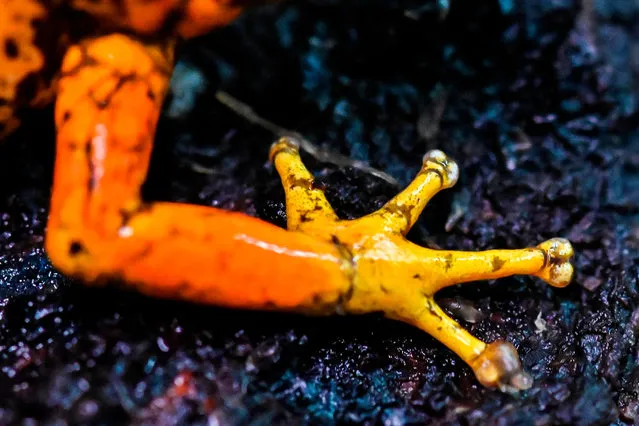
A leg of a “diablito” frog (Oophaga sylvatica) is photographed in a laboratory at a laboratory in the zoo of Cali, Colombia, on July 19, 2019. Colombia is the second country with the largest number of amphibians in the world after Brazil. More than 40% of amphibian species worldwide are in danger of extinction. (Photo by Luis Robayo/AFP Photo)

A leg of a “diablito” frog (Oophaga sylvatica) is photographed in a laboratory at a laboratory in the zoo of Cali, Colombia, on July 19, 2019. Colombia is the second country with the largest number of amphibians in the world after Brazil. More than 40% of amphibian species worldwide are in danger of extinction. (Photo by Luis Robayo/AFP Photo)
Details
28 Nov 2020 00:03:00
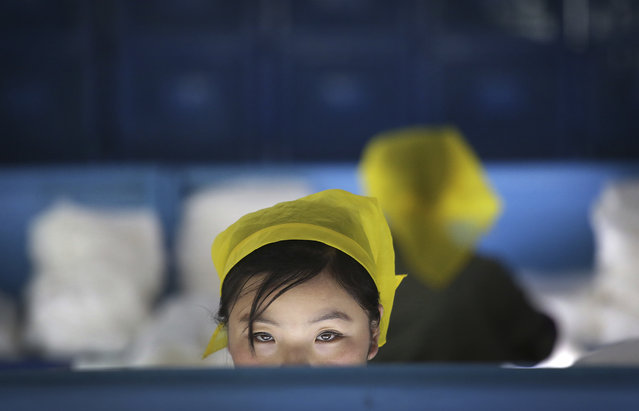
In this Friday, January 6, 2017, photo, a North Korean woman working at the Kim Jong Suk Silk Mill looks up from her workstation in Pyongyang, North Korea. The silk mill, named after North Korean leader Kim Jong Un's grandmother, is where 1,600 workers – mostly women – sort and process silkworms to produce silk thread that officials at the Pyongyang factory say is made into roughly 200 tons of silk a year. (Photo by Wong Maye-E/AP Photo)

In this Friday, January 6, 2017, photo, a North Korean woman working at the Kim Jong Suk Silk Mill looks up from her workstation in Pyongyang, North Korea. The silk mill, named after North Korean leader Kim Jong Un's grandmother, is where 1,600 workers – mostly women – sort and process silkworms to produce silk thread that officials at the Pyongyang factory say is made into roughly 200 tons of silk a year. (Photo by Wong Maye-E/AP Photo)
Details
17 Jan 2017 12:01:00