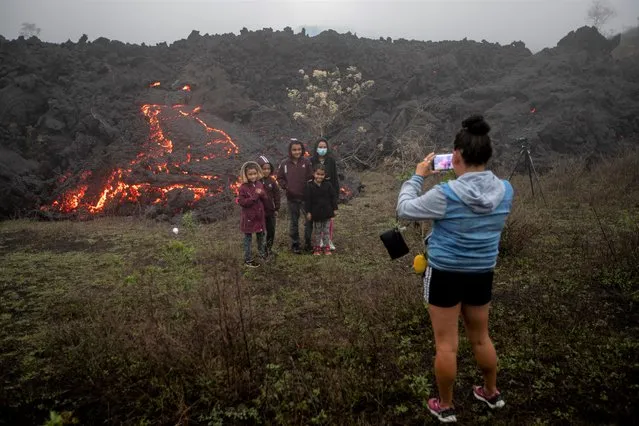
Family members pose for photos near lava flowing from Pacaya Volcano near El Patrocinio village in San Vicente Pacaya, Guatemala, Friday, April 16, 2021. (Photo by Moises Castillo/AP Photo)
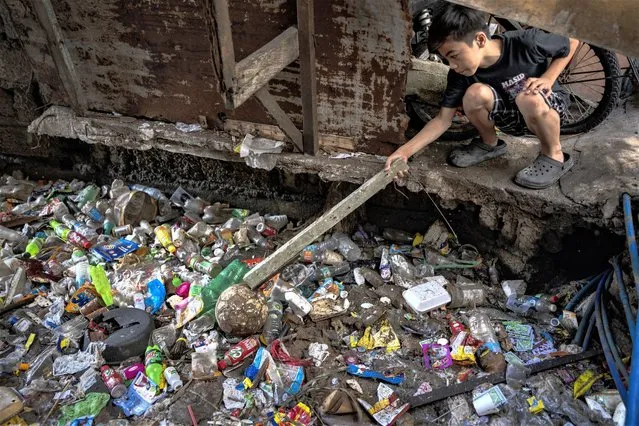
A boy reaches for a ball on a creek clogged with plastic waste on April 15, 2023 in Caloocan, Metro Manila, Philippines. (Photo by Ezra Acayan/Getty Images)
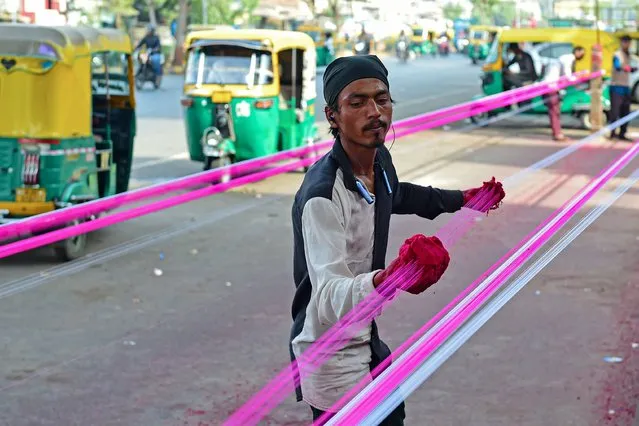
A man applies coats of glass powder to kite strings ahead of the Hindu festival “Uttarayan” in Ahmedabad on December 21, 2023. (Photo by Sam Panthaky/AFP Photo)
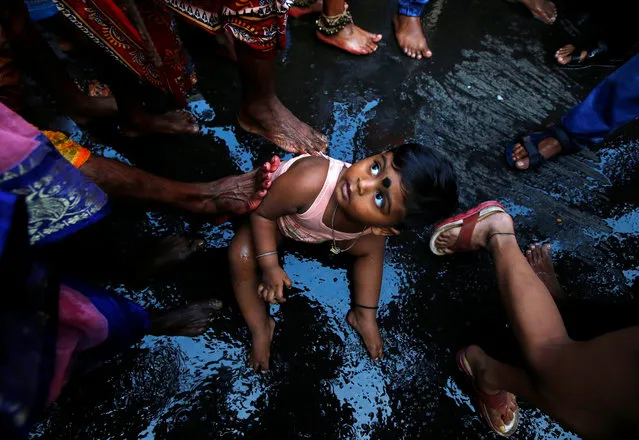
Hindu devotees (not pictured) touch a child with their feet as part of a ritual to bless him during a religious procession held to mark the Gajan festival in Kolkata, India, April 13, 2018. (Photo by Rupak De Chowdhuri/Reuters)
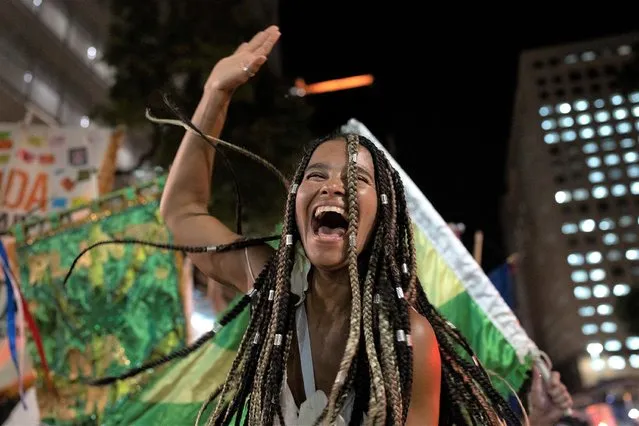
A reveller of a street party known as blocos, dances during a protest against restrictions by city officials in Rio de Janeiro, Brazil, Wednesday, April 13, 2022. City Hall has banned the street parties during Carnival celebrations, which were delayed by almost two months due to the pandemic. (Photo by Silvia Izquierdo/AP Photo)
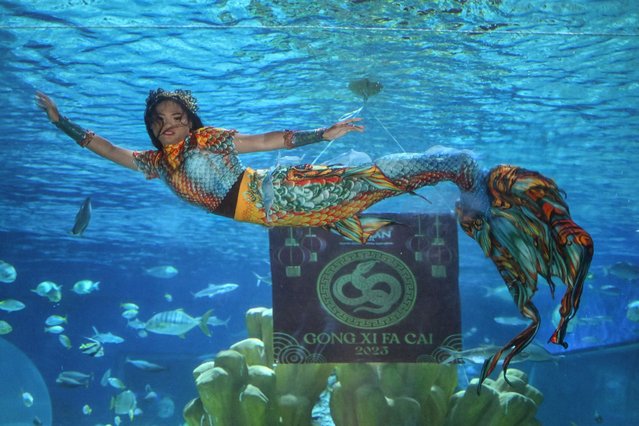
A diver dressed as “Mermaid of the Serpent Depths” performs in front of a sign marking the Lunar New Year of the Snake inside an aquarium at Manila Ocean Park on January 28, 2025. (Photo by Jam Sta Rosa/AFP Photo)
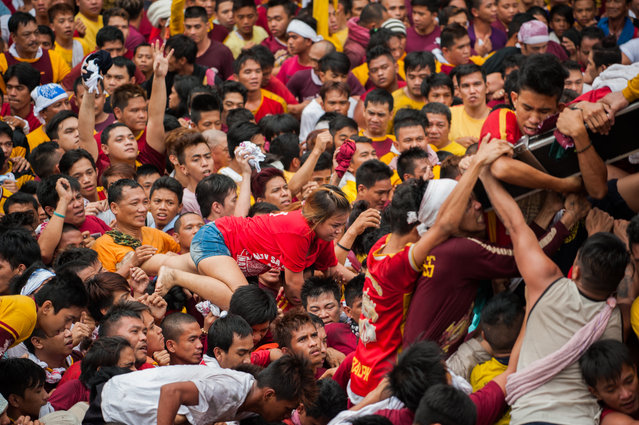
Black Nazarene devotees clamber on top of one another to to touch the cross on January 9, 2015 in Manila, Philippines. The Feast of the Black Nazarene culminates in a day long procession on January 9 as barefoot devotees march to see and touch the image of the Black Nazarene. The Black Nazarene is a dark wood sculpture of Jesus brought to the Philippines in 1606 from Spain and considered miraculous by Filipino devotees. The event falls a week ahead of the visit of Pope Francis who will travel to Leyte and Manila during his visit to the Philippines from January 15–19. The visit is expected to attract crowds in the millions as Filipino Catholics flock to catch a glimpse of the leader of the Catholic Church. The Philippines is the only Catholic majority nation in Asia with around 90 percent of the population professing the faith. (Photo by Dondi Tawatao/Getty Images)
Praia du Forte, Bahia. “This was the lead picture for a National Geographic story on Bahia, because it was both mysterious as well as a “geography” picture showing where the slaves arrived from Nigeria. Beach pictures seem like they should be easy to take, but for me they are actually quite difficult. Too easy to fall into cliche. When I saw the kid coming on the horse, I quickly ran to see if I could make something with a woman in a bikini that was not a bikini shot”. (Photo by David Alan Harvey/The Guardian)