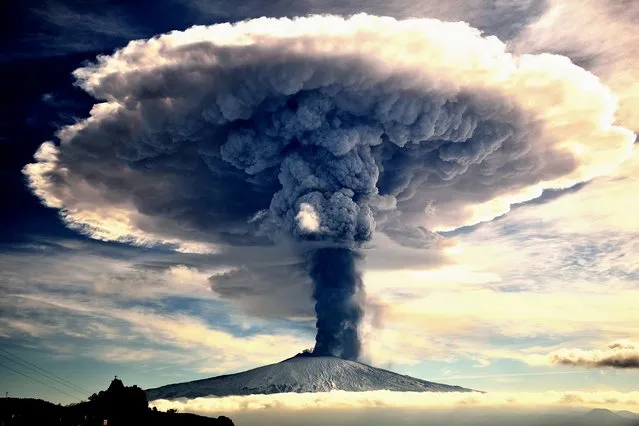
“The power of nature”. Magma, ash and gas erupt from Mount Etna in December 2015, rising to a height of several kilometres. Winner: Nature. (Photo by Giuseppe Mario Famiani/SIPA Contest)
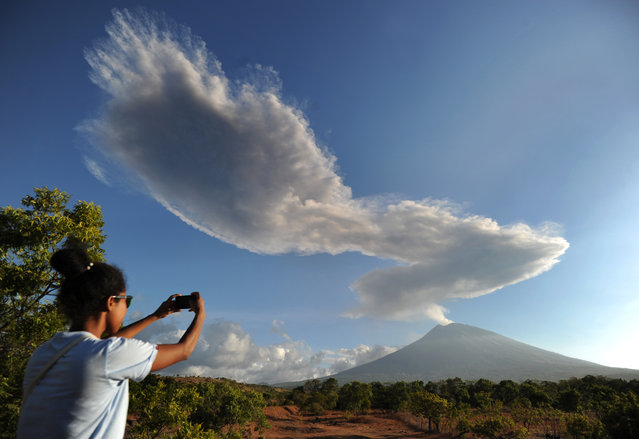
A woman takes photos as Mount Agung volcano sends up another plume of smoke, seen from the Kubu subdistrict in Karangasem Regency on Indonesia's resort island of Bali on July 5, 2018. Mount Agung roared to life again on July 2, belching a plume of ash 2,000 metres (6,500 feet) high, as well as temporarily shuttering the airport and grounding hundreds of flights after erupting the week before. (Photo by Sonny Tumbelaka/AFP Photo)
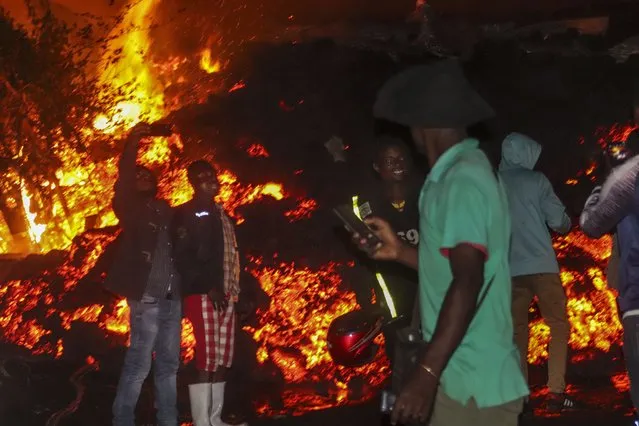
People stand and take selfies in front of lava from the eruption of Mount Nyiragongo, in Buhene, on the outskirts of Goma, Congo in the early hours of Sunday, May 23, 2021. Congo's Mount Nyiragongo erupted for the first time in nearly two decades Saturday, turning the night sky a fiery red and sending lava onto a major highway as panicked residents tried to flee Goma, a city of nearly 2 million. (Photo by Justin Kabumba/AP Photo)
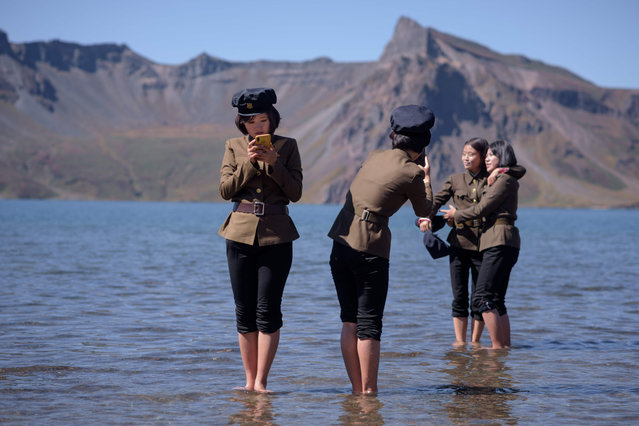
In a photo taken on September 11, 2019, North Korean students pose for photos in Chonji lake, or “Heaven lake”, as they visit the crater of Mount Paektu, near Samjiyon. Mount Paektu has long been considered the spiritual birthplace of the Korean nation and is a place of pilgrimage for tens of thousands of North Koreans every year, who are trained from birth to revere their leaders. (Photo by Ed Jones/AFP Photo)
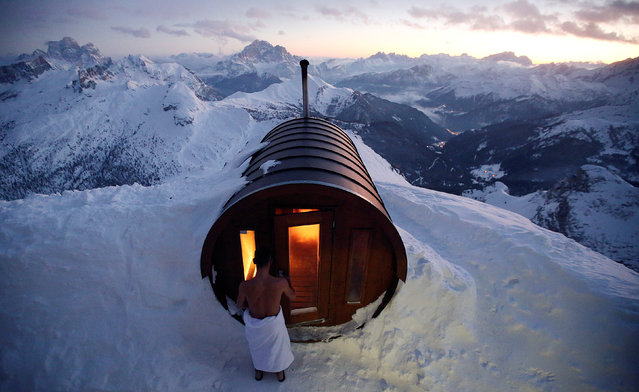
A person enter in sauna on the peak of Mount Lagazuoi in Cortina D'Ampezzo, Italy January 16, 2018. Picture taken January 16, 2017. (Photo by Stefano Rellandini/Reuters)
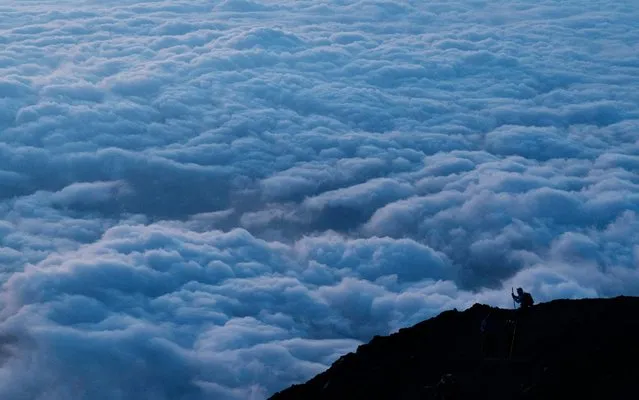
In this Tuesday, August 27, 2019, file photo, a climber stops to take pictures of clouds while climbing towards the summit of Mount Fuji to watch the sunrise, in Japan. (Photo by Jae C. Hong/AP Photo/File)
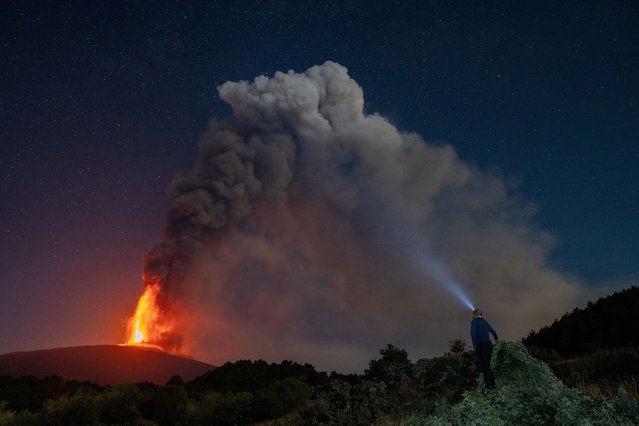
A person looks on as lava and plumes of smoke rise from a crater of Mount Etna, Europe's most active volcano, Italy on July 15, 2024. (Photo by Giuseppe Di Stefano/Etna Walk via Reuters)
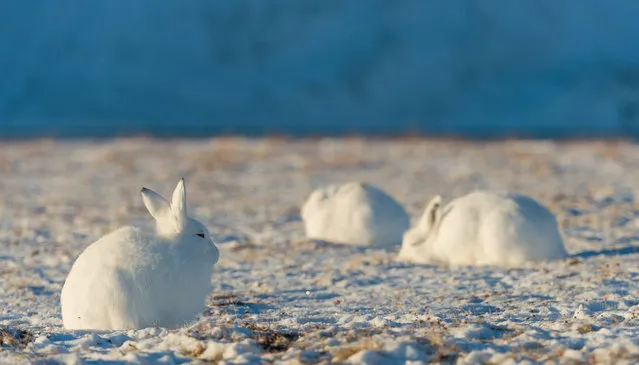
The arctic hare, or polar rabbit, is a species of hare which is adapted largely to polar and mountainous habitats. The arctic hare survives with a thick coat of fur and usually digs holes in the ground or under snow to keep warm and sleep. Arctic hares look like rabbits but have shorter ears, are taller when standing, and, unlike rabbits, can thrive in cold climates. They can travel together with many other hares, sometimes huddling with dozens or more, but are usually found alone, taking, in some cases, more than one partner. The arctic hare can run up to 60 kilometres per hour (40 mph). Its predators include the arctic wolf, arctic fox, and ermine.