Loading...
Done
“The ripening crops eloquently signify that the scarecrow’s work is done. Few remain to see their task fulfilled because if they become entangled in the harvesting machinery it causes serious damage”. (Photo by Colin Garratt)

When Colin Garratt went to photograph the traditional sentinels of the British countryside, he found they ranged from the dapper to the downright sinister. “They are not from the anaesthetised world of the craft fair”, says Colin Garratt, “but are the direct descendants of the ancient spectres which have haunted the landscape for centuries”. The Scarecrow Exhibition is at Geddes Gallery, London, from 25 to 30 March. (Photo by Colin Garratt)
Details
29 Mar 2016 11:46:00
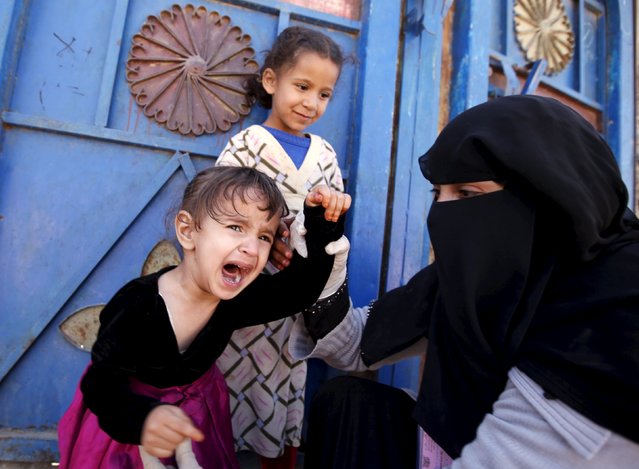
A girl reacts as she receives polio vaccine drops during a house-to-house vaccination campaign in Yemen's capital Sanaa, November 10, 2015. (Photo by Khaled Abdullah/Reuters)

A girl reacts as she receives polio vaccine drops during a house-to-house vaccination campaign in Yemen's capital Sanaa, November 10, 2015. (Photo by Khaled Abdullah/Reuters)
Details
13 Nov 2015 08:03:00
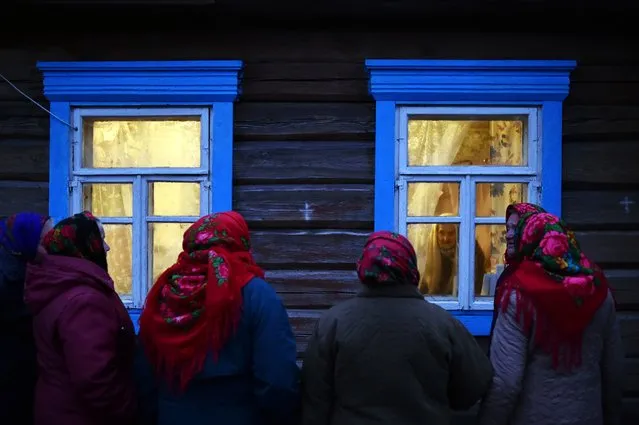
Belarusian villagers celebrate the Christmas carol rite (Kalyady) in the village of Danilevichy, some 320 km south of Minsk on January 7, 2020. Kalyady is an ancient pagan holiday originally celebrated on winter solstice. Dressed-up people walk from house to house singing, dancing, eating and drinking with their neighbours. (Photo by Sergei Gapon/AFP Photo)

Belarusian villagers celebrate the Christmas carol rite (Kalyady) in the village of Danilevichy, some 320 km south of Minsk on January 7, 2020. Kalyady is an ancient pagan holiday originally celebrated on winter solstice. Dressed-up people walk from house to house singing, dancing, eating and drinking with their neighbours. (Photo by Sergei Gapon/AFP Photo)
Details
25 Mar 2020 00:01:00
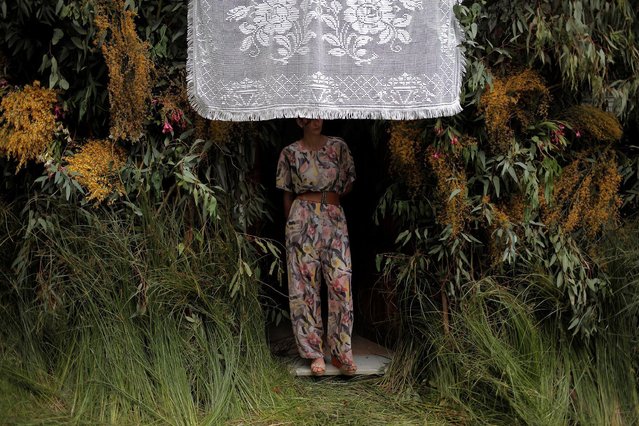
A woman looks out of her house with a decorated doorway during Corpus Christi day in Zahara de la Sierra, southern Spain, May 29, 2016. The village of Zahara de la Sierra celebrated the feast of Corpus Christi (or Body of Christ in Latin) by covering the streets and facades of houses with the branches of trees and grass. (Photo by Jon Nazca/Reuters)

A woman looks out of her house with a decorated doorway during Corpus Christi day in Zahara de la Sierra, southern Spain, May 29, 2016. The village of Zahara de la Sierra celebrated the feast of Corpus Christi (or Body of Christ in Latin) by covering the streets and facades of houses with the branches of trees and grass. (Photo by Jon Nazca/Reuters)
Details
30 May 2016 08:49:00
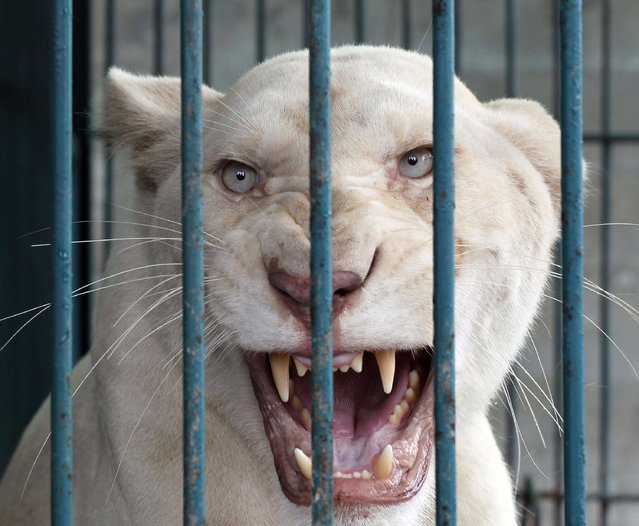
A lioness bares its teeth inside an enclosure after a raid at a zoo-like house on the outskirts of Bangkok, Thailand Monday, June 10, 2013. Thai police and forestry officials searched and seized a number of imported and endangered animals including 14 lions from Africa and arrested the house's owner. (Photo by Apichart Weerawong/AP Photo)

A lioness bares its teeth inside an enclosure after a raid at a zoo-like house on the outskirts of Bangkok, Thailand Monday, June 10, 2013. Thai police and forestry officials searched and seized a number of imported and endangered animals including 14 lions from Africa and arrested the house's owner. (Photo by Apichart Weerawong/AP Photo)
Details
13 Jun 2013 09:30:00
Aerial Views by  Ken Hong Leung

H. Leung has been acclaimed since 1952 for his brilliant artistic style. A master of oil on canvas, he achieves a haunting quality in his works that absorbs the viewer’s emotions like an irresistible melody. His brush, like a wand, seems to weave a sense of enchantment. In his landscapes and waterside villages, visions of Shangri-La come to mind, superbly mixed with subtle orchestrations of peacefulness and drama.

Technique is both a creative and expressive force in the art of H. Leung. Distinctively semi-abstract, his images allow the viewer’s eye to supply what is merely suggested. This very involving result adds power not only to the impact of his designs, it increases the joy that owning his works provides.
Details
26 Aug 2012 12:10:00
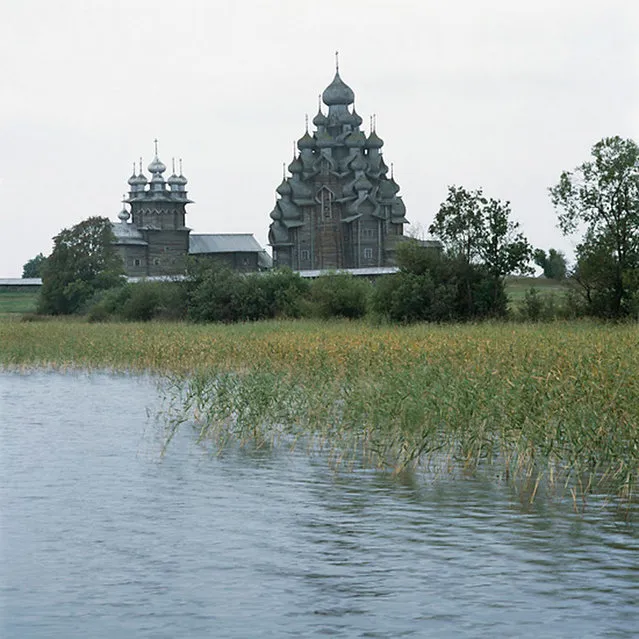
Wooden Churches - Travelling In The Russian North By Richard Davies Part 1

While communism, collectivism, worms, dry rot and casual looting failed to destroy the majestic wooden churches of Russia, it may be ordinary neglect that finally does them in. Dwindled now to several hundred remaining examples, these glories of vernacular architecture lie scattered amid the vastness of the world’s largest country. Just over a decade ago, Richard Davies, a British architectural photographer, struck out on a mission to record the fragile and poetic structures. Austerely beautiful and haunting, “Wooden Churches: Traveling in the Russian North” (White Sea Publishing; $132) is the result. Covering thousands of miles, Mr. Davies described how he and the writer Matilda Moreton tracked down the survivors from among the thousands of onion-domed structures built after Prince Vladimir converted to Christianity in 988.

Details
25 Nov 2013 12:47:00
An installation with a copy of a tank is seen at a villager's house in the village of Vits, Belarus November 8, 2016. (Photo by Vasily Fedosenko/Reuters)

An installation with a copy of a tank is seen at a villager's house in the village of Vits, Belarus November 8, 2016. (Photo by Vasily Fedosenko/Reuters)
Details
09 Nov 2016 06:32:00