Bluey ballon flies as Spirit of America cheerleaders paricipate in the 96th Macy's Thanksgiving Day Parade in Manhattan, New York City, U.S., November 24, 2022. (Photo by Andrew Kelly/Reuters)
Health workers in personal protective equipments (PPE) carrying Covid-19 coronavirus testing swabs and tubes are seen on bicycles along a street in Beijing on November 24, 2022. (Photo by Jade Gao/AFP Photo)
Divers perform underwater “Flying Apsaras” dance at Nanjing Underwater World on September 20, 2023 in Nanjing, Jiangsu Province of China. (Photo by Yang Bo/China News Service/VCG via Getty Images)
A model takes a picture of photographers outside the Anna Sui show at the Strand Rare Book Room in New York on February 10, 2024. (Photo by Jeenah Moon for The Washington Post)
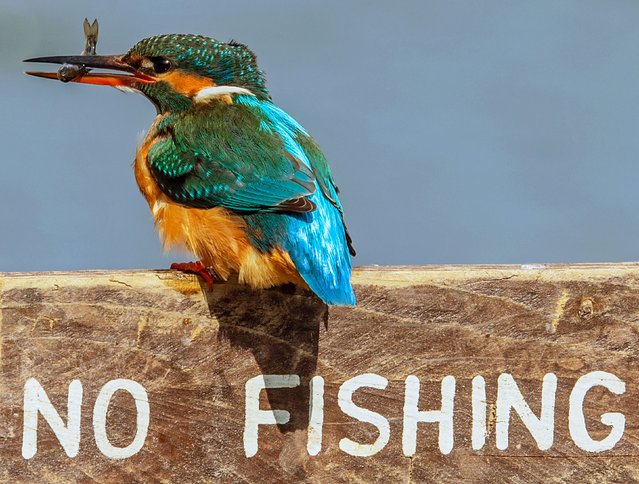
A kingfisher ignores the “no fishing” sign after catching food at Teddesley Park in Staffordshire, England, on Saturday, April 5, 2025. (Photo by Stuart Brock/Anadolu/Getty Images)
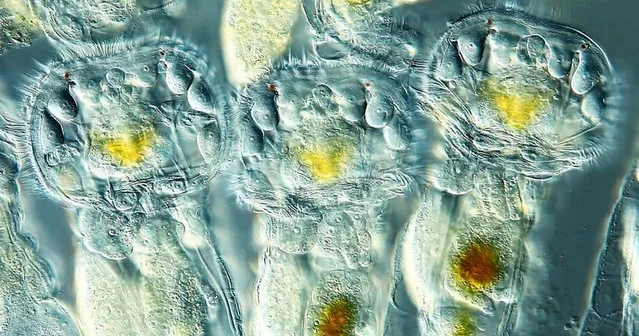
Microscope images forge an extraordinary bond between science and art, said Hidenao Tsuchiya, Olympus America's Vice President and General Manager for the Scientific Equipment Group. We founded this competition to focus on the fascinating stories coming out of today's life science research laboratories. The thousands of images that people have shared with the competition over the years reflect some of the most exciting work going on in research today – work that can help shed light on the living universe and ultimately save lives. We look at BioScapes and these beautiful images as sources of education and inspiration to us and the world
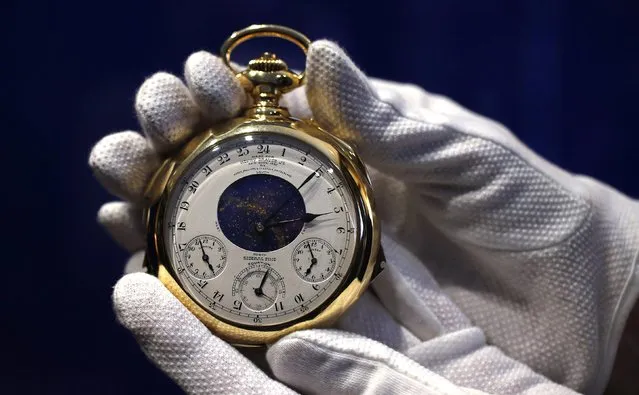
What makes a watch the most valuable in the world? It’s supercomplicated – literally. In 1925 banker Henry Graves Jr. (considered the greatest watch collector of the 20th century) commissioned Patek Philippe to create a unique gold pocket watch. When Graves finally received it – eight years later – it was the most complex timepiece ever created by human hands... (Photo by Suzanne Plunkett/Reuters)
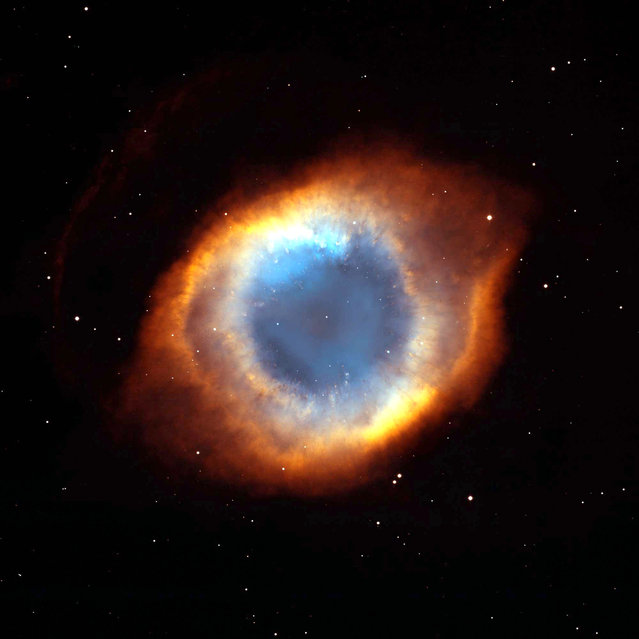
A coil-shaped Helix Nebula showing a fine web of filamentary “bicycle-spoke” features embedded in the colorful red and blue ring of gas. At 650 light-years away, the Helix is one of the nearest planetary nebulae to Earth. A planetary nebula is the glowing gas around a dying, Sun-like star. (Photo by Reuters/NASA)