Loading...
Done
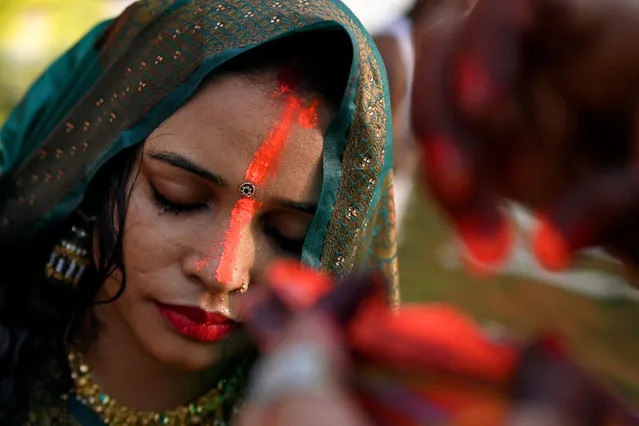
A devotee offers prayers to Sun God while standing inside an artificial pond near the banks of river Yamuna on the occasion of the Hindu festival of “Chhath Puja” in New Delhi on October 30, 2022. (Photo by Sajjad Hussain/AFP Photo)

A devotee offers prayers to Sun God while standing inside an artificial pond near the banks of river Yamuna on the occasion of the Hindu festival of “Chhath Puja” in New Delhi on October 30, 2022. (Photo by Sajjad Hussain/AFP Photo)
Details
08 Nov 2022 04:18:00
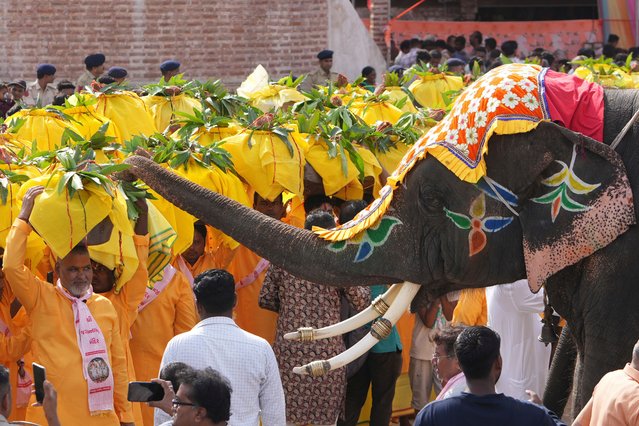
An elephant tries to eat leaves during a religious procession called Jal Yatra, ahead of the annual Rath Yatra, or chariot procession of Hindu god Lord Jagannath, in Ahmedabad, India, Wednesday, June 11, 2025. (Photo by Ajit Solanki/AP Photo)

An elephant tries to eat leaves during a religious procession called Jal Yatra, ahead of the annual Rath Yatra, or chariot procession of Hindu god Lord Jagannath, in Ahmedabad, India, Wednesday, June 11, 2025. (Photo by Ajit Solanki/AP Photo)
Details
17 Jul 2025 03:09:00
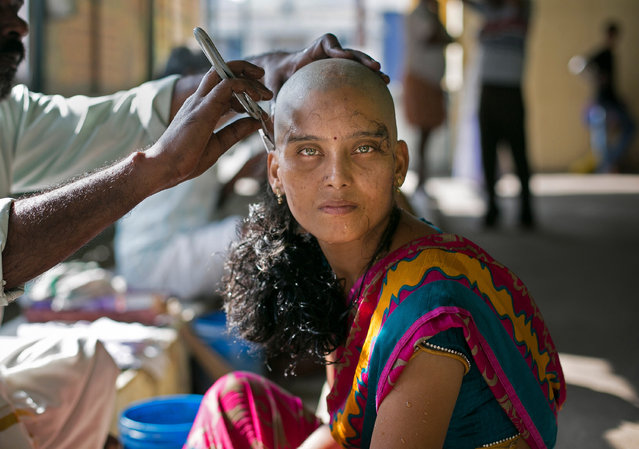
28 year old Rupa has her hair shaven to donate to the Gods at the Thiruthani Murugan Temple November 10, 2016 in Thiruttani, India. Rupa donated her hair with the wish that her daughter's illness is cured. The process of shaving ones hair and donating it to the Gods is known as tonsuring. It is common for Hindu believers to tonsure their hair at a temple as a young child, and also to celebrate a wish coming true, such as the birth of a baby or the curing of an illness. The “temple hair”, as it's known, is then auctioned off to a processing plant and then sold as pricey wigs and weaves in the US, Europe and Africa. (Photo by Allison Joyce/Getty Images)

28 year old Rupa has her hair shaven to donate to the Gods at the Thiruthani Murugan Temple November 10, 2016 in Thiruttani, India. Rupa donated her hair with the wish that her daughter's illness is cured. The process of shaving ones hair and donating it to the Gods is known as tonsuring. It is common for Hindu believers to tonsure their hair at a temple as a young child, and also to celebrate a wish coming true, such as the birth of a baby or the curing of an illness. The “temple hair”, as it's known, is then auctioned off to a processing plant and then sold as pricey wigs and weaves in the US, Europe and Africa. (Photo by Allison Joyce/Getty Images)
Details
21 Nov 2016 10:30:00
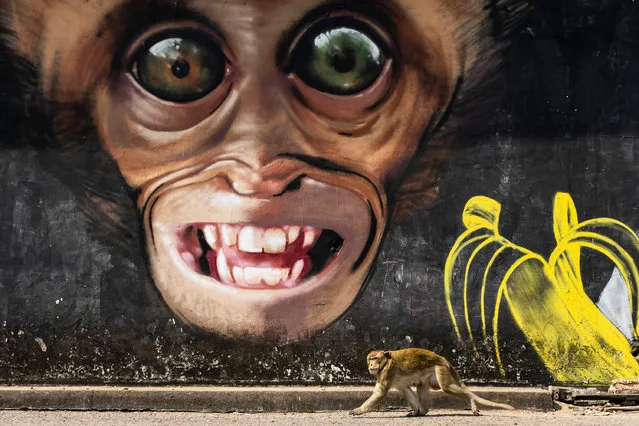
Natural world and wildlife shortlist. Lop Buri in Thailand is home to hundreds of macaques, which local residents consider to be disciples of the Hindu god Hanuman. While some people love them, others fear or even hate them. Despite the inconvenience they often cause, the macaques are generally respected and considered sacred. (Photo by Joan de la Malla/Sony World Photography Awards)

Natural world and wildlife shortlist. Lop Buri in Thailand is home to hundreds of macaques, which local residents consider to be disciples of the Hindu god Hanuman. While some people love them, others fear or even hate them. Despite the inconvenience they often cause, the macaques are generally respected and considered sacred. (Photo by Joan de la Malla/Sony World Photography Awards)
Details
15 Feb 2020 00:05:00
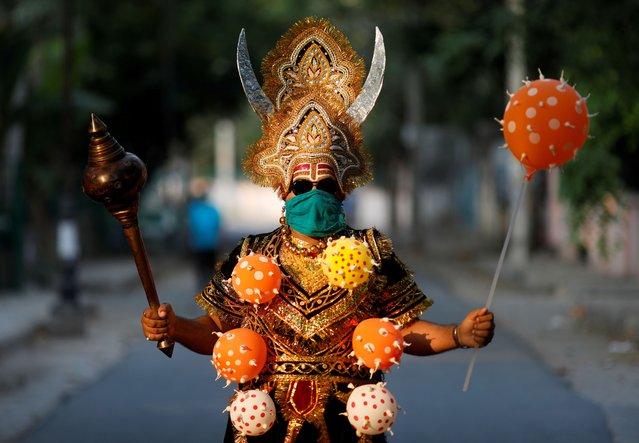
A local resident dressed as Yamraj or Hindu god of death, wearing a novel coronavirus-themed balloon necklace, gestures as he poses during an awareness about social distancing and staying at home organised by Delhi police during a nationwide lockdown to slow the spreading of the coronavirus disease (COVID-19), in New Delhi, India, April 28, 2020. (Photo by Adnan Abidi/Reuters)

A local resident dressed as Yamraj or Hindu god of death, wearing a novel coronavirus-themed balloon necklace, gestures as he poses during an awareness about social distancing and staying at home organised by Delhi police during a nationwide lockdown to slow the spreading of the coronavirus disease (COVID-19), in New Delhi, India, April 28, 2020. (Photo by Adnan Abidi/Reuters)
Details
04 May 2020 00:01:00
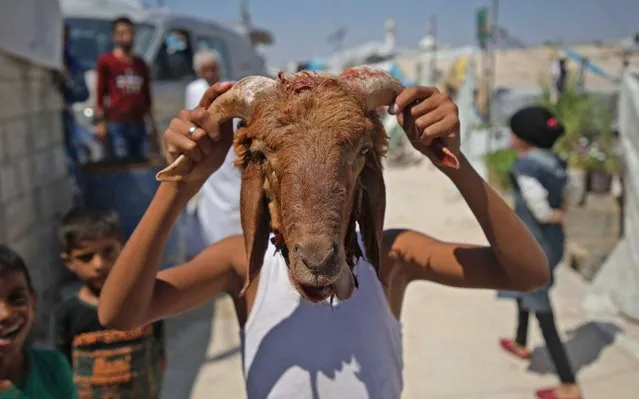
A Syrian boy plays with the head of a sacrificed sheep at a DIP camp for Interally Displaced Persons near the town of Aqrabat in Syria's northern Idlib province on August 12, 2019. Known as the “big” festival, Eid Al-Adha is celebrated each year by Muslims sacrificing various animals according to religious traditions, including cows, camels, goats and sheep. The festival marks the end of the Hajj pilgrimage to Mecca and commemorates Prophet Abraham's readiness to sacrifice his son to show obedience to God. (Photo by Aaref Watad/AFP Photo)

A Syrian boy plays with the head of a sacrificed sheep at a DIP camp for Interally Displaced Persons near the town of Aqrabat in Syria's northern Idlib province on August 12, 2019. Known as the “big” festival, Eid Al-Adha is celebrated each year by Muslims sacrificing various animals according to religious traditions, including cows, camels, goats and sheep. The festival marks the end of the Hajj pilgrimage to Mecca and commemorates Prophet Abraham's readiness to sacrifice his son to show obedience to God. (Photo by Aaref Watad/AFP Photo)
Details
15 Aug 2019 00:05:00
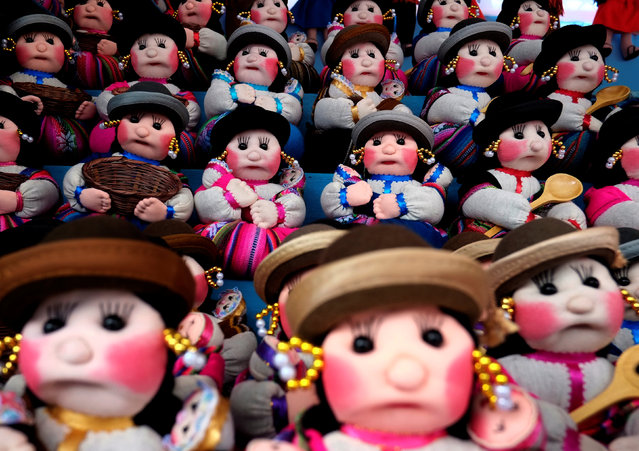
Aymara dolls are seen during the “Alasitas” fair, where people buy miniature versions of goods they hope to acquire in real life, in La Paz, Bolivia, January 24, 2017. Shoppers fill their baskets with miniature versions of things they desire – everything from cars, houses computers – to give to Ekeko the God of abundance, in the hope he will being therm good fortune. And it is all carried out with a priest’s blessing. Originally, the Festival of Alasitas was a celebration by farmers praying for plentiful crops.Today, the meaning amounts to the same only locals hope for more material goods. (Photo by David Mercado/Reuters)

Aymara dolls are seen during the “Alasitas” fair, where people buy miniature versions of goods they hope to acquire in real life, in La Paz, Bolivia, January 24, 2017. Shoppers fill their baskets with miniature versions of things they desire – everything from cars, houses computers – to give to Ekeko the God of abundance, in the hope he will being therm good fortune. (Photo by David Mercado/Reuters)
Details
26 Jan 2017 12:56:00
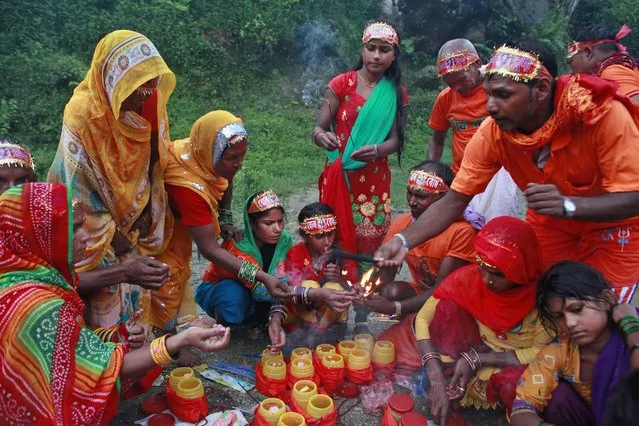
Hindu devotees perform rituals during the Bol Bom pilgrimage, on the outskirts of Kathmandu, Nepal, Monday, August 8, 2016. During this pilgrimage, devotees walk miles barefooted before offering water collected from Bagmati river, at the Pashupatinath temple in Katmandu. Shravan Somwar or Monday of Hindu calendar month of Shravan is considered auspicious for offering prayers to Lord Shiva, the god of destruction. (Photo by Niranjan Shrestha/AP Photo)

Hindu devotees perform rituals during the Bol Bom pilgrimage, on the outskirts of Kathmandu, Nepal, Monday, August 8, 2016. During this pilgrimage, devotees walk miles barefooted before offering water collected from Bagmati river, at the Pashupatinath temple in Katmandu. Shravan Somwar or Monday of Hindu calendar month of Shravan is considered auspicious for offering prayers to Lord Shiva, the god of destruction. (Photo by Niranjan Shrestha/AP Photo)
Details
09 Aug 2016 12:42:00