Loading...
Done
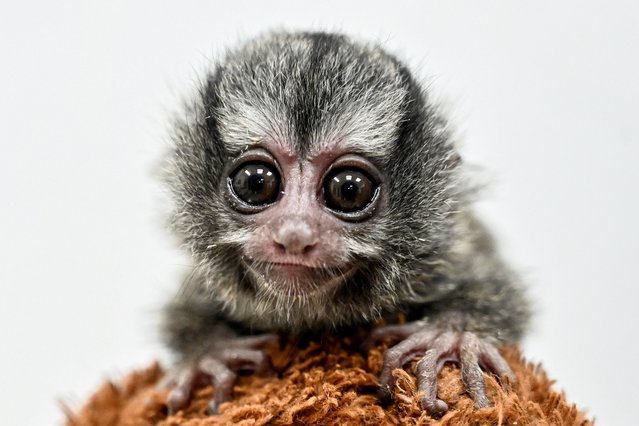
A grey-bellied Night Monkey (Aotus Lemurinus) plays with a teddy bear at the veterinary clinic of the Cali Zoo in Cali, Colombia on January 27, 2020. They monkey is being raised by personnel of the Cali Zoo after a worker found it near the complex. Apparently it fall from a tree with his father who had health problems. (Photo by Luis Robayo/AFP Photo)

A grey-bellied Night Monkey (Aotus Lemurinus) plays with a teddy bear at the veterinary clinic of the Cali Zoo in Cali, Colombia on January 27, 2020. They monkey is being raised by personnel of the Cali Zoo after a worker found it near the complex. Apparently it fall from a tree with his father who had health problems. (Photo by Luis Robayo/AFP Photo)
Details
02 Feb 2020 00:03:00
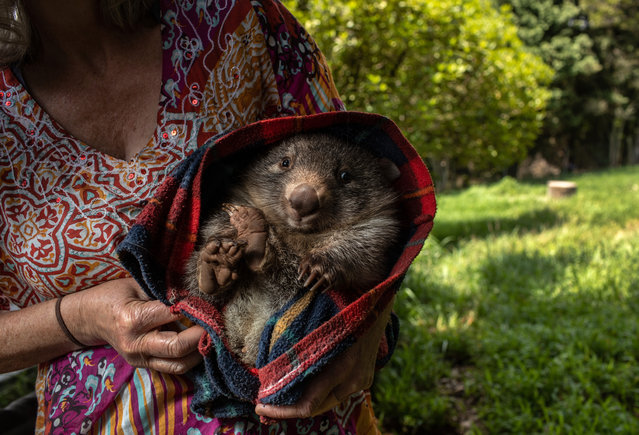
A wildlife caregiver holds an orphaned wombat at the Native Wildlife Rescue center on January 29, 2020 in Robertson, Australia. The center has taken in many burned kangaroos and wallabies injured in recent bushfires. Wombat orphans are often rescued from the pouch of their mothers struck by vehicles. (Photo by John Moore/Getty Images)

A wildlife caregiver holds an orphaned wombat at the Native Wildlife Rescue center on January 29, 2020 in Robertson, Australia. The center has taken in many burned kangaroos and wallabies injured in recent bushfires. Wombat orphans are often rescued from the pouch of their mothers struck by vehicles. (Photo by John Moore/Getty Images)
Details
16 Feb 2020 00:03:00
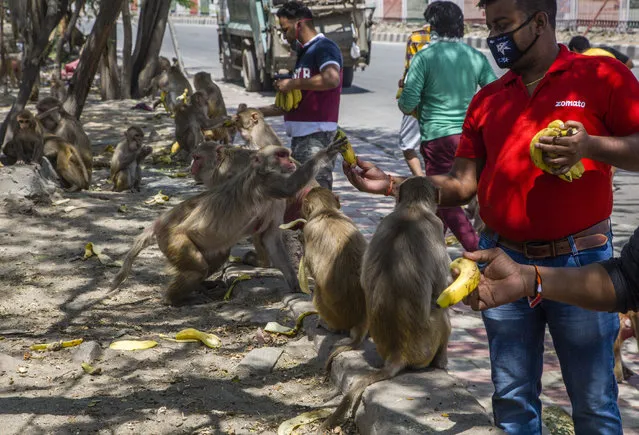
Men give bananas to monkeys gathered on the side of the road as India remains under an unprecedented lockdown over the highly contagious coronavirus (COVID-19) on April 08, 2020 in New Delhi, India. Wild animals, including monkeys, are roaming human settlements in India as people are staying indoors due to the 21-day lockdown. With India's 1.3 billion population and tens of millions of cars off the roads, wildlife is moving towards areas inhabited by humans. Wild animals in many countries have been seen roaming streets. A study says some 60 percent of the new diseases found around the globe every year are zoonotic, meaning they originate in animals and are passed on to humans. COVID-19 is a zoonotic disease that is suspected to have come from the wet markets of Wuhan, China. (Photo by Yawar Nazir/Getty Images)

Men give bananas to monkeys gathered on the side of the road as India remains under an unprecedented lockdown over the highly contagious coronavirus (COVID-19) on April 08, 2020 in New Delhi, India. Wild animals, including monkeys, are roaming human settlements in India as people are staying indoors due to the 21-day lockdown. (Photo by Yawar Nazir/Getty Images)
Details
12 Apr 2020 00:05:00

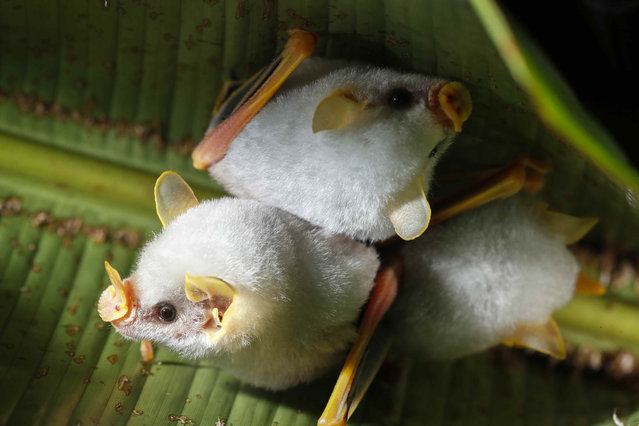
Some bats in the forested area of Guapiles, Costa Rica, 21 April 2020. (Photo by Jeffrey Arguedas/EPA/EFE)

Some bats in the forested area of Guapiles, Costa Rica, 21 April 2020. (Photo by Jeffrey Arguedas/EPA/EFE)
Details
03 May 2020 00:05:00
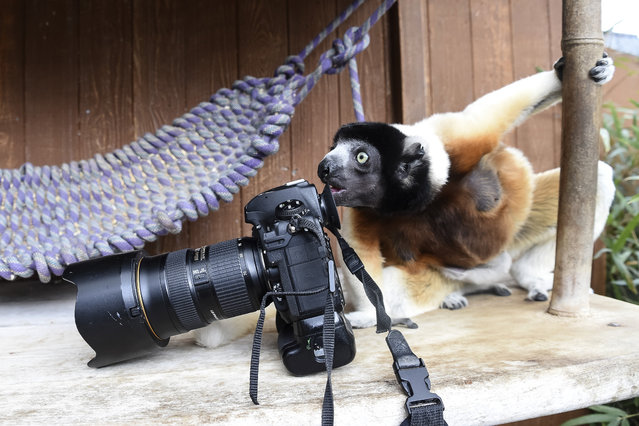
Poppy, a female Crowned sifaka, inspects a photographer's camera in the enclosure at the zoo of Mulhouse, eastern France, on March 5, 2019. The Crowned sifaka is a critically endangered species from Madagascar. (Photo by Sebastien Bozon/AFP Photo)

Poppy, a female Crowned sifaka, inspects a photographer's camera in the enclosure at the zoo of Mulhouse, eastern France, on March 5, 2019. The Crowned sifaka is a critically endangered species from Madagascar. (Photo by Sebastien Bozon/AFP Photo)
Details
10 Mar 2019 00:03:00
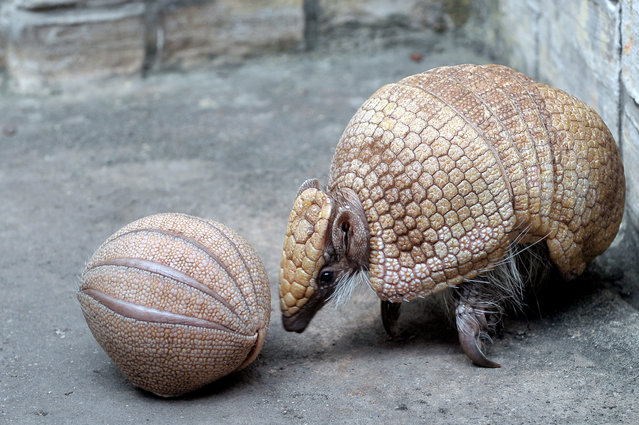
A four-week old southern three-banded armadillo (Tolypeutes matacus) is rolled up into a ball next to its mother in the tropical house of Budapest Zoo in Budapest, Hungary on May 3, 2019. The South American insect-eating mammal and its close relative, the Brasilian three-banded armadillo (Tolypeutes tricinctus) are the only two species of armadillos capable of rolling into a complete ball to defend themselves when feeling threatened. (Photo by Attila Kovács/EPA/EFE)

A four-week old southern three-banded armadillo (Tolypeutes matacus) is rolled up into a ball next to its mother in the tropical house of Budapest Zoo in Budapest, Hungary on May 3, 2019. The South American insect-eating mammal and its close relative, the Brasilian three-banded armadillo (Tolypeutes tricinctus) are the only two species of armadillos capable of rolling into a complete ball to defend themselves when feeling threatened. (Photo by Attila Kovács/EPA/EFE)
Details
05 May 2019 00:03:00
Grumpy Cat in Las Vegas, America on August 5, 2014. Grumpy Cat aka Tardar Sauce has died  on May 14, 2019 at home in Arizona at the age of seven due to complications from a urinary tract infection. Her family's statement said: “Besides being our baby and a cherished member of the family, Grumpy Cat has helped millions of people smile all around the world - even when times were tough. Her spirit will continue to live on through her fans everywhere. Grumpy's Family – Tabatha, Bryan and Chyrstal”. (Photo by Mediapunch/Shutterstock)

Grumpy Cat in Las Vegas, America on August 5, 2014. Grumpy Cat aka Tardar Sauce has died on May 14, 2019 at home in Arizona at the age of seven due to complications from a urinary tract infection. Her family's statement said: “Besides being our baby and a cherished member of the family, Grumpy Cat has helped millions of people smile all around the world – even when times were tough. Her spirit will continue to live on through her fans everywhere. Grumpy's Family – Tabatha, Bryan and Chyrstal”. (Photo by Mediapunch/Shutterstock)
Details
19 May 2019 00:03:00
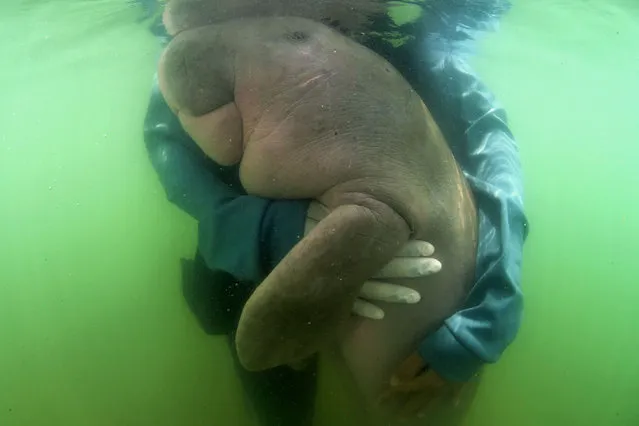
This picture taken on May 24, 2019 shows Mariam the dugong as she is cared for by park officials and veterinarians from the Phuket Marine Biological Centre on Libong island, Trang province in southern Thailand. An orphaned baby dugong rescued off a beach in Krabi province is Thailand's newest star, capturing the hearts of millions on social media and igniting an awarness for ocean conservation as authorities hand-raise the young mammal. (Photo by Sirachai Sirachai Arunrugstichai/AFP Photo)

This picture taken on May 24, 2019 shows Mariam the dugong as she is cared for by park officials and veterinarians from the Phuket Marine Biological Centre on Libong island, Trang province in southern Thailand. An orphaned baby dugong rescued off a beach in Krabi province is Thailand's newest star, capturing the hearts of millions on social media and igniting an awarness for ocean conservation as authorities hand-raise the young mammal. (Photo by Sirachai Sirachai Arunrugstichai/AFP Photo)
Details
07 Jul 2019 00:03:00