Loading...
Done
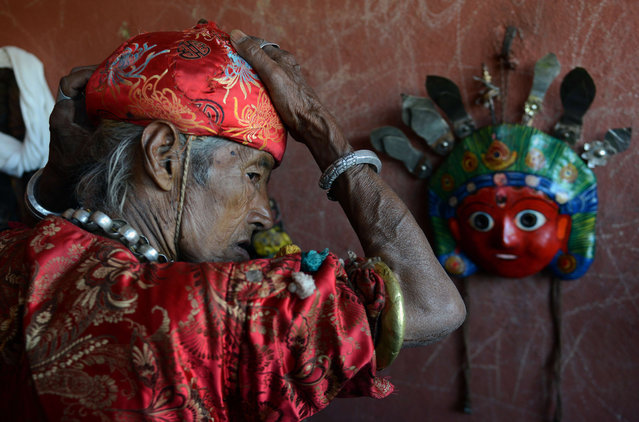
A Nepalese Hindu devotee dresses as a deity as he prepares to participate in festivities at the Shikali Temple during celebrations for the Shikali Jatra festival in the village of Khokana, on the outskirts of Kathmandu, on October 19, 2015. Local villagers, who normally do not celebrate the country's most famous festival of Dashain, celebrate the Shikali Jatra each year. (Photo by Prakash Mathema/AFP Photo)

A Nepalese Hindu devotee dresses as a deity as he prepares to participate in festivities at the Shikali Temple during celebrations for the Shikali Jatra festival in the village of Khokana, on the outskirts of Kathmandu, on October 19, 2015. Local villagers, who normally do not celebrate the country's most famous festival of Dashain, celebrate the Shikali Jatra each year. (Photo by Prakash Mathema/AFP Photo)
Details
22 Oct 2015 08:04:00
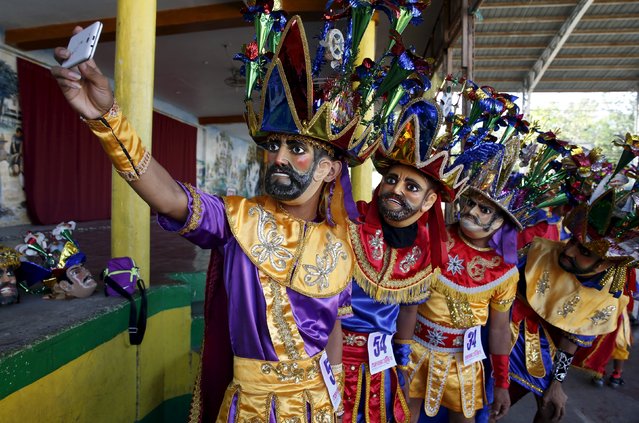
Penitents wearing masks, known locally as “Morions” take a selfie during the start of Holy Week celebrations in Mogpog, Marinduque in central Philippines March 21, 2016. (Photo by Erik De Castro/Reuters)

Penitents wearing masks, known locally as “Morions” take a selfie during the start of Holy Week celebrations in Mogpog, Marinduque in central Philippines March 21, 2016. The Moriones is an annual festival held on Holy Week on the island of Marinduque, Philippines. The “Moriones” are men and women in costumes and masks replicating the garb of biblical Roman soldiers as interpreted by local folks. (Photo by Erik De Castro/Reuters)
Details
22 Mar 2016 11:29:00
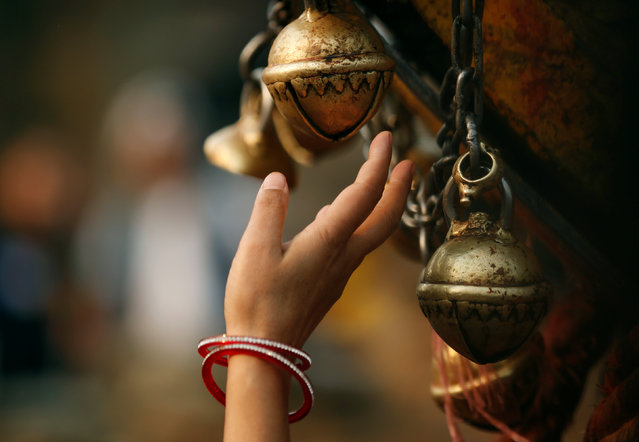
A hand of a devotee is pictured as she rings a bell while offering prayers to the chariot of God Bhairab during the Bisket festival in Bhaktapur, Nepal, April 13, 2016. (Photo by Navesh Chitrakar/Reuters)

A hand of a devotee is pictured as she rings a bell while offering prayers to the chariot of God Bhairab during the Bisket festival in Bhaktapur, Nepal, April 13, 2016. During the festival, also regarded as Nepalese New Year, images of the Hindu god Bhairava and his female counterpart Bhadrakali are enshrined in two large chariots and pulled to an open square after which rituals and festivities are performed. (Photo by Navesh Chitrakar/Reuters)
Details
15 Apr 2016 11:20:00
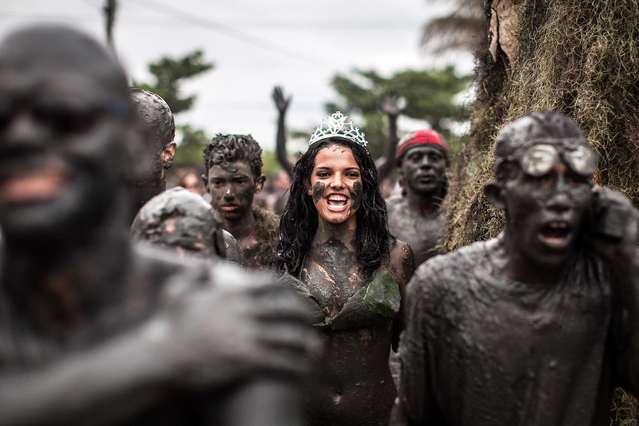
Revelers participate in the traditional Bloco da Lama (Mud block) carnival in Parati, Rio de Janeiro State, Brazil, on February 9, 2013. The event, which was begun by two men in a playful manner in 1986, has now become a traditional carnival in which participants disguised as primitives with rags, lianas or skulls and bones, dive in the mud. (Photo by Victor Moriyama/AFP Photo)

Revelers participate in the traditional Bloco da Lama (Mud block) carnival in Parati, Rio de Janeiro State, Brazil, on February 9, 2013. The event, which was begun by two men in a playful manner in 1986, has now become a traditional carnival in which participants disguised as primitives with rags, lianas or skulls and bones, dive in the mud. (Photo by Victor Moriyama/AFP Photo)
Details
12 Feb 2013 14:10:00
A dog dressed like of a bee is seen during the “Blocao” dog carnival in Rio de Janeiro. (Photo by Silvia Izquierdo/AP Photo)

A dog dressed like of a bee is seen during the “Blocao” dog carnival in Rio de Janeiro, Brazil, Sunday, February 16, 2014. About 100 dogs have had their day at a pre-Carnival bash in Rio de Janeiro. A 10-man brass band and a singer belting out Rio's anthem song “Cidade Maravilhosa” (Marvelous City) kicked off the four-footed fest as dog owners gathered to party down with pooches on Copacabana beach Sunay. (Photo by Silvia Izquierdo/AP Photo)
Details
18 Feb 2014 14:50:00
Revellers take part in the Notting Hill Carnival in London, Britain on August 27, 2018. (Photo by Henry Nicholls/Reuters)

Revellers take part in the Notting Hill Carnival in London, Britain on August 27, 2018. The carnival has been held every year since 1966 and one of the largest festival celebrations of its kind in Europe. (Photo by Henry Nicholls/Reuters)
Details
29 Aug 2018 00:05:00
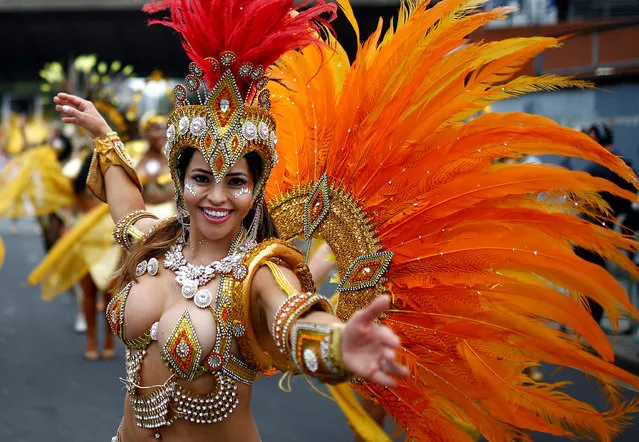
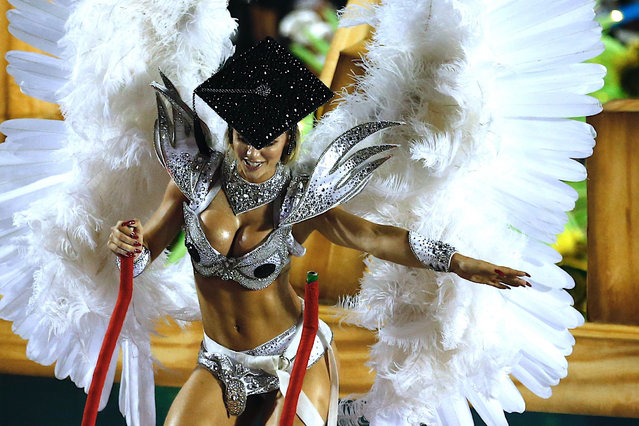
A member of the samba school of the Grupo Especial Academicos do Grande Rio parade during the Carnival celebration at the Marques de Sapucai sambadrome in Rio de Janeiro, Brazil, early 04 March 2019. The samba schools of the Rio de Janeiro Special Groups began their parades on 03 March at the sambadrome, considered the main attraction of the carnival in Brazil. (Photo by Marcelo Chello/EPA/EFE)

A member of the samba school of the Grupo Especial Academicos do Grande Rio parade during the Carnival celebration at the Marques de Sapucai sambadrome in Rio de Janeiro, Brazil, early 04 March 2019. The samba schools of the Rio de Janeiro Special Groups began their parades on 03 March at the sambadrome, considered the main attraction of the carnival in Brazil. (Photo by Marcelo Chello/EPA/EFE)
Details
09 Mar 2019 00:05:00
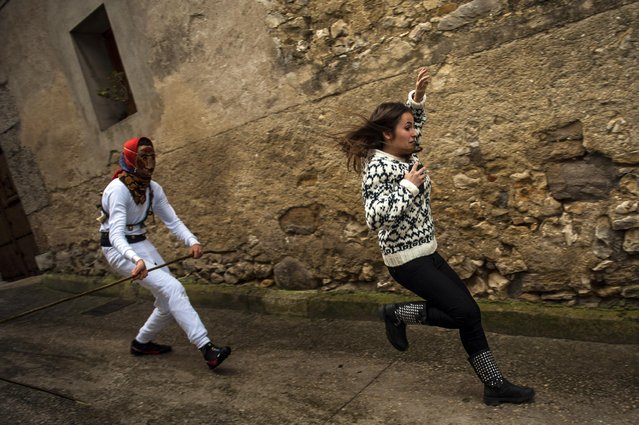
In this photo taken on Sunday, February 15, 2015 a girl runs away from a “Mamuxarro” during the carnival, in the small town of Unanu, northern Spain. While Rio de Janeiro may boast the world’s most famous carnival, the festive period of masquerades and wild and colorful costumes that precedes the Christian religious season of Lent is also a permanent and popular fixture for celebration in Spain and Portugal, with each country having its own strange and unique way of doing it. (Photo by Alvaro Barrientos/AP Photo)

In this photo taken on Sunday, February 15, 2015 a girl runs away from a “Mamuxarro” during the carnival, in the small town of Unanu, northern Spain. In the northern Spanish ancient village of Unamu, people dress up as “Mamuxarro”, folkloric figures in white with a red sash and a metal mask to cover their faces as they pursue townsfolk with sticks. According to custom, their “victims” (usually young women) must kneel and kiss the mamuxarro’s knee after he makes the sign of the cross on their forehead. (Photo by Alvaro Barrientos/AP Photo)
Details
22 Feb 2015 10:51:00