Loading...
Done
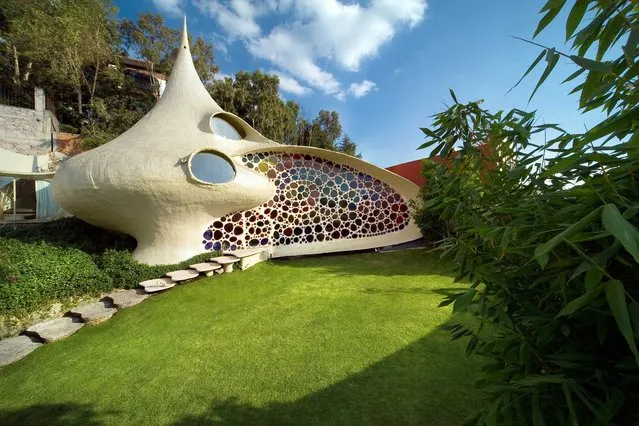
Living In A Shell – Nautilus House

The Nautilus, designer Javier Senosiain’s bizarre, snail-shaped dwelling, is a mind-bending union of artistic experimentation and simplified living. Inspired by the work of Gaudí and Frank Lloyd Wright, Senosiain has brought to Mexico City another sparkling example of what he calls “Bio-Architecture” — the idea that buildings based on the natural principles of organic forms bring us back to local history, tradition and cultural roots, in turn creating harmony with nature.
Details
07 Jun 2013 10:15:00
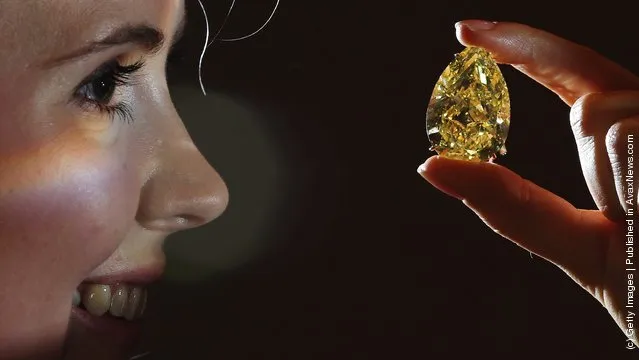
A Sun Drop Diamond Forms Part Of Sothebys Magnificent Jewels Sale

A Sotheby's employee holds a 110.03 carat sun-drop diamond on October 24, 2011 in London, England. The diamond is the largest yellow pear-shaped diamond in the world, and is expected to fetch between $11-15 Million USD when it is sold at auction at Sotheby's Auction house in London. (Photo by Dan Kitwood/Getty Images)
Details
29 Oct 2011 14:24:00
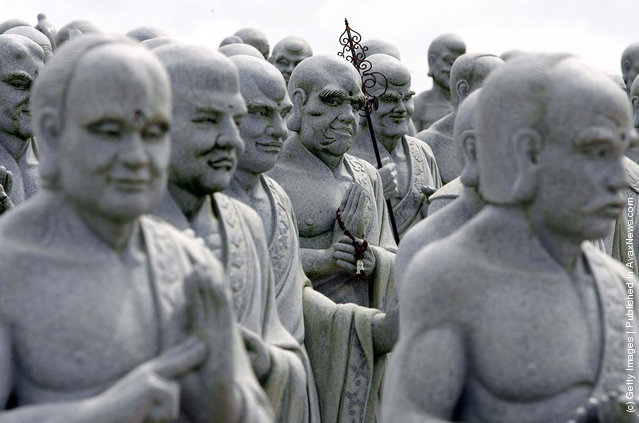
Buddha Statues Feature At Bintan Chinese Temple

Buddha statues with a variety of faces shapes and unique characters at Ksitigarbha Bodhisattva Temple on January 11, 2012 in Bintan Island, Indonesia. 500 statues are situated inside the temple featuring Ksitigarbha Hodhisattva, known as the Bodhisattva of Hell because of his vow not to achieve Buddha-hood until “all the hells are empty”. (Photo by Yuli Seperi/Getty Images)
Details
12 Jan 2012 12:25:00
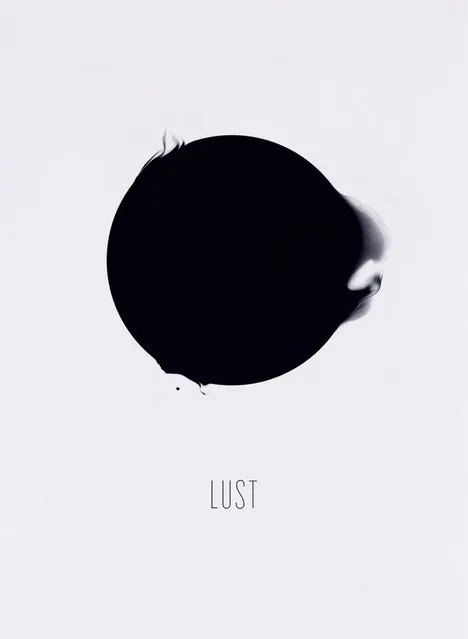
Seven Sins By Alexey Malina

Alexey Malina has portrayed the Seven Deadly Sins in a series of posters called Seven Sins. The black shapes bleed as the deception and dread of sin’s course evolves in one’s life. Their stamina caves to lust, wrath, envy, greed, sloth, pride and gluttony. As the New Testament warns us, “flee from evil, cling to what is good” for the patterns that follow the seven only lead to death.
Details
20 Apr 2014 09:42:00
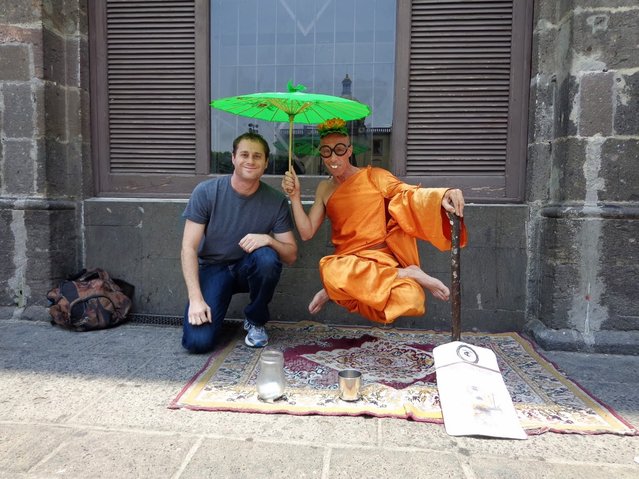
The Secret Of Levitation Street Yogis

Yogis and street performers have been simulating levitation with nifty contraptions forever. They appear to be held aloft via nothing but their preternatural mental prowess. But are really enjoying the benefits of basic physics just like the rest of us when we use a chair. However, just because it’s perfectly explainable doesn’t mean it isn’t nifty. I’m especially impressed by this 2-person version and am still trying to work out how exactly the chair they’re using is shaped at the base.


Details
28 Mar 2014 12:43:00
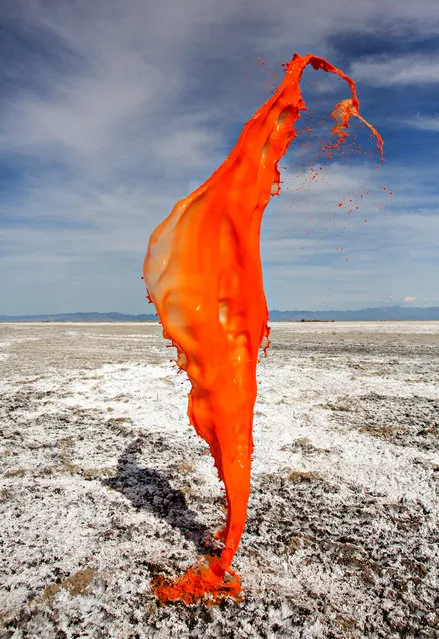
“Orange Salt Flats”. (Photo by Floto/Warner)

The photography duo of Floto+Warner created the series, “Colorant”, from an idea that stemmed out of a previous series and the fascination of landscapes, with results that leave one in awe. Creating shapes, not experienced in nature, they tossed colored water in the air to capture “a momentary graffiti of air and space”. Using a high shutter speed to capture these fleeting moments, Floto/Warner has produced a multi-medium series with jaw-dropping results. Photo: “Orange Salt Flats”. (Photo by Floto/Warner)
Details
02 Jul 2014 10:26:00


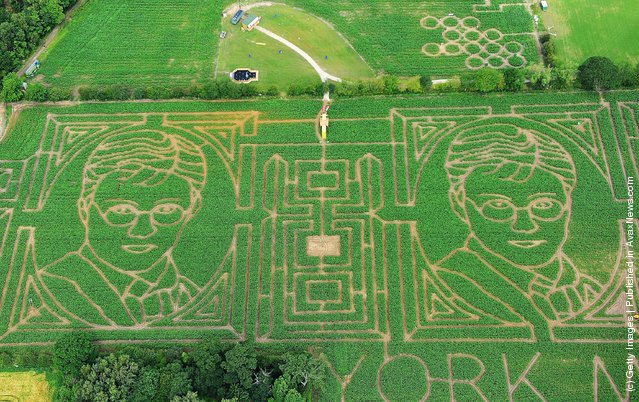
An arial view of Top Pearsy's Maize Maze in the shape of Harry Potter, on July 11, 2011 in York, England. Farmer Tom Pearcy has cut two portraits of Harry Potter in his crop of maize plants. With some subtle differences the two images create the world's largest spot the difference competition. At over 50m in diameter, and cut out of over 1 million living maize plants, the York Maze is the largest “Maize Maze” in Europe and one of the largest in the world. (Photo by Bethany Clarke/Getty Images)
Details
12 Jul 2011 12:01:00
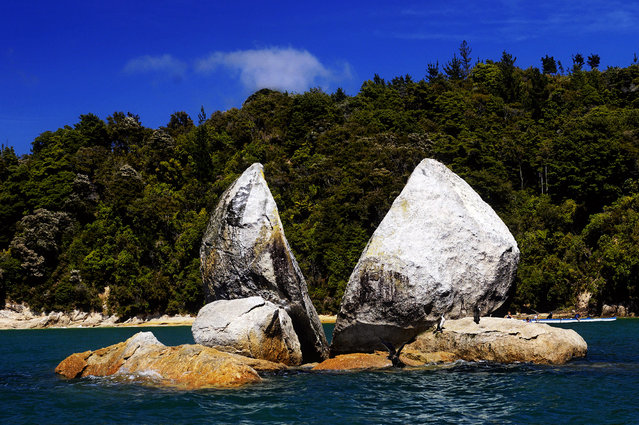
Split Apple Rock

Split Apple Rock is a geological rock formation in The Tasman Bay off the northern coast of the South Island of New Zealand. Made of granite, it is in the shape of an apple which has been cut in half. It is a popular tourist attraction in the waters of the Tasman Sea approximately 50 metres off the coast between Kaiteriteri and Marahau. The rock sits in shallow water at low tide and is accessible by wading. It is also a point of interest for the many tourist boats and pleasure craft which operate along the shores of the Abel Tasman National Park. The cleft to produce two sides of the 'apple' was a natural occurrence. It is unknown when this happened and therefore the cleaving of the rock has attracted mythological explanations.
Details
19 Oct 2013 10:58:00