Loading...
Done
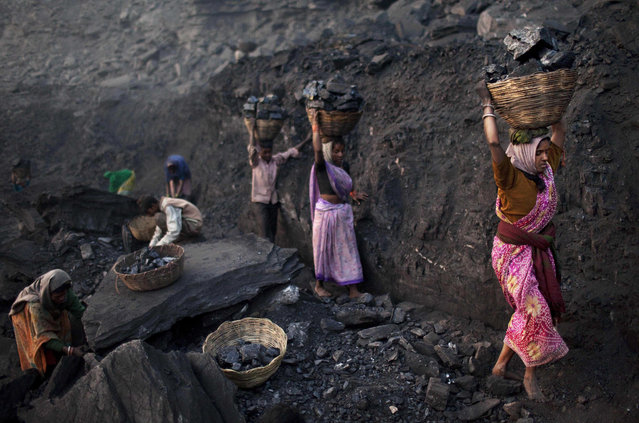
In this Friday, January 7, 2011 photo, people carry baskets of coal scavenged illegally at an open-cast mine in the village of Bokapahari in the eastern Indian state of Jharkhand where a community of coal scavengers live and work. The world's biggest coal users – China, the United States and India – have boosted coal mining in 2017, in an abrupt departure from last year's record global decline for the heavily polluting fuel and a setback to efforts to rein in climate change emissions. (Photo by Kevin Frayer/AP Photo)

In this Friday, January 7, 2011 photo, people carry baskets of coal scavenged illegally at an open-cast mine in the village of Bokapahari in the eastern Indian state of Jharkhand where a community of coal scavengers live and work. The world's biggest coal users – China, the United States and India – have boosted coal mining in 2017, in an abrupt departure from last year's record global decline for the heavily polluting fuel and a setback to efforts to rein in climate change emissions. (Photo by Kevin Frayer/AP Photo)
Details
28 Jun 2017 08:08:00
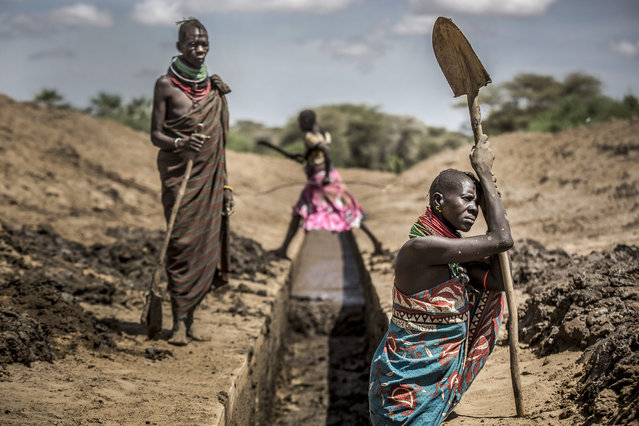
Members of the Turkana community work unblocking an irrigation canal to provide water to their sorghum crops in an arid dry area in Nanyee, near Lodwar, Turkana County, Kenya, on October 1, 2019. Turkana is a vast, dry area in the north-west of Kenya that is on the frontline of climate change. With regular searing temperatures the Turkana people are suffering from recurring and prolonged droughts. (Photo by Luis Tato/AFP Photo)

Members of the Turkana community work unblocking an irrigation canal to provide water to their sorghum crops in an arid dry area in Nanyee, near Lodwar, Turkana County, Kenya, on October 1, 2019. Turkana is a vast, dry area in the north-west of Kenya that is on the frontline of climate change. With regular searing temperatures the Turkana people are suffering from recurring and prolonged droughts. (Photo by Luis Tato/AFP Photo)
Details
28 Oct 2019 00:05:00
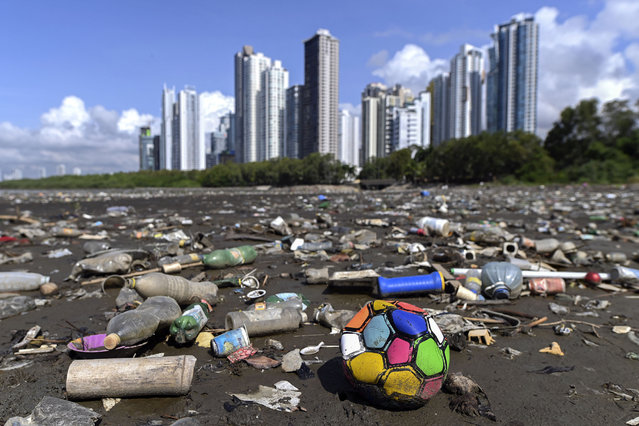
Garbage, including plastic waste, is seen at the beach of Costa del Este, in Panama City, on April 19, 2021. Every two weeks, Marine Biology students descend about five meters in the sea to take care of a coral nursery of the staghorn species (Acropora cervicornis) in Portobelo, Panama, with which they aim to restore reefs damaged by climate change and pollution, as part of the Reef2Reef project. (Photo by Luis Acosta/AFP Photo)

Garbage, including plastic waste, is seen at the beach of Costa del Este, in Panama City, on April 19, 2021. Every two weeks, Marine Biology students descend about five meters in the sea to take care of a coral nursery of the staghorn species (Acropora cervicornis) in Portobelo, Panama, with which they aim to restore reefs damaged by climate change and pollution, as part of the Reef2Reef project. (Photo by Luis Acosta/AFP Photo)
Details
21 Jun 2021 07:30:00
In this September 19, 2019 file photo, an aircraft passes the rising sun during take off at the international airport in Frankfurt, Germany. Germany’s top court has ruled that the government has to set clear goals for reducing greenhouse gas emissions after 2030, arguing that current legislation doesn’t go far enough in curbing climate change. (Photo by Michael Probst/AP Photo/File)

In this September 19, 2019 file photo, an aircraft passes the rising sun during take off at the international airport in Frankfurt, Germany. Germany’s top court has ruled that the government has to set clear goals for reducing greenhouse gas emissions after 2030, arguing that current legislation doesn’t go far enough in curbing climate change. (Photo by Michael Probst/AP Photo/File)
Details
03 Jul 2021 10:28:00
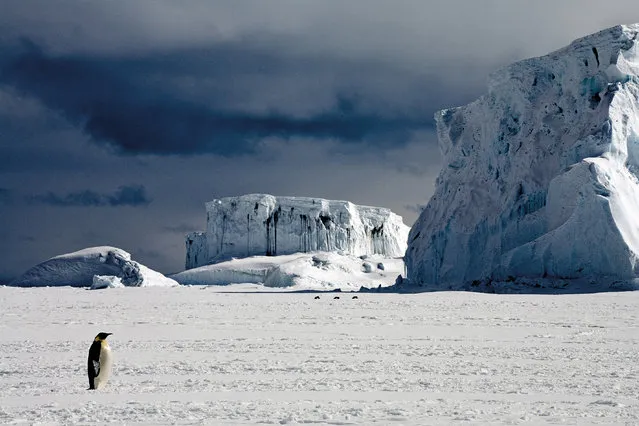
Image from Camille Seamans new book, “Melting Away”. (Photo by Camille Seaman/Barcroft Media)

Documenting the effects of climate change first hand over the past eight years, Camille Seaman fears we may be on the road to the last iceberg. Photographing the enormous frozen floats at both poles for the past eight years, the Californian adventurer has seen the receding ice shelves and experienced the changing warmer weather. Feeling that her intimate and emotional work documents a snapshot of history, Camille presents her series “The Last Iceberg” as a study of what she sees as the personality of each huge iceberg. Drawing parallels with the famous novel, “The Last of the Mohicans”, Camille, 42, wonders whether these unique, almost alien natural features will become a thing of the past or part of nature's renewal process. (Photo by Camille Seaman/Barcroft Media)
Details
02 Dec 2014 12:10:00
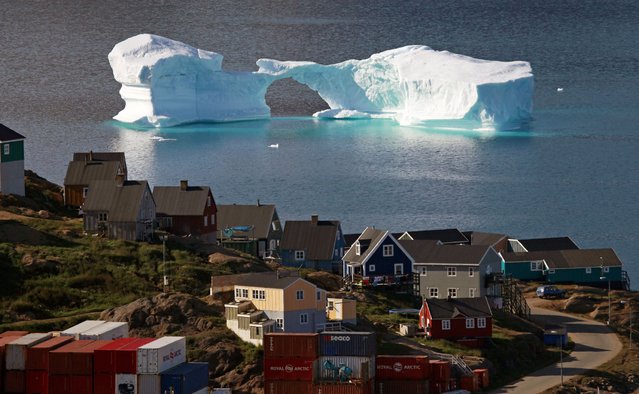
File photo of an iceberg floating near a harbour in the town of Kulusuk, east Greenland August 1, 2009. The United Nations 19th Climate Change Conference (COP19) will take place November 11-22, 2013 in Warsaw. The main goal of the talks with almost almost 200 nations assembled, is to lay the foundation for the new global climate agreement, aiming at further emission reduction, which is to be signed in 2015 in Paris and be launched in 2020. (Photo by Bob Strong/Reuters)

It's taken roughly five months, but a massive iceberg has separated from Antarctica's Pine Island Glacier. According to NASA's Earth Observatory, the estimated size of this iceberg, named B-31, is around 660 square kilometres (33 km long by 20 km wide) – a city-sized block of ice that has slowly migrated away from the continent, and is now floating out to sea. Take a look at some massive icebergs afloat in the oceans. Photo: File photo of an iceberg floating near a harbour in the town of Kulusuk, east Greenland August 1, 2009. (Photo by Bob Strong/Reuters)
Details
27 Apr 2014 07:47:00


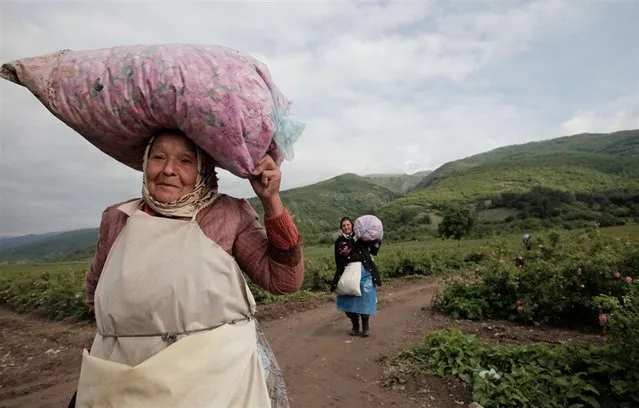
Rose oil production in Bulgaria's famous Rose Valley is set to increase by 25 percent according to a mid-season estimate by experts in spite of the climate changes and economy crisis. Bulgaria is traditionally one of the biggest world exporters of high-grade rose oil along with Morocco and neighboring Turkey, with clients mostly from the United States, France, Germany, United Kingdom and Japan. Rose oil is the most commonly used essential oil in the perfume industry.
Details
07 Sep 2013 10:31:00
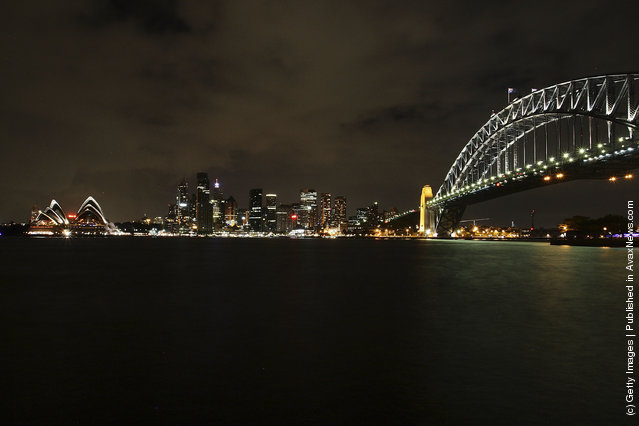
Sydney Dims For Earth Hour

The Sydney Skyline is seen before the lights are switched off for Earth Hour on March 26, 2011 in Sydney, Australia. Earth Hour encourages individuals around the world to turn off their lights for one hour at 20:30 local time on March 26, 2011 to take a stand against climate change. The largest Earth Hour was in 2010 when 128 countries participated.
Details
26 Mar 2011 14:54:00