Loading...
Done
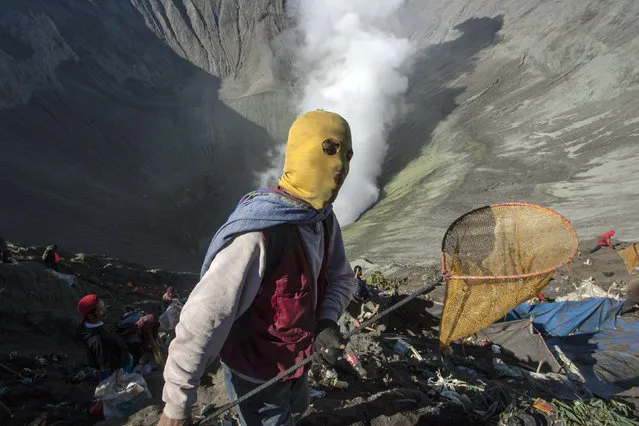
Non-Hindus carry nets as they wait on the edge of the crater to catch offerings cast down by Hindus during the Kasodo ceremony at Mount Bromo, Probolinggo, Indonesia, August 12, 2014. The Kasodo ceremony is a way of Tengger Hindus to express their gratitude to God for good harvest and fortune. The offerings range from vegetables to chickens, from fruits to goats, from money to other valuables. (Photo by Fully Handoko/EPA)

Non-Hindus carry nets as they wait on the edge of the crater to catch offerings cast down by Hindus during the Kasodo ceremony at Mount Bromo, Probolinggo, Indonesia, August 12, 2014. The Kasodo ceremony is a way of Tengger Hindus to express their gratitude to God for good harvest and fortune. The offerings range from vegetables to chickens, from fruits to goats, from money to other valuables. (Photo by Fully Handoko/EPA)
Details
14 Aug 2014 11:06:00
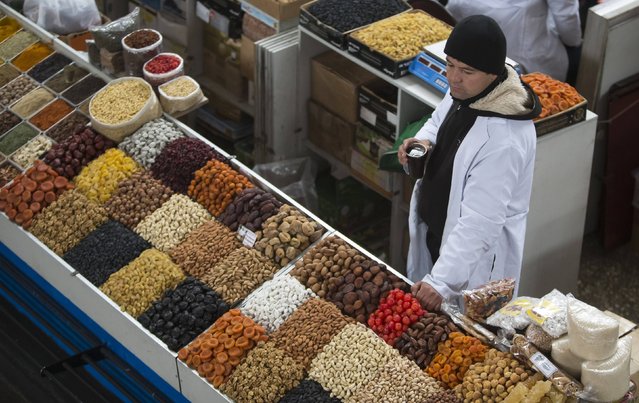
A vendor sells fruits and nuts at the Green Bazaar in Almaty January 23, 2015. Kazakhstan is spending billions of dollars of its reserves to keep devaluation of its currency gradual and reduce inflationary risks of the sort thrown up in Russia by the rouble's slide, analysts and former central bank officials say. (Photo by Shamil Zhumatov/Reuters)

A vendor sells fruits and nuts at the Green Bazaar in Almaty January 23, 2015. Kazakhstan is spending billions of dollars of its reserves to keep devaluation of its currency gradual and reduce inflationary risks of the sort thrown up in Russia by the rouble's slide, analysts and former central bank officials say. Kazakhstan, Central Asia's largest economy, is closely tied to Russia through trade and, like other ex-Soviet states, has been feeling the pain of the crisis which has driven the rouble down 50 percent against the dollar since the start of 2014. (Photo by Shamil Zhumatov/Reuters)
Details
28 Jan 2015 11:57:00
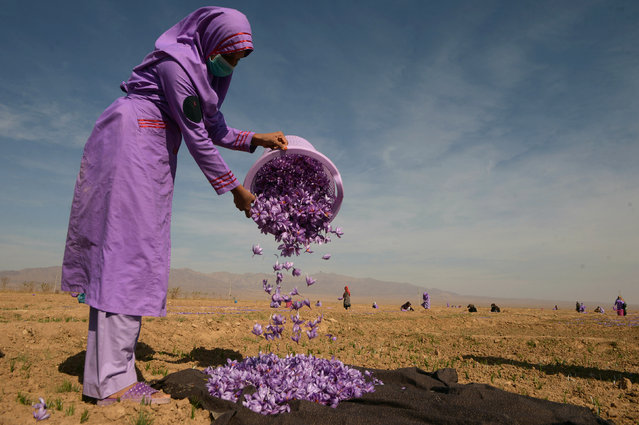
In this photograph taken on October 27, 2017 an Afghan woman collects saffron flowers after picking them in a field on the outskirt of Herat For years, Afghanistan has tried to give farmers alternatives such as fruit crops and saffron to wean them away from poppy farming – the lifeblood of the Taliban insurgency. International donors have splurged billions of dollars on counter- narcotics efforts in Afghanistan over the past decade, including efforts to encourage farmers to switch to other cash crops such as saffron. But those efforts have shown little results. (Photo by Hoshang Hashimi/AFP Photo)

In this photograph taken on October 27, 2017 an Afghan woman collects saffron flowers after picking them in a field on the outskirt of Herat For years, Afghanistan has tried to give farmers alternatives such as fruit crops and saffron to wean them away from poppy farming – the lifeblood of the Taliban insurgency. International donors have splurged billions of dollars on counter- narcotics efforts in Afghanistan over the past decade, including efforts to encourage farmers to switch to other cash crops such as saffron. But those efforts have shown little results. (Photo by Hoshang Hashimi/AFP Photo)
Details
25 Nov 2017 07:48:00
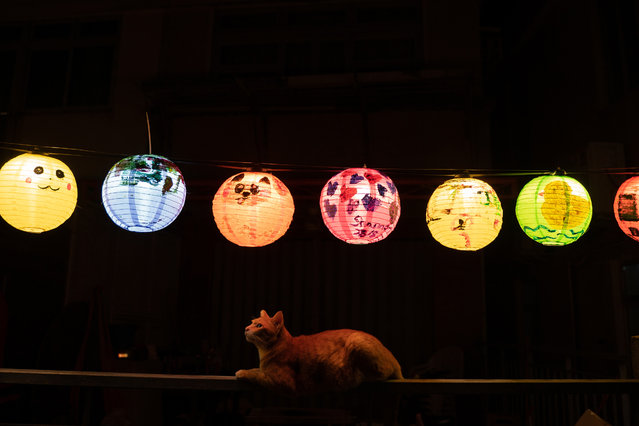
A cat sits underneath lanterns displayed at Tai O fishing village on September 07, 2022 in Hong Kong, China. Hong Kong prepares ahead to celebrate the mid-autumn festival which is an occasion for a children's night out and family gathering with the customs of moon contemplating, a procession of star and moon-shaped lanterns, lion dance, as well as holding parties with moon cakes and fruits. (Photo by Anthony Kwan/Getty Images)

A cat sits underneath lanterns displayed at Tai O fishing village on September 07, 2022 in Hong Kong, China. Hong Kong prepares ahead to celebrate the mid-autumn festival which is an occasion for a children's night out and family gathering with the customs of moon contemplating, a procession of star and moon-shaped lanterns, lion dance, as well as holding parties with moon cakes and fruits. (Photo by Anthony Kwan/Getty Images)
Details
14 Sep 2022 05:12:00
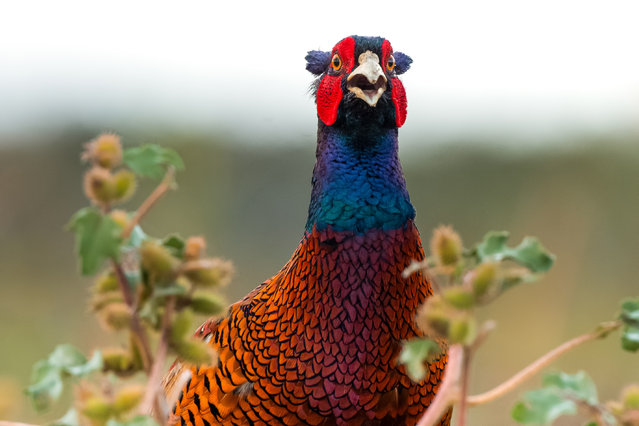
A pheasant is seen among grasses in Bursa, Turkiye on October 07, 2024. Pheasants mostly live in forested areas, thickets and wetlands. Unlike females, male pheasants have a much more remarkable structure with their long tails and feathers in bright and variable colors. Also, they feed on fruits, grains, seeds and invertebrates. (Photo by Alper Tuydes/Anadolu via Getty Images)

A pheasant is seen among grasses in Bursa, Turkiye on October 07, 2024. Pheasants mostly live in forested areas, thickets and wetlands. Unlike females, male pheasants have a much more remarkable structure with their long tails and feathers in bright and variable colors. Also, they feed on fruits, grains, seeds and invertebrates. (Photo by Alper Tuydes/Anadolu via Getty Images)
Details
27 Oct 2024 04:43:00
The Ending Of Life Of The Cargo Ship

The MSC Napoli cargo ship lies in a dry dock at Harland and Wolff ship builders as it is dismantled for recycling on April 11, 2008 in Belfast, Northern Ireland. (Photo by Peter Macdiarmid/Getty Images)
Details
23 Oct 2011 14:47:00
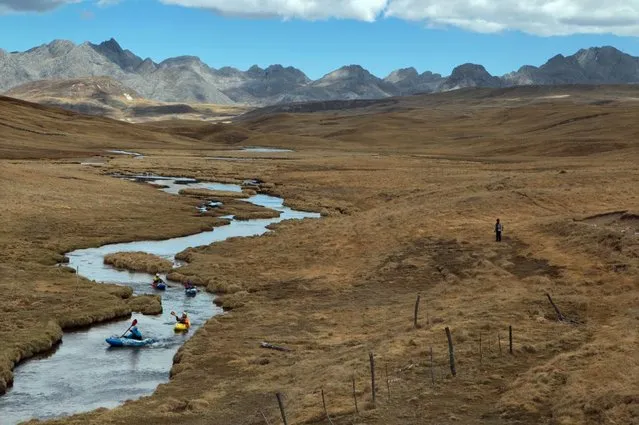
August 19, 2012 – Alpamarca, Peru – Amazon Express white water members Juan Antonio De Ugarte, of Peru, Rafael Ortiz, of Mexico, West Hansen, of the U.S., and Tino Specht, of the U.S., paddle down the Rio Gashan after leaving Lago Acucocha. Lago Acucocha is possibly the dry season source of the Amazon River. (Photo by Erich Schlegel/zReportage via ZUMA Press)

“The Amazon river has a newly discovered source. Completed last year and led by West Hansen and documented by award-winning freelance photographer Erich Schlegel, this is the first expedition to paddle from the furthest source of the earth's largest river to the ocean”. – zReportage. Photo: August 19, 2012 – Alpamarca, Peru – Amazon Express white water members Juan Antonio De Ugarte, of Peru, Rafael Ortiz, of Mexico, West Hansen, of the U.S., and Tino Specht, of the U.S., paddle down the Rio Gashan after leaving Lago Acucocha. Lago Acucocha is possibly the dry season source of the Amazon River. (Photo by Erich Schlegel/zReportage via ZUMA Press)
Details
29 Jul 2013 10:47:00
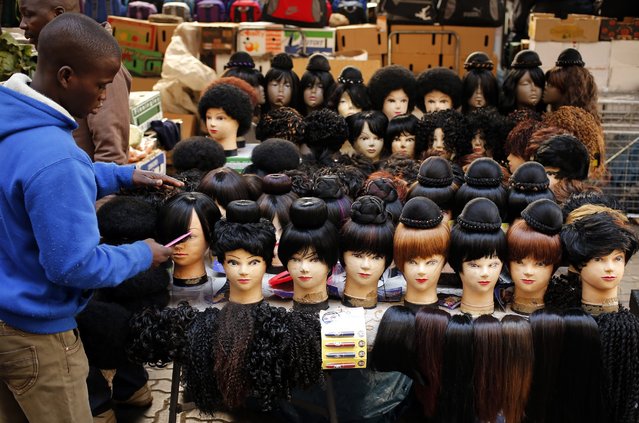
Man prepares wigs as he waits for customers in downtown Johannesburg. Some estimates put Africa's dry hair industry at as much as $6 billion a year; Nigerian singer Muma Gee recently boasted that she spends 500,000 naira ($3,100) on a single hair piece made of 11 sets of human hair. (Photo by Siphiwe Sibeko/Reuters)

Man prepares wigs as he waits for customers in downtown Johannesburg, on August 5, 2014. Some estimates put Africa's dry hair industry at as much as $6 billion a year; Nigerian singer Muma Gee recently boasted that she spends 500,000 naira ($3,100) on a single hair piece made of 11 sets of human hair. (Photo by Siphiwe Sibeko/Reuters)
Details
15 Aug 2014 09:08:00