A man walks his dog through Los Berros Mountain in El Paso with the Cumbre Vieja volcano in the background, on the Canary Island of La Palma, Spain, October 24, 2021. (Photo by Borja Suarez/Reuters)
Migratory flamingos arriving from Europe are seen in Port Fouad Nature Reserve, on the outskirts of Port Said Governorate, Egypt on December 12, 2022. (Photo by Mohamed Abd El Ghany/Reuters)
Moroccan horsemen fire their rifles during a performance to celebrate the annual Moussem festival in El Jadida on August 6, 2023. (Photo by Fadel Senna/AFP Photo)
Actress and singer Rachel Zegler attends the World Premiere of Disney's Snow White at El Capitan Theatre in Hollywood, California on March 15, 2025. (Photo by Rodin Eckenroth/Getty Images for Disney)
A man poses for a picture in front of Christmas lights decoration at the Francisco Morazan square in San Salvador, El Salvador, December 22, 2020. (Photo by Jose Cabezas/Reuters)
Women walk next to soldiers in Surcubamba, Peru, Thursday, May 21, 2015. The Joint Command of the Peruvian Armed Forces organized a humanitarian mission to Surcubamba, where health care was provided to families from nearby villages in this region called VRAEM, the acronym for Valley of the Apurimac, Ene and Mantaro rivers, where sixty percent of Peru's cocaine originates. (Photo by Rodrigo Abd/AP Photo)
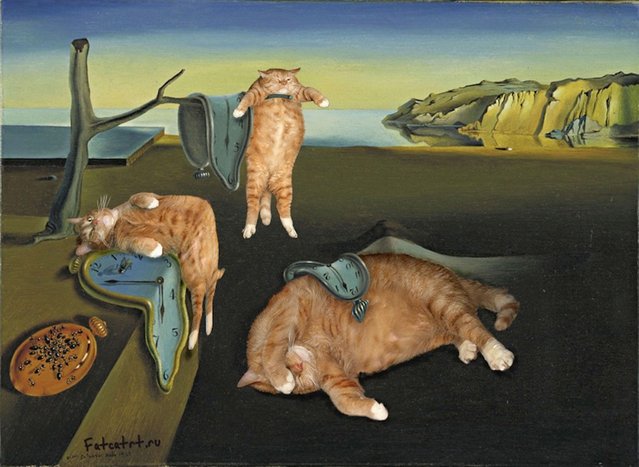
A Russian digital artist Svetlana Petrova has taken her love of cats to the next level – by adding her furry friend to some of the world's greatest artwork. Svetlana has placed photos of her tabby, called Zarathustra, posing alongside the most well-known pieces in history for her UK exhibition. (Photo by Svetlana Petrova/Zarathustra the Cat)
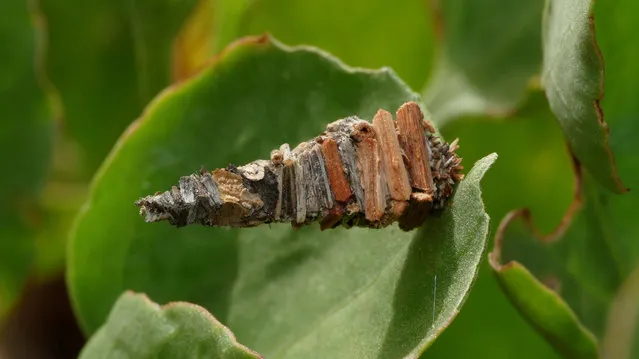
An undated handout photo made available by the Zerynthia Association shows the pupa of an amicta moneiba, a recently discovered species of moth endemic to La Gomera and El Hierro islands in the Canary Islands, Spain (issued 01 July 2020), as those two islands pulled apart from the rest of the Canary Islands 2.5 million years ago. The Institute of Evolutionary Biology of the Spanish National Research Council (CSIC) and the Zerynthia Association have recently discovered two new moth species in El Hierro and La Gomera. (Photo by Yeray Monasterio/Zerynthia/EPA/EFE)