Loading...
Done
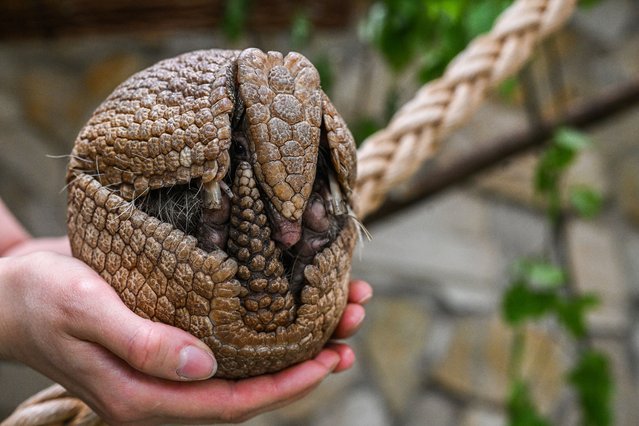
Zookeeper Agata holds a rare newborn Brazilian three-banded armadillo inside its enclosure at the Wroclaw Zoo in Wroclaw, Poland on May 11, 2023. The Tolypeutes matatus, or the southern armor also known as bolita or tatu-bola, is a fairly popular animal in South America but is increasingly rare. The new zoo child was born on March 23. The species is listed as vulnerable by the International Union for the Conservation of Nature (IUCN) and threatened by habitat loss and hunting. (Photo by Omar Marques/Anadolu Agency via Getty Images)

Zookeeper Agata holds a rare newborn Brazilian three-banded armadillo inside its enclosure at the Wroclaw Zoo in Wroclaw, Poland on May 11, 2023. The Tolypeutes matatus, or the southern armor also known as bolita or tatu-bola, is a fairly popular animal in South America but is increasingly rare. The new zoo child was born on March 23. The species is listed as vulnerable by the International Union for the Conservation of Nature (IUCN) and threatened by habitat loss and hunting. (Photo by Omar Marques/Anadolu Agency via Getty Images)
Details
28 May 2023 04:09:00
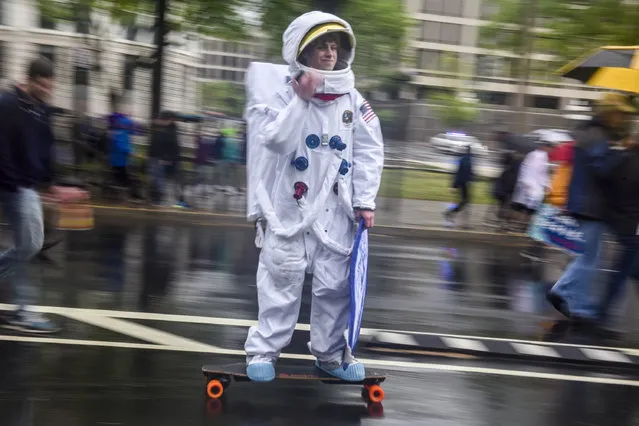
Max Gold, 20, of NYC, cruises on his skateboard as thousands gather on the National Mall for the March for Science on Saturday, April 22, 2017, in Washington, DC.  Activists and scientists descend on the nation's capital to rally for environmental causes and government policies rooted in scientific research as part of the Earth Day and March for Science rallies. (Photo by Jahi Chikwendiu/The Washington Post)

Max Gold, 20, of NYC, cruises on his skateboard as thousands gather on the National Mall for the March for Science on Saturday, April 22, 2017, in Washington, DC. Activists and scientists descend on the nation's capital to rally for environmental causes and government policies rooted in scientific research as part of the Earth Day and March for Science rallies. (Photo by Jahi Chikwendiu/The Washington Post)
Details
22 May 2017 07:38:00
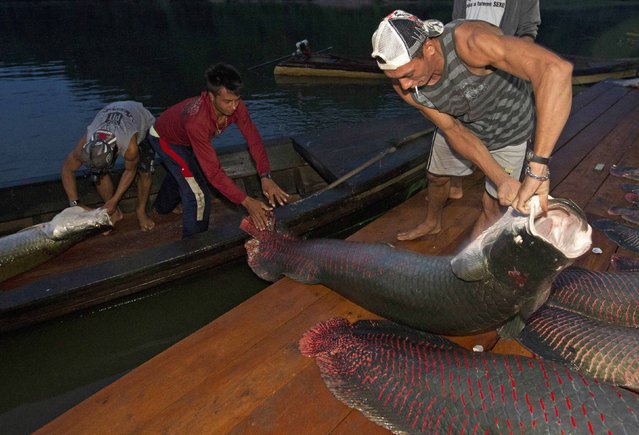
Villagers from the Medio Jurua nature reserve of Brazil's Amazon rainforest arrive with their catch of pirarucus, the largest freshwater fish in South America, after a night of fishing in Manaria Lake, Carauari municipality, September 3, 2012. Catching the pirarucu, a fish that is sought after for its meat and is considered by biologists to be a living fossil, is only allowed once a year by Brazil's environmental protection agency. (Photo by Bruno Kelly/Reuters)

Villagers from the Medio Jurua nature reserve of Brazil's Amazon rainforest arrive with their catch of pirarucus, the largest freshwater fish in South America, after a night of fishing in Manaria Lake, Carauari municipality, September 3, 2012. Catching the pirarucu, a fish that is sought after for its meat and is considered by biologists to be a living fossil, is only allowed once a year by Brazil's environmental protection agency. (Photo by Bruno Kelly/Reuters)
Details
19 Jul 2013 08:53:00
Dancers in mirrorball costumes dance with festival-goers during day two of Glastonbury Festival 2024 at Worthy Farm, Pilton on June 27, 2024 in Glastonbury, England. Founded by Michael Eavis in 1970, Glastonbury Festival features around 3,000 performances across over 80 stages. Renowned for its vibrant atmosphere and iconic Pyramid Stage, the festival offers a diverse lineup of music and arts, embodying a spirit of community, creativity, and environmental consciousness. (Photo by Leon Neal/Getty Images)

Dancers in mirrorball costumes dance with festival-goers during day two of Glastonbury Festival 2024 at Worthy Farm, Pilton on June 27, 2024 in Glastonbury, England. Founded by Michael Eavis in 1970, Glastonbury Festival features around 3,000 performances across over 80 stages. Renowned for its vibrant atmosphere and iconic Pyramid Stage, the festival offers a diverse lineup of music and arts, embodying a spirit of community, creativity, and environmental consciousness. (Photo by Leon Neal/Getty Images)
Details
11 Oct 2025 05:34:00
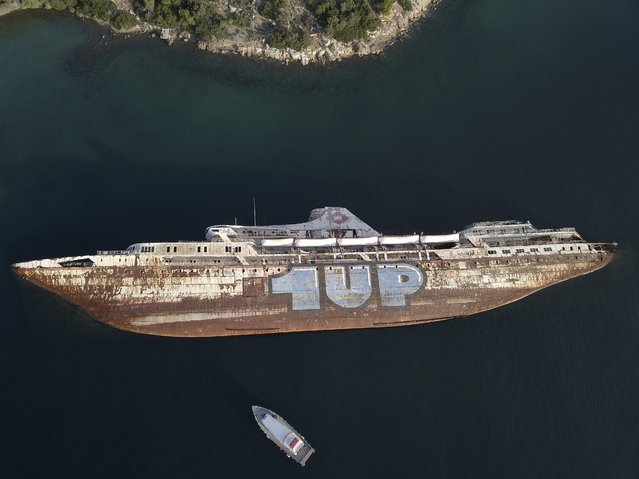
In this Friday, December 4, 2018 photo, a half sunken cruise ship lays on its side, in the Gulf of Elefsina, west of Athens. Dozens of abandoned cargo and passenger ships lie semi-submerged or completely sunken around the Gulf of Elefsina, near Greece’s major port of Piraeus. Now authorities are beginning to remove the dilapidated ships. Some of them have been there for decades, leaking hazards like oil into the environment and creating a danger to modern shipping. One expert calls the abandoned ships “an environmental bomb”. (Photo by Thanassis Stavrakis/AP Photo)

In this Friday, December 4, 2018 photo, a half sunken cruise ship lays on its side, in the Gulf of Elefsina, west of Athens. Dozens of abandoned cargo and passenger ships lie semi-submerged or completely sunken around the Gulf of Elefsina, near Greece’s major port of Piraeus. Now authorities are beginning to remove the dilapidated ships. Some of them have been there for decades, leaking hazards like oil into the environment and creating a danger to modern shipping. One expert calls the abandoned ships “an environmental bomb”. (Photo by Thanassis Stavrakis/AP Photo)
Details
08 Jan 2019 00:05:00
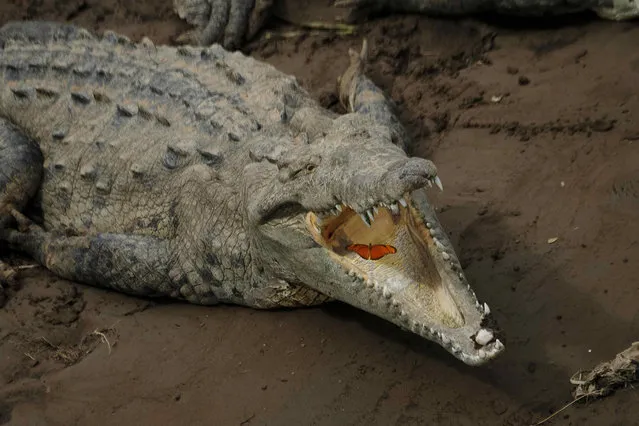
A butterfly flies into the jaws of a crocodile inhabiting the Tarcoles River, the most polluted basin in Central America and one of the most polluted in Latin America, in the place of Tarcoles, province of Puntarenas, Costa Rica, 05 June 2018. Costa Rica, a country recognized worldwide for its environmental policies, seeks to be a leader in the replacement of single-use plastic with renewable and compostable alternatives, despite its lag in terms of recycling and integrated waste management. (Photo by Jeffrey Arguedas/EPA/EFE)

A butterfly flies into the jaws of a crocodile inhabiting the Tarcoles River, the most polluted basin in Central America and one of the most polluted in Latin America, in the place of Tarcoles, province of Puntarenas, Costa Rica, 05 June 2018. Costa Rica, a country recognized worldwide for its environmental policies, seeks to be a leader in the replacement of single-use plastic with renewable and compostable alternatives, despite its lag in terms of recycling and integrated waste management. (Photo by Jeffrey Arguedas/EPA/EFE)
Details
17 Jun 2018 00:03:00


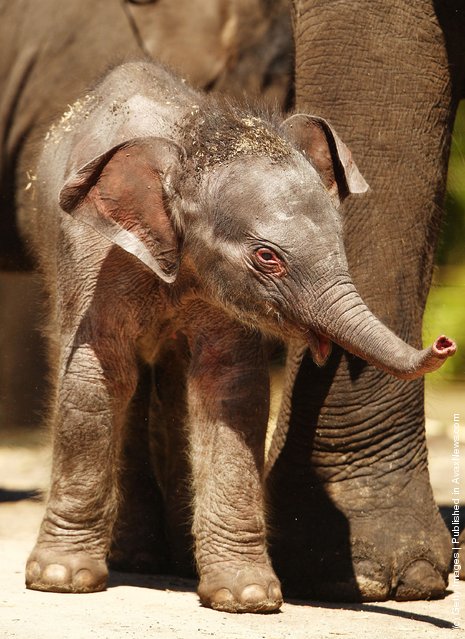
Taronga's first female elephant calf explores the paddock with her mother Pak Boon at Taronga Zoo on November 3, 2010 in Sydney, Australia. The 120kg elephant was born at 1:12am and is Taronga's first female calf and fifth born to The Australian Conservation Management Plan for endangered elephants. The calf will be given a Thai name to reflect the herds' cultural origin. (Photo by Brendon Thorne/Getty Images)
Details
16 Apr 2011 11:01:00


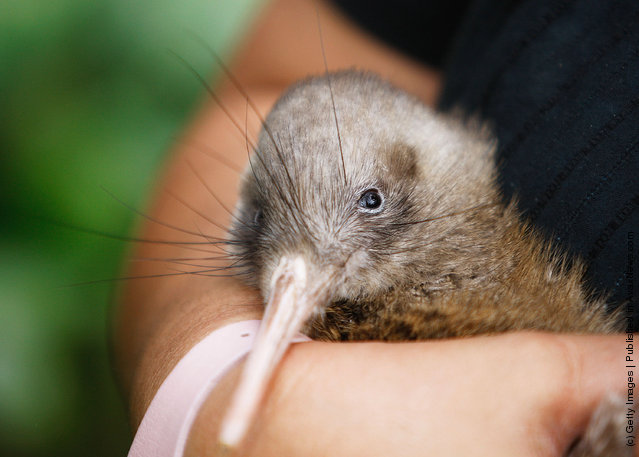
One of ten little spotted kiwi is released on Motuihe Island, a conservation pest-free island close to Auckland, on March 21, 2009 in Auckland, New Zealand. Eventually up to 40 endangered kiwi birds will be relocated to the island. (Photo by Hannah Johnston/Getty Images)
Details
03 Apr 2011 15:13:00