Bluey ballon flies as Spirit of America cheerleaders paricipate in the 96th Macy's Thanksgiving Day Parade in Manhattan, New York City, U.S., November 24, 2022. (Photo by Andrew Kelly/Reuters)
Health workers in personal protective equipments (PPE) carrying Covid-19 coronavirus testing swabs and tubes are seen on bicycles along a street in Beijing on November 24, 2022. (Photo by Jade Gao/AFP Photo)
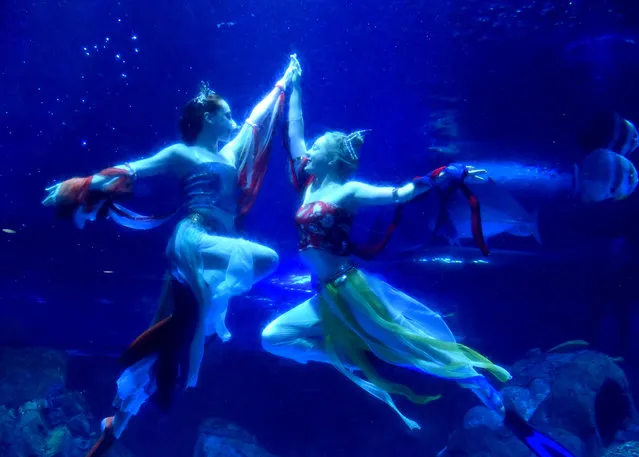
Divers perform underwater “Flying Apsaras” dance at Nanjing Underwater World on September 20, 2023 in Nanjing, Jiangsu Province of China. (Photo by Yang Bo/China News Service/VCG via Getty Images)
A model takes a picture of photographers outside the Anna Sui show at the Strand Rare Book Room in New York on February 10, 2024. (Photo by Jeenah Moon for The Washington Post)
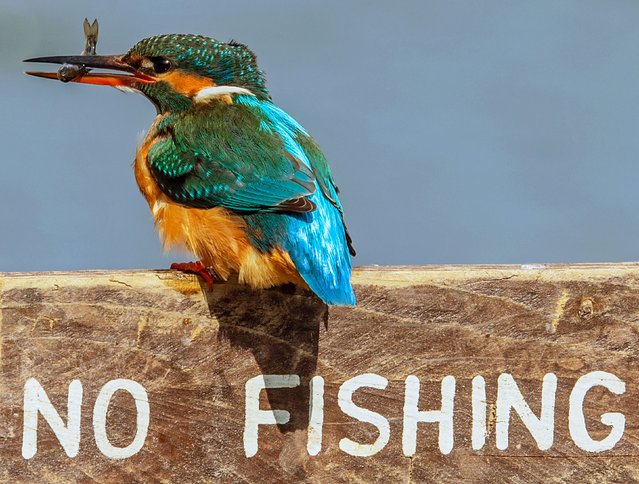
A kingfisher ignores the “no fishing” sign after catching food at Teddesley Park in Staffordshire, England, on Saturday, April 5, 2025. (Photo by Stuart Brock/Anadolu/Getty Images)
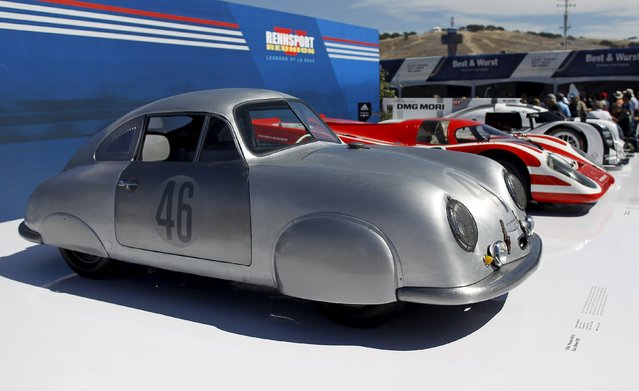
A 1949 Porsche 356 SL is displayed during the Porsche Rennsport Reunion V at Laguna Seca Raceway near Salinas, California, September 26, 2015. The three-day reunion is billed by organizers as the world's largest gathering of Porsche racecars, renowned drivers, and Porsche collector cars. (Photo by Michael Fiala/Reuters)
Widows, who have been abandoned by their families, light sparklers after offering prayers on the banks of the river Yamuna as part of Diwali celebrations organised by non-governmental organisation Sulabh International in Vrindavan, Uttar Pradesh October 21, 2014. (Photo by Ahmad Masood/Reuters)
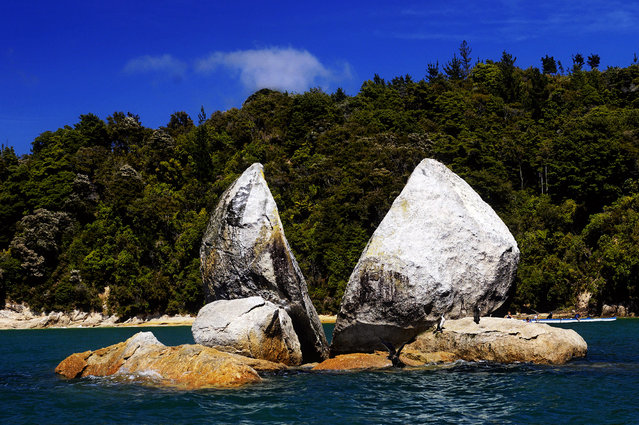
Split Apple Rock is a geological rock formation in The Tasman Bay off the northern coast of the South Island of New Zealand. Made of granite, it is in the shape of an apple which has been cut in half. It is a popular tourist attraction in the waters of the Tasman Sea approximately 50 metres off the coast between Kaiteriteri and Marahau. The rock sits in shallow water at low tide and is accessible by wading. It is also a point of interest for the many tourist boats and pleasure craft which operate along the shores of the Abel Tasman National Park. The cleft to produce two sides of the 'apple' was a natural occurrence. It is unknown when this happened and therefore the cleaving of the rock has attracted mythological explanations.