Loading...
Done
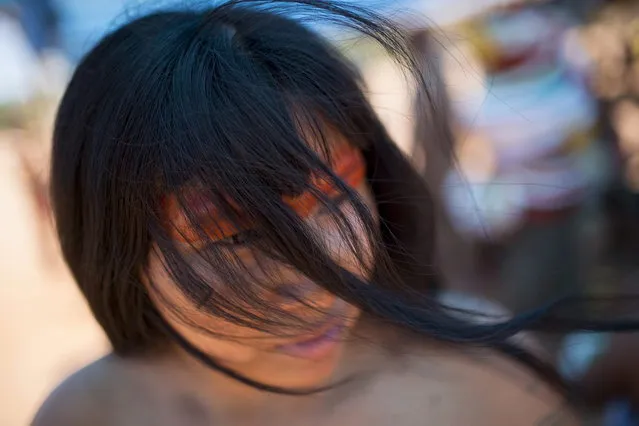
A Waura Indian woman watches the activities of this year's “quarup”, a ritual held over several days to honour in death a person of great importance to them, in Xingu National Park, Mato Grosso State, August 24, 2013. This year the Waura tribe is honouring their late cacique (chief) Atamai, who died in 2012 and helped created the Xingu Park, and his important contribution in facilitating communication between white Brazilians and Indians. (Photo by Ueslei Marcelino/Reuters)

A Waura Indian woman watches the activities of this year's “quarup”, a ritual held over several days to honour in death a person of great importance to them, in Xingu National Park, Mato Grosso State, August 24, 2013. This year the Waura tribe is honouring their late cacique (chief) Atamai, who died in 2012 and helped created the Xingu Park, and his important contribution in facilitating communication between white Brazilians and Indians. (Photo by Ueslei Marcelino/Reuters)
Details
04 Sep 2013 08:48:00
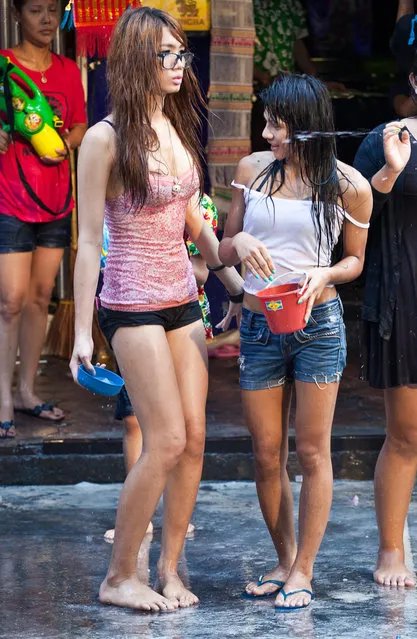
The Songkran festival

“The Songkran festival is celebrated in Thailand as the traditional New Year's Day from 13 to 15 April. It coincides with the New Year of many calendars of South and Southeast Asia. The most obvious celebration of Songkran is the throwing of water upon others. Thais roam the streets with containers of water or water guns. In addition, many Thais will have small bowls of beige colored talc sold cheaply and mixed with water which is then smeared on the faces and bodies of random passerbys as a blessing for the new year” – Wikipedia. (Photo by Seua Yai)
Details
23 Oct 2013 12:00:00
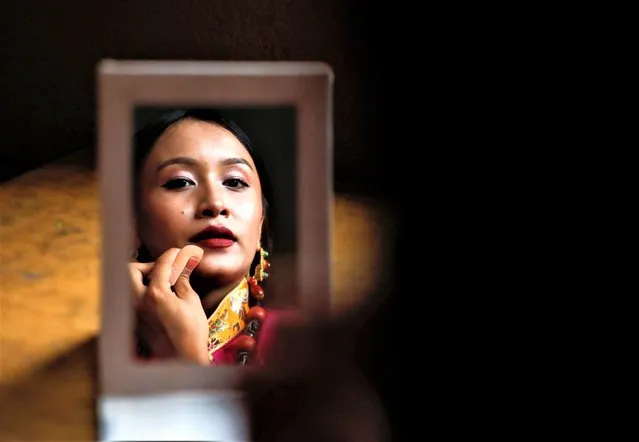
A Tibetan girl is reflected in a mirror, as she gets ready for her performance during an event organised to mark the 88th birthday celebration of their spiritual leader, the Dalai Lama in Kathmandu, Nepal on July 6, 2023. (Photo by Navesh Chitrakar/Reuters)

A Tibetan girl is reflected in a mirror, as she gets ready for her performance during an event organised to mark the 88th birthday celebration of their spiritual leader, the Dalai Lama in Kathmandu, Nepal on July 6, 2023. (Photo by Navesh Chitrakar/Reuters)
Details
15 Jul 2023 01:53:00
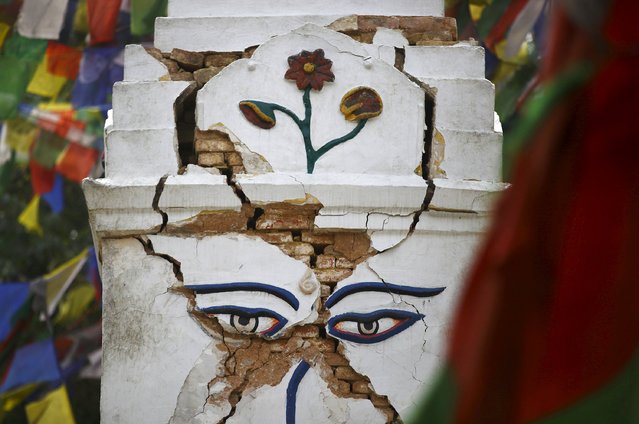
Cracks are seen on one of the shrines at Swoyambhunath Stupa, a UNESCO world heritage site, after Saturday's earthquake in Kathmandu, Nepal April 28, 2015. (Photo by Navesh Chitrakar/Reuters)

Cracks are seen on one of the shrines at Swoyambhunath Stupa, a UNESCO world heritage site, after Saturday's earthquake in Kathmandu, Nepal April 28, 2015. (Photo by Navesh Chitrakar/Reuters)
Details
29 Apr 2015 06:38:00
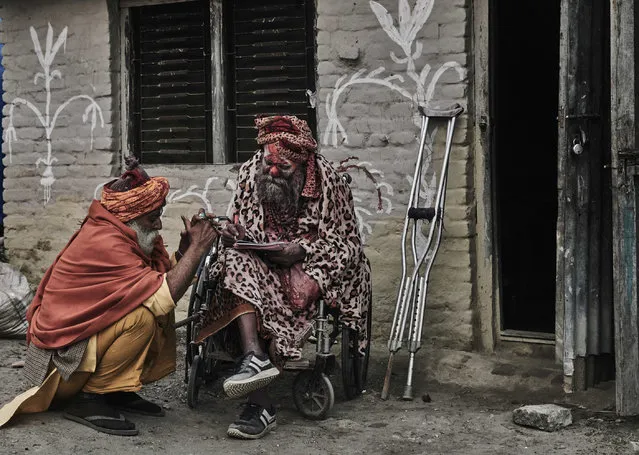
Two holy men with a decorative faces and headdresses, taken in Kathmandu, Nepal. (Photo by Jan Moeller Hansen/Barcroft Images)

Two holy men with a decorative faces and headdresses, taken in Kathmandu, Nepal. Wandering through the cities and forests of Nepal are the holy men, or Sadhus, who have left all materialistic pleasures behind to live a life devoted to God. Their appearances vary from brightly coloured face paints, and decorations, to minimalistic practical clothing, but they all represent the fundamental values and meanings of Hinduism. Danish photographer Jan Moeller Hansen visited the ancient capital city of Kathmandu between 2013 and 2016 and documented the mysterious holy wanderers. (Photo by Jan Moeller Hansen/Barcroft Images)
Details
02 Feb 2017 05:02:00
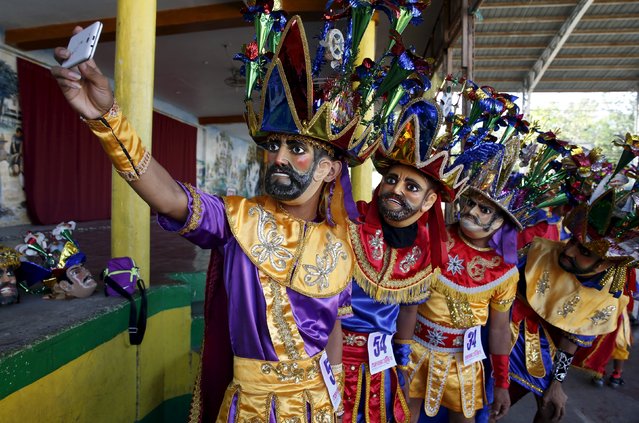
Penitents wearing masks, known locally as “Morions” take a selfie during the start of Holy Week celebrations in Mogpog, Marinduque in central Philippines March 21, 2016. (Photo by Erik De Castro/Reuters)

Penitents wearing masks, known locally as “Morions” take a selfie during the start of Holy Week celebrations in Mogpog, Marinduque in central Philippines March 21, 2016. The Moriones is an annual festival held on Holy Week on the island of Marinduque, Philippines. The “Moriones” are men and women in costumes and masks replicating the garb of biblical Roman soldiers as interpreted by local folks. (Photo by Erik De Castro/Reuters)
Details
22 Mar 2016 11:29:00
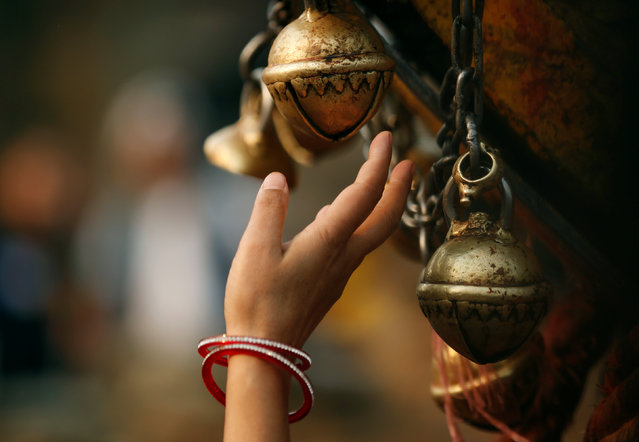
A hand of a devotee is pictured as she rings a bell while offering prayers to the chariot of God Bhairab during the Bisket festival in Bhaktapur, Nepal, April 13, 2016. (Photo by Navesh Chitrakar/Reuters)

A hand of a devotee is pictured as she rings a bell while offering prayers to the chariot of God Bhairab during the Bisket festival in Bhaktapur, Nepal, April 13, 2016. During the festival, also regarded as Nepalese New Year, images of the Hindu god Bhairava and his female counterpart Bhadrakali are enshrined in two large chariots and pulled to an open square after which rituals and festivities are performed. (Photo by Navesh Chitrakar/Reuters)
Details
15 Apr 2016 11:20:00
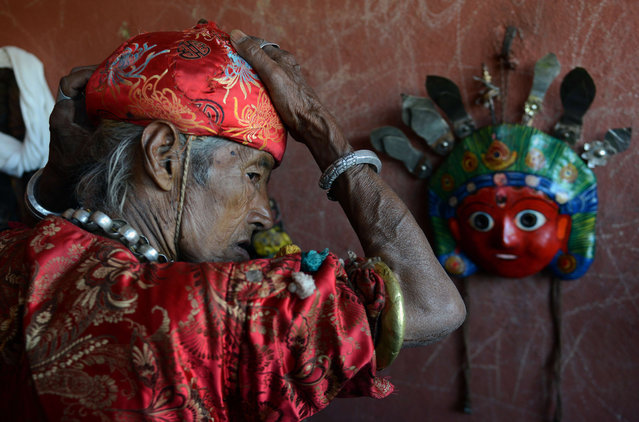
A Nepalese Hindu devotee dresses as a deity as he prepares to participate in festivities at the Shikali Temple during celebrations for the Shikali Jatra festival in the village of Khokana, on the outskirts of Kathmandu, on October 19, 2015. Local villagers, who normally do not celebrate the country's most famous festival of Dashain, celebrate the Shikali Jatra each year. (Photo by Prakash Mathema/AFP Photo)

A Nepalese Hindu devotee dresses as a deity as he prepares to participate in festivities at the Shikali Temple during celebrations for the Shikali Jatra festival in the village of Khokana, on the outskirts of Kathmandu, on October 19, 2015. Local villagers, who normally do not celebrate the country's most famous festival of Dashain, celebrate the Shikali Jatra each year. (Photo by Prakash Mathema/AFP Photo)
Details
22 Oct 2015 08:04:00