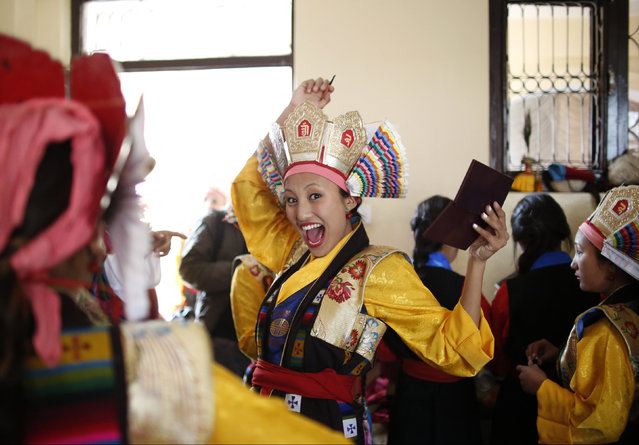
A Tibetan girl reacts as she gets ready to perform in a function organised to mark “Losar” or the Tibetan New Year in Kathmandu, Nepal, February 11, 2016. (Photo by Navesh Chitrakar/Reuters)
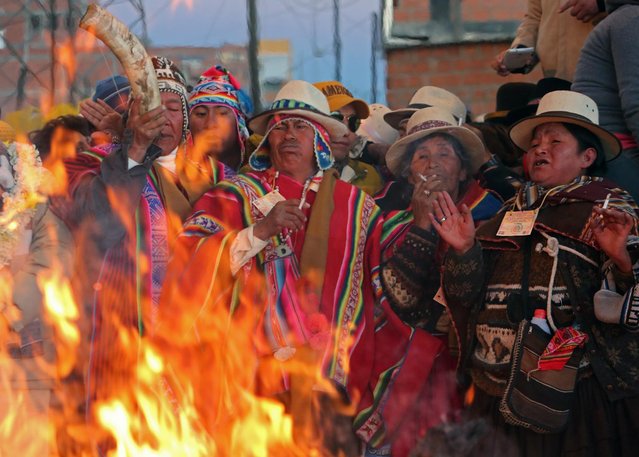
Local priests celebrate the “Aimara New Year”, an Andean Bolivian traditional festival that marks the winter solstice in El Alto, Bolivia, 21 June 2016. Aimara or Aymara means the Return of the Sun. (Photo by Martin Alipaz/EPA)
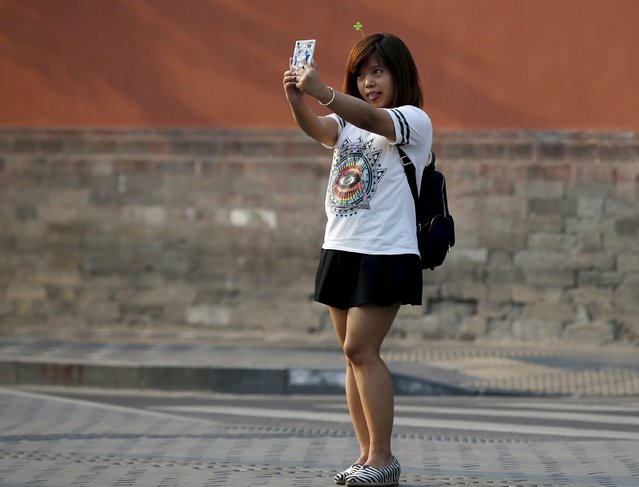
A woman wearing a four-leaf clover-like hairpin takes a selfie nearby Nanluoguxiang street in Beijing, China, September 16, 2015. Wearing antenna styled hairpins in the shape of various flowers and plants at scenic spots has become a new trend in Beijing. (Photo by Kim Kyung-Hoon/Reuters)
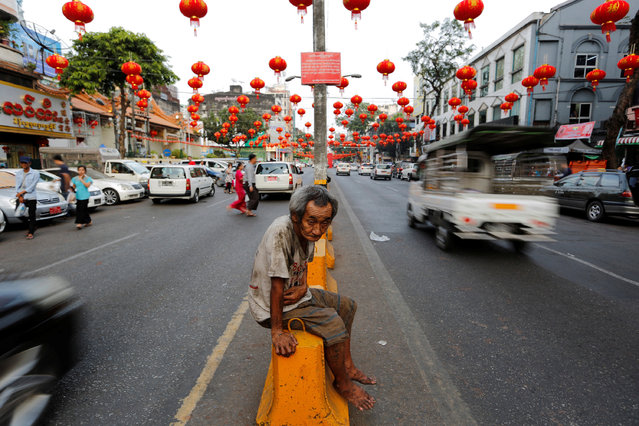
A man sits under lanterns and decorations on a street ahead of the Chinese Lunar New Year in Chinatown Yangon, Myanmar January 23, 2017. (Photo by Soe Zeya Tun/Reuters)
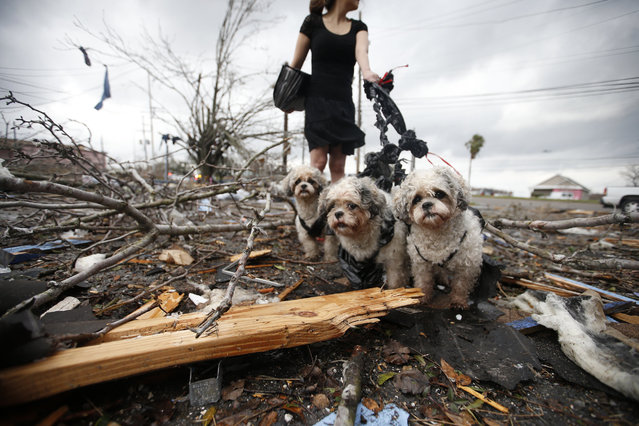
A woman holds thre dogs by a make shift leash amongst the debris left behind by a tornadon on February 7, 2017 in New Orleans, Louisiana. (Photo by Sean Gardner/Getty Images)
A Thai and foreign revelers battle with water guns during the annual Songkran celebration at Khaosan Road, a tourist spot in Bangkok, Thailand, 12 April 2017. The four southeast Asian nations of Myanmar, Thailand, Cambodia and Laos started the Buddhist new year, known as Thingyan in Myanmar and Songkran in Thailand, on April 13. (Photo by Rungroj Yongrit/EPA)
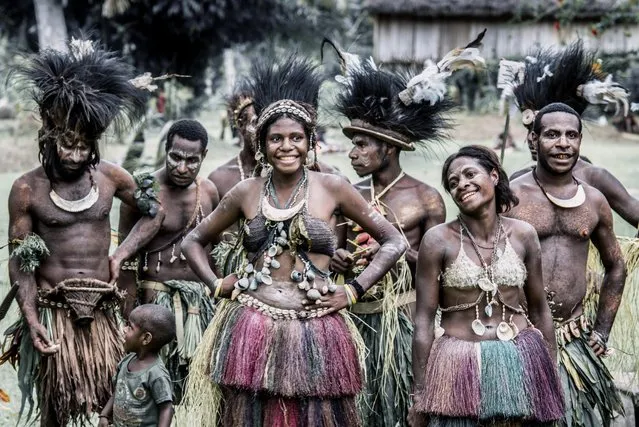
These powerful images capture the spear-wielding tribes of Papua new Guinea who believe they are possessed with the spirit of the crocodile. They show how the Kangunaman clansmen scar their backs to resemble reptile scales while the Huli Wigmen wear elaborate headdresses to signal they are ready for battle. (Photo by Trevor Cole/Media Drum World)
Indian brides and grooms wait for the start of a mass wedding in New Delhi on June 15, 2014. Some 92 low-income and disabled couples tied the knot in a free mass wedding ceremony organised by the non-profit organisation Narayan Sewa Sansthan. (Photo by Chandan Khanna/AFP Photo)