Loading...
Done
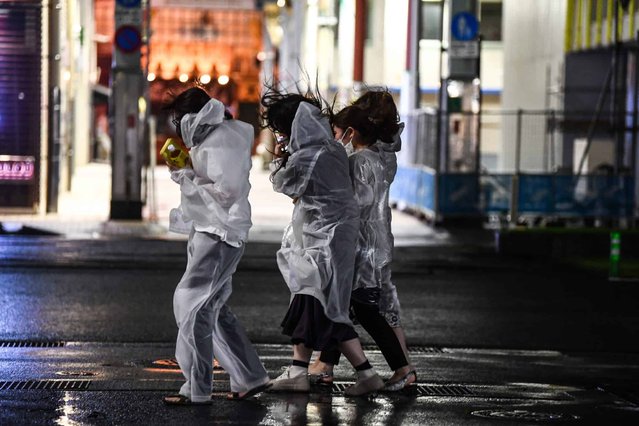
Women walk in heavy rain as Typhoon Haishen hits Kagoshima, Kagoshima prefecture on September 6, 2020. Typhoon Haishen began to lash southern Japan on September 6, with officials warning it could bring record rainfall and winds strong enough to snap power line poles and flip cars. (Photo by Charly Triballeau/AFP Photo)

Women walk in heavy rain as Typhoon Haishen hits Kagoshima, Kagoshima prefecture on September 6, 2020. Typhoon Haishen began to lash southern Japan on September 6, with officials warning it could bring record rainfall and winds strong enough to snap power line poles and flip cars. (Photo by Charly Triballeau/AFP Photo)
Details
08 Sep 2020 00:07:00
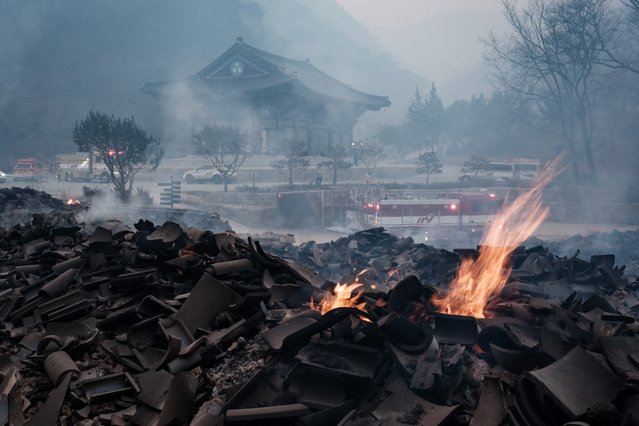
Embers remain among the debris after most of the buildings were burned to the ground in a wildfire at Gounsa Temple in Uiseong on March 26, 2025. At least 18 people have been killed in one of South Korea's worst wildfire outbreaks, with multiple blazes burning and causing “unprecedented damage”, the acting president said. (Photo by Yasuyoshi Chiba/AFP Photo)

Embers remain among the debris after most of the buildings were burned to the ground in a wildfire at Gounsa Temple in Uiseong on March 26, 2025. At least 18 people have been killed in one of South Korea's worst wildfire outbreaks, with multiple blazes burning and causing “unprecedented damage”, the acting president said. (Photo by Yasuyoshi Chiba/AFP Photo)
Details
06 May 2025 11:46:00
Russian police cadets march during general rehearsal of the Victory Day parade on the Dvortsovaya Square in St. Petersburg, Russia, 07 May 2021. The military parade marking the 76th anniversary of the victory over Nazi Germany in the World War II will take place on the Dvortsovaya Square on 09 May 2021. (Photo by Anatoly Maltsev/EPA/EFE)

Russian police cadets march during general rehearsal of the Victory Day parade on the Dvortsovaya Square in St. Petersburg, Russia, 07 May 2021. The military parade marking the 76th anniversary of the victory over Nazi Germany in the World War II will take place on the Dvortsovaya Square on 09 May 2021. (Photo by Anatoly Maltsev/EPA/EFE)
Details
08 May 2021 09:12:00
A priest comforts one of the relatives of the victims, before a mass in their memory, as Lebanon marks one-year anniversary of Beirut port explosion, at the port in Beirut, Lebanon on August 4, 2021. (Photo by Aziz Taher/Reuters)

A priest comforts one of the relatives of the victims, before a mass in their memory, as Lebanon marks one-year anniversary of Beirut port explosion, at the port in Beirut, Lebanon on August 4, 2021. United in grief and anger, families of the victims and other Lebanese came out into the streets of Beirut on Wednesday to demand accountability as banks, businesses and government offices shuttered to mark one year since the horrific explosion. (Photo by Aziz Taher/Reuters)
Details
05 Aug 2021 08:47:00
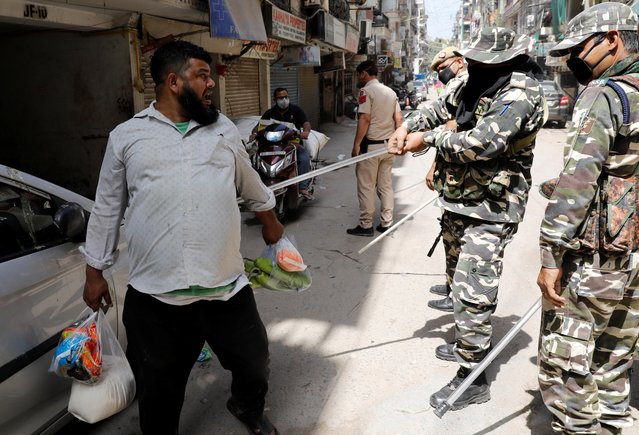
Police officers wield their batons against a man as a punishment for breaking the lockdown rules after India ordered a 21-day nationwide lockdown to limit the spread of coronavirus in New Delhi, India, March 25, 2020. (Photo by Adnan Abidi/Reuters)

Police officers wield their batons against a man as a punishment for breaking the lockdown rules after India ordered a 21-day nationwide lockdown to limit the spread of coronavirus in New Delhi, India, March 25, 2020. (Photo by Adnan Abidi/Reuters)
Details
05 Apr 2020 00:03:00
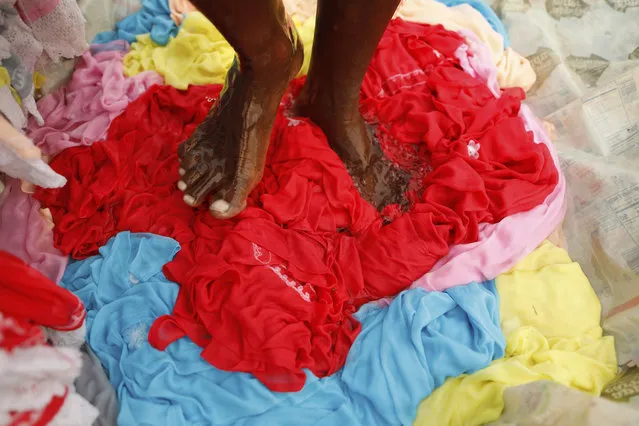
A dhobi, or a washerman washes cloths on the banks of the River Gomti in Lucknow, India, Saturday, September 12, 2020. Dhobis are traditional laundry workers who wash clothes by hand and dry them in the sun, an occupation which has been in existence for generations. Most cities in India have a Dhobi Ghat, or washermen's area, where the city's pile of clothes is laundered. This practice is still popular in India, despite of modern technology. Around 1,000 families work in Lucknow's Dhobi Ghat. However, in light of the novel coronavirus, their wages have decreased drastically. With each family earning around US$100-200 per month. (Photo by Rajesh Kumar Singh/AP Photo)

A dhobi, or a washerman washes cloths on the banks of the River Gomti in Lucknow, India, Saturday, September 12, 2020. Dhobis are traditional laundry workers who wash clothes by hand and dry them in the sun, an occupation which has been in existence for generations. Most cities in India have a Dhobi Ghat, or washermen's area, where the city's pile of clothes is laundered. This practice is still popular in India, despite of modern technology. Around 1,000 families work in Lucknow's Dhobi Ghat. However, in light of the novel coronavirus, their wages have decreased drastically. With each family earning around US$100-200 per month. (Photo by Rajesh Kumar Singh/AP Photo)
Details
25 Sep 2020 00:03:00
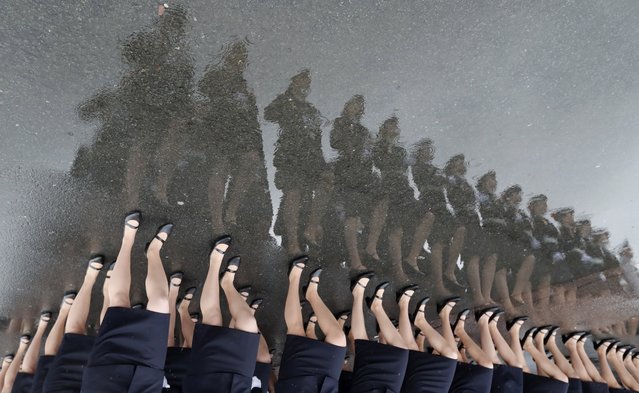
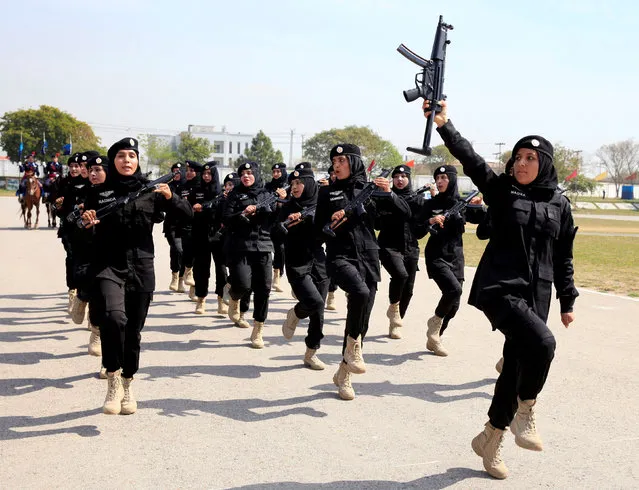
Female members of police commando march during a ceremony on International Women's Day, at the police headquarters in Islamabad, Pakistan March 8, 2018. (Photo by Faisal Mahmood/Reuters)

Female members of police commando march during a ceremony on International Women's Day, at the police headquarters in Islamabad, Pakistan March 8, 2018. (Photo by Faisal Mahmood/Reuters)
Details
09 Mar 2018 08:49:00
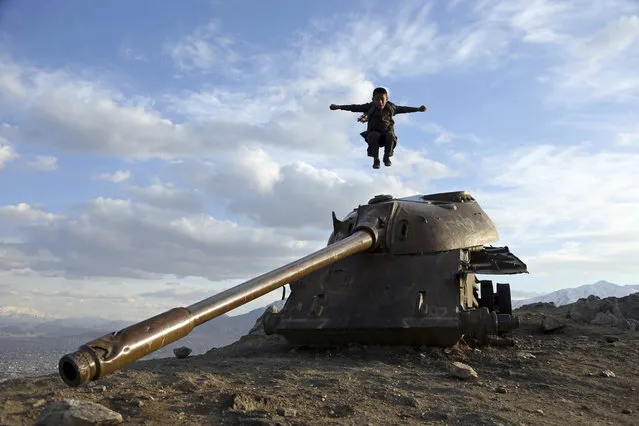
An Afghan boy jumps off the turret of a Soviet tank on a hilltop on the the outskirts of Kabul, Sunday, March, 4, 2018. (Photo by Rahmat Gul/AP Photo)

An Afghan boy jumps off the turret of a Soviet tank on a hilltop on the the outskirts of Kabul, Sunday, March, 4, 2018. (Photo by Rahmat Gul/AP Photo)
Details
23 Mar 2018 00:03:00