Loading...
Done
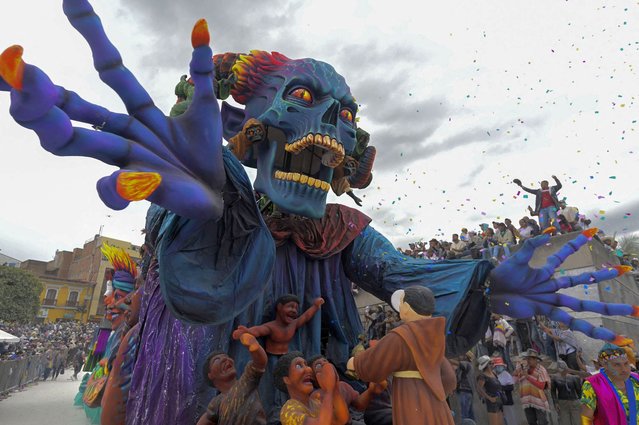
Picture of a float taking part in the “White Day” parade during the Carnival of Blacks and Whites in Pasto, Colombia on January 6, 2024. The Blacks and Whites carnival has its origins in a mix of Andean, Amazonian and Pacific cultural expressions, and it celebrates the ethnic diversity in the region and was proclaimed by UNESCO as intangible cultural heritage in 2009. (Photo by Joaquín Sarmiento/AFP Photo)

Picture of a float taking part in the “White Day” parade during the Carnival of Blacks and Whites in Pasto, Colombia on January 6, 2024. The Blacks and Whites carnival has its origins in a mix of Andean, Amazonian and Pacific cultural expressions, and it celebrates the ethnic diversity in the region and was proclaimed by UNESCO as intangible cultural heritage in 2009. (Photo by Joaquín Sarmiento/AFP Photo)
Details
17 Mar 2025 03:56:00
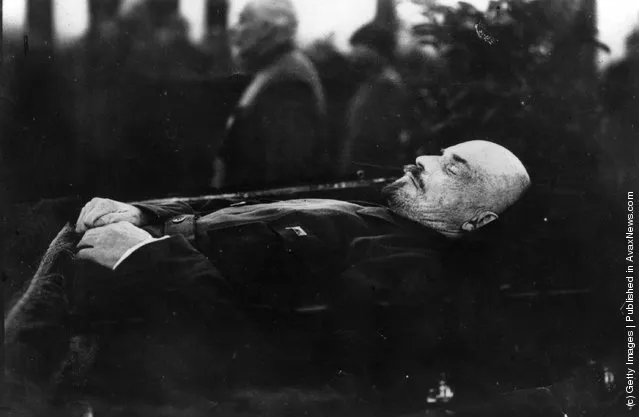
1924:  Vladimir Ilyich Lenin lying in state in the Kremlin

Photo: Vladimir Ilyich Lenin (1870 – 1924) lying in state in the Kremlin. (Photo by Hulton Archive/Getty Images). 1924

Important! For the same article in Russian language click here.

Something quite intriguing is happening within Russian-speaking internet during the last few – should you type a fully academic inquiry (at least, according to Russian academic requirements) in national search engines for "Lenin's mausoleum" – the first thing you get (even in top 10 searches) is website pages talking about black magic and occult. Website authors view this construction differently, but unconditionally agree on one thing: the mausoleum of the "leader of the world proletariat” – the essence of a magical artifact, a sort of “energy vampire”. It was built with a certain purpose: to drain the energy out of miserable Soviet citizens on one hand; and to poison the anthroposphere of one-sixth part of the earth with its vibes (the exact territory that was occupied by the former Soviet Union), depriving the Russian people of will to resist on the other hand. Complete nonsense? No doubt. Nevertheless, an intriguing one. Well, probably because some oddities do exist in mausoleum's history. These oddities are the thing we are going to discuss this time. First, let me refresh you memory on the subject.
Details
16 Oct 2011 11:27:00
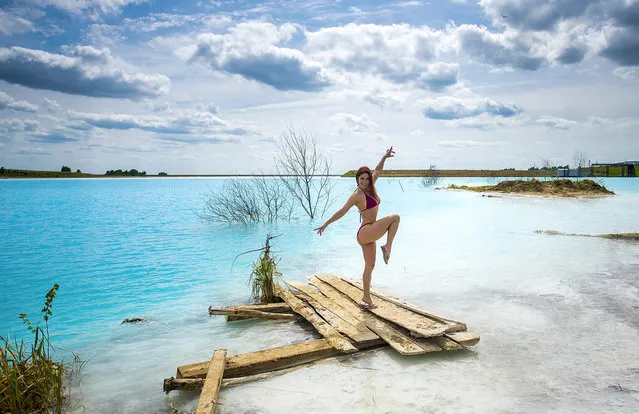
In this undated handout photo taken by mrwed54, a woman poses for a photo by a lake in the Siberian city of Novosibirsk, about 2,800 kilometers (1,750 miles) east of Moscow, Russia. Thousands of Novosibirsk residents, from scantily clad women to newlyweds have been instagramming selfies near the lake nicknamed the “Siberian Malvides” after the far-flung tropical islands in the Indian Ocean. This is in fact is a man-made dumb of coal from a nearby power station that provides for most of Novosibirsk’s energy needs. Environmentalists are warning people against coming into contact with the water. (Photo by mrwed54 via AP Photo)

In this undated handout photo taken by mrwed54, a woman poses for a photo by a lake in the Siberian city of Novosibirsk, about 2,800 kilometers (1,750 miles) east of Moscow, Russia. Thousands of Novosibirsk residents, from scantily clad women to newlyweds have been instagramming selfies near the lake nicknamed the “Siberian Malvides” after the far-flung tropical islands in the Indian Ocean. This is in fact is a man-made dumb of coal from a nearby power station that provides for most of Novosibirsk’s energy needs. Environmentalists are warning people against coming into contact with the water. (Photo by mrwed54 via AP Photo)
Details
15 Jul 2019 00:07:00
Labourers walk near trucks loaded with logs, which are trapped on a muddy road, near an unreserved forest in the village of Igbatoro, southwest Nigeria, August 28, 2014. (Photo by Akintunde Akinleye/Reuters)

Labourers walk near trucks loaded with logs, which are trapped on a muddy road, near an unreserved forest in the village of Igbatoro, southwest Nigeria, August 28, 2014. Wood, a form of biomass, is the sole source of energy for hundreds of millions of Africans who lack access to modern sources of power, and logging, both legal and illegal, remains a lucrative business that has contributed to the rapid shrinking of Africa's rainforests and woodlands. (Photo by Akintunde Akinleye/Reuters)
Details
21 Nov 2014 12:50:00
Club-goers dance at “Morning Gloryville” at the Ministry of Sound in south London August 11, 2015. (Photo by Toby Melville/Reuters)

Club-goers dance at “Morning Gloryville” at the Ministry of Sound in south London August 11, 2015. Morning dance parties with names like “Morning Gloryville” and "Daybreaker" are gathering steam in cities across the world, giving rise to a movement known as “conscious clubbing”. Its founders aim to create the energy and community of electronic dance parties with fruit smoothies and coffee instead of the drugs and alcohol more common after nightfall. (Photo by Toby Melville/Reuters)
Details
18 Aug 2015 14:06:00
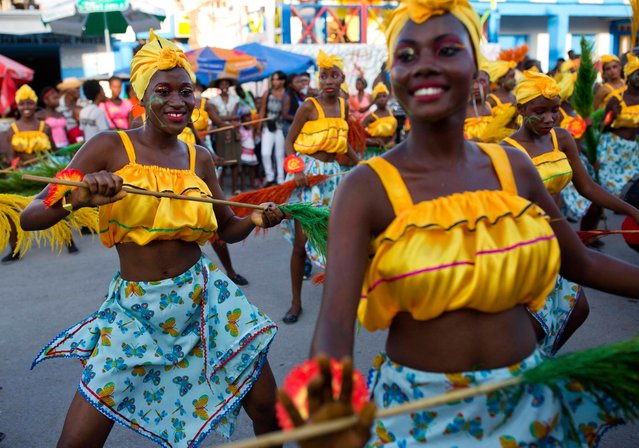
Dancers perform at a Carnival parade in Les Cayes, Haiti, Tuesday, February 28, 2017. (Photo by Dieu Nalio Chery/AP Photo)

Dancers perform at a Carnival parade in Les Cayes, Haiti, Tuesday, February 28, 2017. Haiti's three-day Carnival festivities have brought rum-fueled parties, imaginative costumes and high-energy dance music to a southern city that's still recovering from last year's punishing Hurricane Matthew. (Photo by Dieu Nalio Chery/AP Photo)
Details
03 Mar 2017 00:02:00
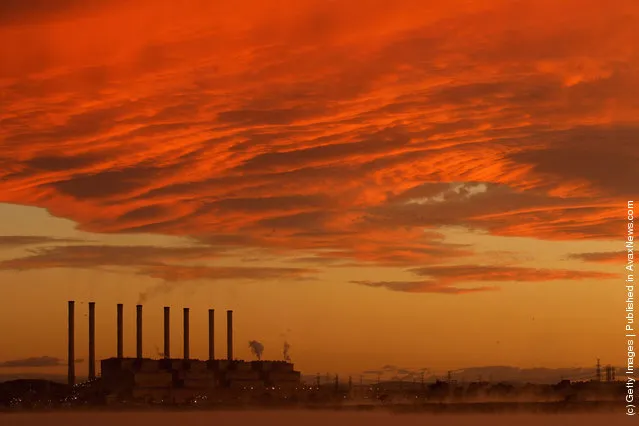
A view of the Hazelwood Power Station across the cooling pondage at sunrise in Melbourne, Australia

A view of the Hazelwood Power Station across the cooling pondage at sunrise on March 21, 2012 in Melbourne, Australia. The brown coal fueled power station, located in Latrobe Valley is the oldest in Victoria and provides the state nearly 25% of its energy. In 2005 Hazelwood was labeled Australia's least carbon efficient power station by WWF Australia and continues to be a target of issue of environmentalist groups. (Photo by Hamish Blair/Getty Images)
Details
21 Mar 2012 08:34:00
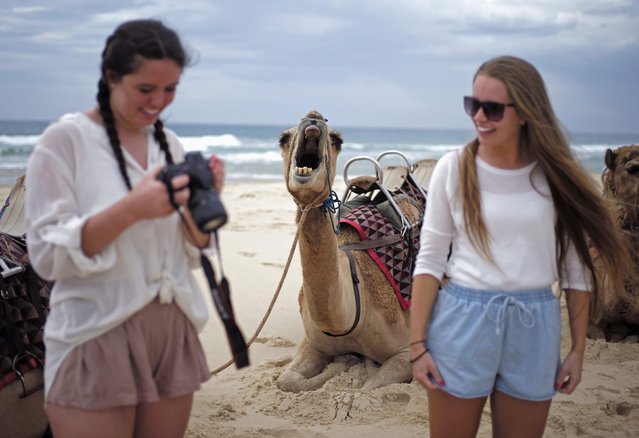
A camel yawns as a tourist checks images on her camera following a ride on a camel safari alongside the Pacific Ocean on Lighthouse Beach, north of Sydney, December 4, 2014. For 25 years camel rides on this beach have given visitors to Australia's holiday coast a rare experience available only in a handful of locations in the country. (Photo by Jason Reed/Reuters)

A camel yawns as a tourist checks images on her camera following a ride on a camel safari alongside the Pacific Ocean on Lighthouse Beach, north of Sydney, December 4, 2014. For 25 years camel rides on this beach have given visitors to Australia's holiday coast a rare experience available only in a handful of locations in the country. Australia's long history with the “ships of the desert” goes back to the 1800s when they were imported from Afghanistan and India for use as transportation across Australia's vast deserts before being released into the wild following their replacement by motorised transport. (Photo by Jason Reed/Reuters)
Details
06 Dec 2014 12:48:00