Loading...
Done
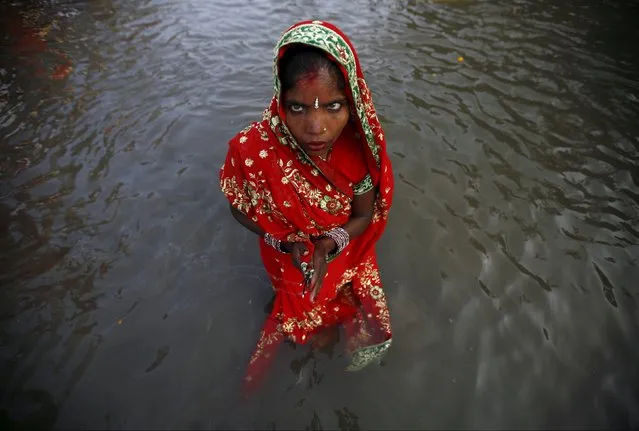
A devotee offers prayers to the setting sun during the "Chhat" festival at Bagmati river in Kathmandu, Nepal November 17, 2015. (Photo by Navesh Chitrakar/Reuters)

A devotee offers prayers to the setting sun during the "Chhat" festival at Bagmati river in Kathmandu, Nepal November 17, 2015. Hindus in Nepal celebrate "Chhat", a four-day festival that honours the sun god, by praying at sunrise and sunset, and seek blessings for one's family by giving offerings. (Photo by Navesh Chitrakar/Reuters)
Details
19 Nov 2015 08:01:00
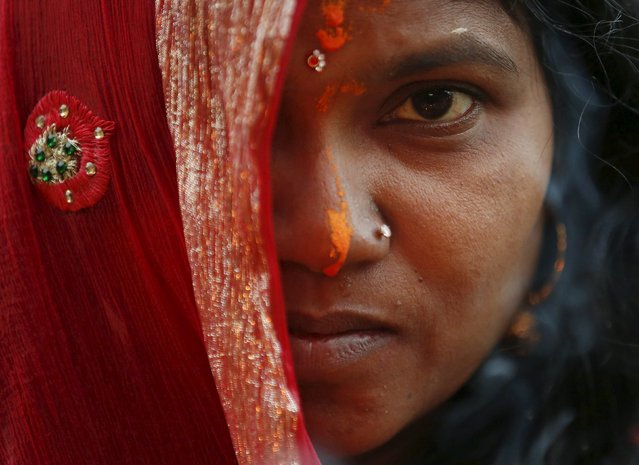
A face of a devotee covered with her cloth is pictured as she offers prayers to the rising sun during the "Chhat" festival in Kathmandu, Nepal November 18, 2015. (Photo by Navesh Chitrakar/Reuters)

A face of a devotee covered with her cloth is pictured as she offers prayers to the rising sun during the "Chhat" festival in Kathmandu, Nepal November 18, 2015. Hindus in Nepal celebrate "Chhat", a four-day festival that honours the sun god by praying at sunrise and sunset and seeking blessings for ones family by giving offerings. (Photo by Navesh Chitrakar/Reuters)
Details
20 Nov 2015 08:00:00
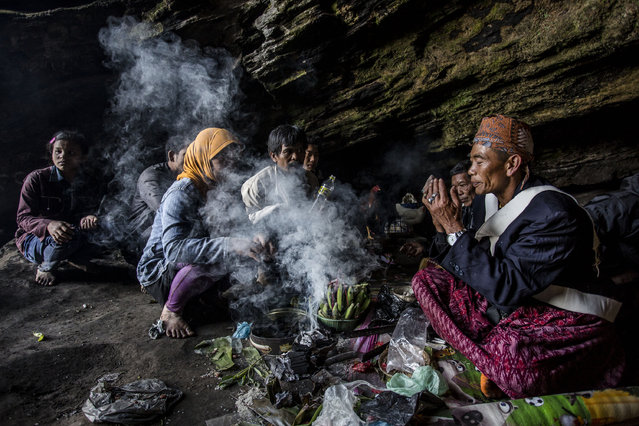
A Tenggerese shaman praying for worshippers at Widodaren cave during the Tenggerese Hindu Yadnya Kasada festival on July 31, 2015 in Probolinggo, East Java, Indonesia. The festival is the main festival of the Tenggerese people and lasts about a month. On the fourteenth day, the Tenggerese make the journey to Mount Bromo to make offerings of rice, fruits, vegetables, flowers and livestock to the mountain gods by throwing them into the volcano's caldera. (Photo by Ulet Ifansasti/Getty Images)

A Tenggerese shaman praying for worshippers at Widodaren cave during the Tenggerese Hindu Yadnya Kasada festival on July 31, 2015 in Probolinggo, East Java, Indonesia. The festival is the main festival of the Tenggerese people and lasts about a month. On the fourteenth day, the Tenggerese make the journey to Mount Bromo to make offerings of rice, fruits, vegetables, flowers and livestock to the mountain gods by throwing them into the volcano's caldera. The origin of the festival lies in the 15th century when a princess named Roro Anteng started the principality of Tengger with her husband Joko Seger, and the childless couple asked the mountain Gods for help in bearing children. The legend says the Gods granted them 24 children but on the provision that the 25th must be tossed into the volcano in sacrifice. The 25th child, Kesuma, was finally sacrificed in this way after initial refusal, and the tradition of throwing sacrifices into the caldera to appease the mountain Gods continues today. (Photo by Ulet Ifansasti/Getty Images)

Details
01 Aug 2015 12:07:00
Stunning images have revealed ice-cool British tourists chilling out inside Europe’s largest glacier – despite being at risk of flooding. The spectacular collection of images show the explorers braving the freezing temperatures to climb, photograph and even abseil down the inside of the icy cliff sides. Another image shows one visitor on his knees appearing to pray next to a water fall of melted ice. Other glistening shots show an adventurer trying to keep warm by a fire whose flames dance beautifully against the glossy roof. More shots show the caves sparkling like crystal with one ice formation appearing to resemble bubble wrap. In one picture, a brave tourist stands at the edge of a river flowing through the centre of the frosty caves. (Photo by Einar Runar Sigurdsson/Mediadrumworld.com)

Stunning images have revealed ice-cool British tourists chilling out inside Europe’s largest glacier – despite being at risk of flooding. The spectacular collection of images show the explorers braving the freezing temperatures to climb, photograph and even abseil down the inside of the icy cliff sides. Another image shows one visitor on his knees appearing to pray next to a water fall of melted ice. Other glistening shots show an adventurer trying to keep warm by a fire whose flames dance beautifully against the glossy roof. (Photo by Einar Runar Sigurdsson/Mediadrumworld.com)
Details
03 Dec 2016 11:36:00
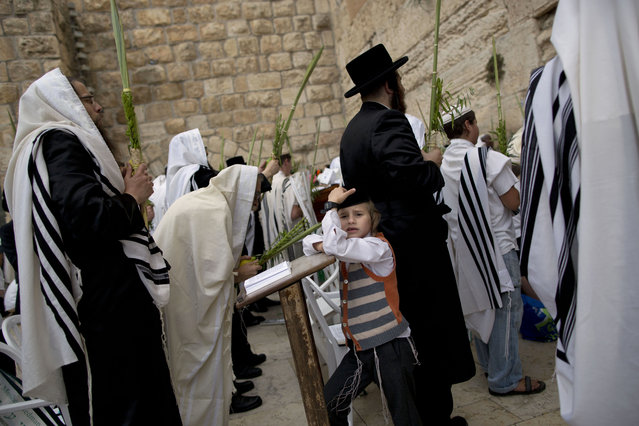
Covered in prayer shawls, Ultra-Orthodox Jewish men participate in a blessing during the holiday of Sukkot, in front of the Western Wall, the holiest site where Jews can pray in Jerusalem's Old City, Wednesday, September 30, 2015. The Cohanim, believed to be descendants of priests who served God in the Jewish Temple before it was destroyed, perform a blessing ceremony of the Jewish people three times a year during the festivals of Passover, Shavuot and Sukkot. (Photo by Oded Balilty/AP Photo)

Covered in prayer shawls, Ultra-Orthodox Jewish men participate in a blessing during the holiday of Sukkot, in front of the Western Wall, the holiest site where Jews can pray in Jerusalem's Old City, Wednesday, September 30, 2015. The Cohanim, believed to be descendants of priests who served God in the Jewish Temple before it was destroyed, perform a blessing ceremony of the Jewish people three times a year during the festivals of Passover, Shavuot and Sukkot. (Photo by Oded Balilty/AP Photo)
Details
03 Oct 2015 08:00:00
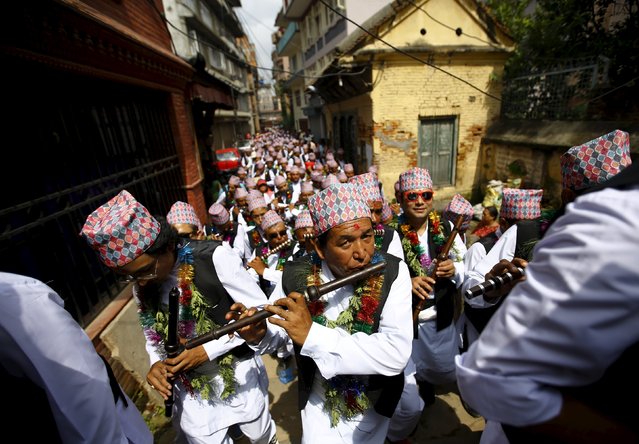
Devotees in traditional attire play flutes as they take part in a parade commemorating the Neku Jatra-Mataya festival, the Festival of Lights, in Lalitpur, Nepal August 31, 2015. Devotees celebrate the Buddhist festival which marks the victory of Sakyamuni Buddha over Mara, by praying for the souls of departed family members and holding parades throughout the city. (Photo by Navesh Chitrakar/Reuters)

Devotees in traditional attire play flutes as they take part in a parade commemorating the Neku Jatra-Mataya festival, the Festival of Lights, in Lalitpur, Nepal August 31, 2015. Devotees celebrate the Buddhist festival which marks the victory of Sakyamuni Buddha over Mara, by praying for the souls of departed family members and holding parades throughout the city. (Photo by Navesh Chitrakar/Reuters)
Details
18 Nov 2015 08:01:00
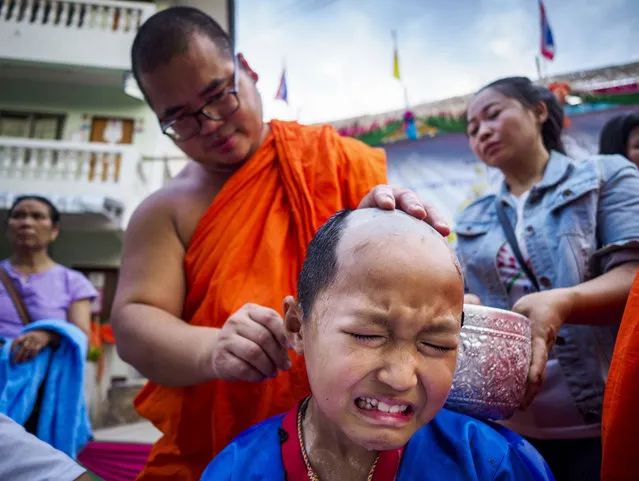
Shan boys pray before they have their heads shaved in anticipation of their ordination in the Poy Song Long Ceremony at Wat Pa Pao in Chiang Mai, Thailand on April 3, 2018. Poy Sang Long (“The Festival of the Crystal Sons”) is a ceremony that marks a rite of passage among the Buddhist Shan people in Myanmar and northern Thailand. Boys between seven and fourteen years of age are ordained as Buddhist novices during a three day ceremony. Before the ceremony starts the boys have their heads shaved. (Photo by Jack Kurtz/ZUMA Wire/Rex Features/Shutterstock)

Shan boys pray before they have their heads shaved in anticipation of their ordination in the Poy Song Long Ceremony at Wat Pa Pao in Chiang Mai, Thailand on April 3, 2018. Poy Sang Long (“The Festival of the Crystal Sons”) is a ceremony that marks a rite of passage among the Buddhist Shan people in Myanmar and northern Thailand. Boys between seven and fourteen years of age are ordained as Buddhist novices during a three day ceremony. Before the ceremony starts the boys have their heads shaved. (Photo by Jack Kurtz/ZUMA Wire/Rex Features/Shutterstock)
Details
06 Apr 2018 07:59:00
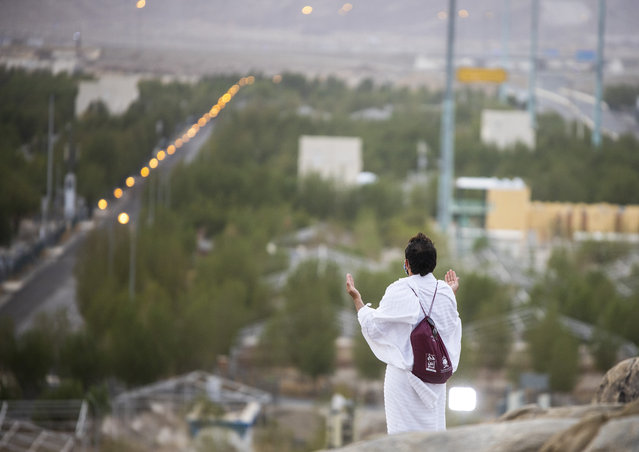
Muslim pilgrims pray on top of the rocky hill known as Mountain of Mercy on the Plain of Arafat during the annual hajj pilgrimage near the holy city of Mecca, Saudi Arabia, Thursday, July 30, 2020. Only about 1,000 pilgrims will be allowed to perform the annual hajj pilgrimage this year due to the virus pandemic. (Photo by Saudi Ministry of Media via AP Photo)

Muslim pilgrims pray on top of the rocky hill known as Mountain of Mercy on the Plain of Arafat during the annual hajj pilgrimage near the holy city of Mecca, Saudi Arabia, Thursday, July 30, 2020. Only about 1,000 pilgrims will be allowed to perform the annual hajj pilgrimage this year due to the virus pandemic. (Photo by Saudi Ministry of Media via AP Photo)
Details
01 Aug 2020 00:03:00