The aerial view shows terraced hills at Helin village in Anqing, in eastern China's Anhui province on January 12, 2024. (Photo by AFP Photo/China Stringer Network)
The Prince Albert Cairn, built in 1862 by Queen Victoria, is surrounded by snow and ice, near Balmoral, Aberdeenshire, Scotland, Friday November 22, 2024. (Photo by Jane Barlow/PA Wire via AP Photo)
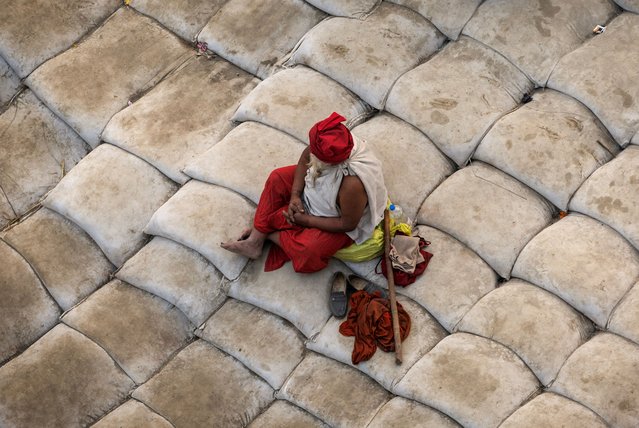
A Sadhu or a Hindu holy man sits on the banks before taking a holy dip at Sangam, the confluence of the Ganges and Yamuna rivers with the mythical, invisible Saraswati river, during the “Maha Kumbh Mela”, or the Great Pitcher Festival, in Prayagraj, India, on January 13, 2025. (Photo by Adnan Abidi/Reuters)
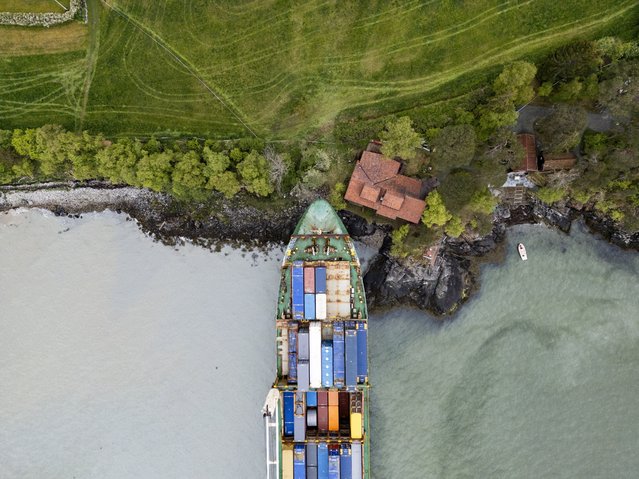
The container ship NCL Salten ran aground at Byneset, outside Trondheim, Norway. A man in Norway woke up to find a massive container ship in his front garden. The 135-metre (443-foot) vessel missed Johan Helberg's house by a few metres at around 5am local time on Thursday, May 22, 2025 in Byneset, near Trondheim. Mr. Helberg was only made aware of the incident after his panicked neighbour, who had seen the ship heading straight for shore, repeatedly rang his doorbell and eventually called him on the phone. (Photo by South West News Service)
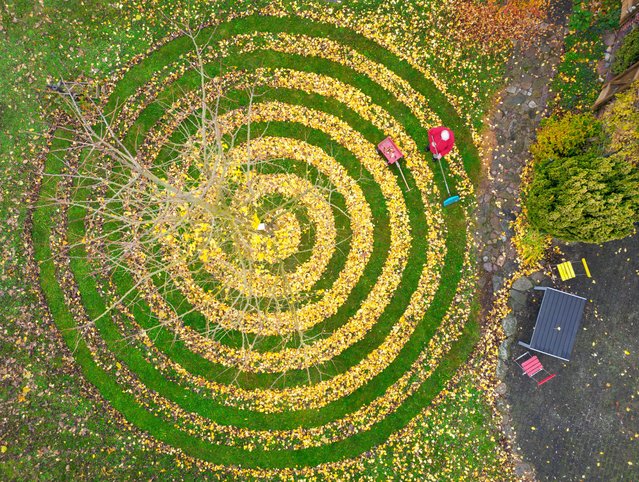
A striking spiral of golden ginkgo leaves raked with care in a private garden in Petersdorf, Brandenburg, Germany on November 2, 2025. (Photo by Patrick Pleu/dpa)
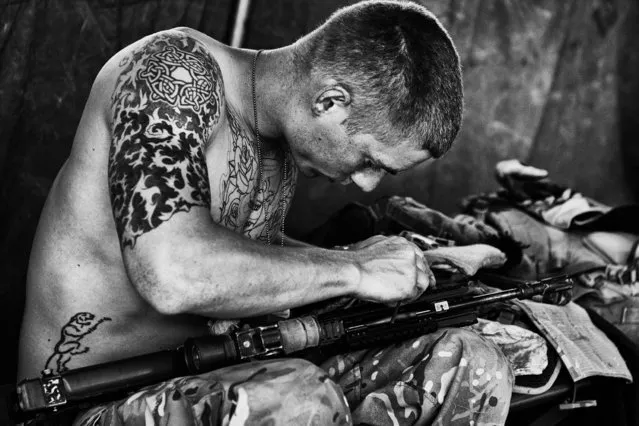
A Scots soldier has won a top award for his photos vividly depicting Army life in Afghanistan. Corporal Jamie Peters took the overall first prize for his portfolio in the annual Army Photographic Competition. Photo: Jamie's overall winning image entitled “Celtic Warrior” and shows Private Ross Cunningham from 1 Scots cleaning his personal weapon. (Photo by Jamie Peters/PA Wire)
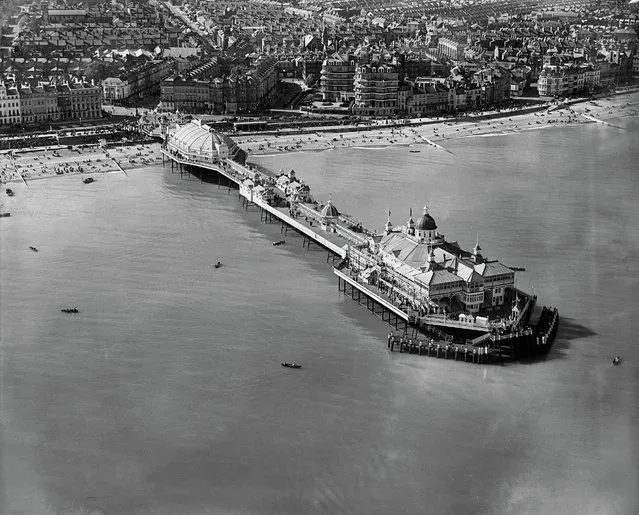
While the lido was described as bringing “modernism to the masses” on the British coast it was just the latest example of a trend that had been developing since Victorian times – transforming seaside towns into resorts for leisure and entertainment. In the latter half of the nineteenth century, the fashion was for local authorities to build great piers stretching from the promenade out into the sea. The Eastbourne Pier, pictured here in May 1931, was erected between 1866 and 1870 to an ingenious design by Eugenius Birch, which saw the structure sitting on special cups allowing the supporting struts to “move” in bad weather. Arranged on the pier's 1,000-foot length were kiosks, a theatre, a ballroom and a camera obscura. 1931. (Photo by Aerofilms Collection via “A History of Britain From Above”)