Loading...
Done
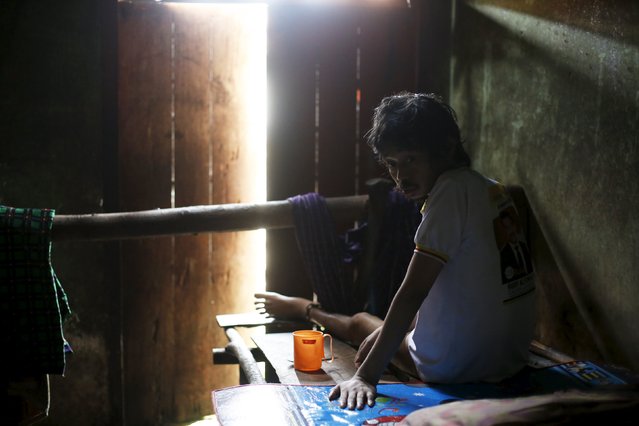
A man suffering from mental illness sits chained on a bed in his room inside his family home in Curug Sulanjana village in Serang, Banten province, Indonesia March 23, 2016. (Photo by Reuters/Beawiharta)

A man suffering from mental illness sits chained on a bed in his room inside his family home in Curug Sulanjana village in Serang, Banten province, Indonesia March 23, 2016. In a programme launched this year, Indonesia sends teams of workers into often-remote hamlets to help free patients kept in chains and ensure they get the medical treatment they need. (Photo by Reuters/Beawiharta)
Details
31 Mar 2016 11:29:00
A Palestinian social activist working for the International South South Cooperation (Cooperazione Internazionale Sud Sud, or CISS) entertain children who are patients inside a hospital in Gaza City August 31, 2015. (Photo by Mohammed Salem/Reuters)

A Palestinian social activist working for the International South South Cooperation (Cooperazione Internazionale Sud Sud, or CISS) entertain children who are patients inside a hospital in Gaza City August 31, 2015. Activists working for the Italian non-profit NGO use entertainment and humour to help bring treatment to children suffering from psychological trauma in the Gaza Strip. (Photo by Mohammed Salem/Reuters)
Details
01 Sep 2015 14:19:00


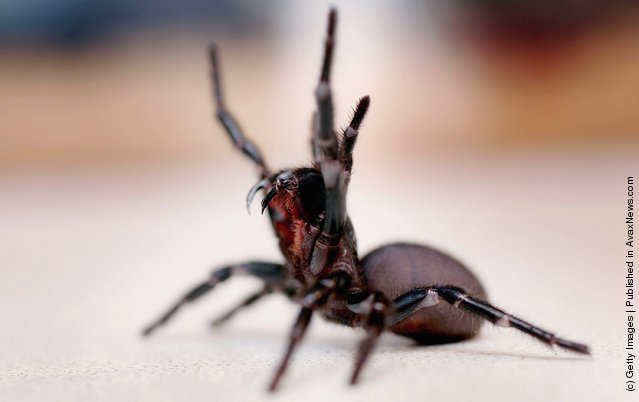
A Funnel Web spider is pictured at the Australian Reptile Park January 23, 2006 in Sydney, Australia. The Funnel Web is one of Australia's deadliest animals, with a venom that is packed with at least 40 different toxic proteins. A bite from a Funnel Web causes massive electrical over-load in the body's nervous system. Finally, fatalities occur from either heart attack or a pulmonary oedema, where the capillaries around the lungs begin to leak fluid and the patient effectively drowns. Death can come as quickly as two hours after a bite if no medical treatment is sought. Due to advances in anti-venom, there has been no death from a Funnel Web bite in Australia since 1980. Australia is home to some of the most deadly and poisonous animals on earth. (Photo by Ian Waldie/Getty Images)
Details
25 Apr 2011 07:49:00
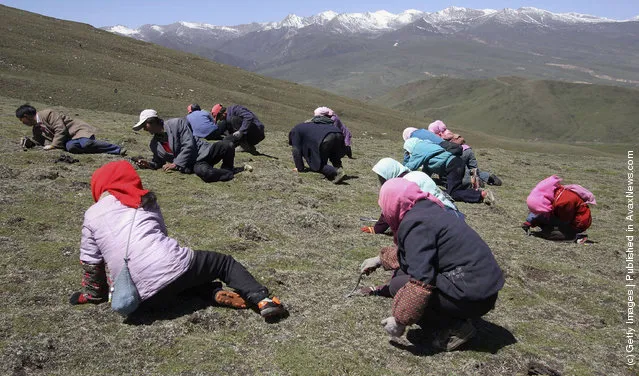
Ophiocordyceps Sinensis A.K.A. Caterpillar Fungus

“There are over 680 documented species of the sac fungus genus Ophiocordyceps, and one of the best known of these is Ophiocordyceps sinensis, colloquially known as caterpillar fungus. The fungus is known in Tibetan as yartsa gunbu or yatsa gunbu. O. sinensis is known in the West as a medicinal mushroom and its use has a long history in Traditional Chinese medicine as well as Traditional Tibetan medicine. The highly valuable fungus-caterpillar combination is hand-collected and is used as an aphrodisiac and as a treatment for a variety of ailments from fatigue to cancer”. – Wikipedia

Photo: Nomads dig for Chinese caterpillar fungus from a mountain May 25, 2007 in Guide County, Hainan Prefecture, Qinghai Province, China. Nomads can earn about 2,000 yuan to 5,000 yuan (about U.S. $260 to $653 ) through their work during the fifty-day Chinese caterpillar fungus gathering season. (Photo by China Photos/Getty Images)
Details
26 Sep 2011 10:47:00
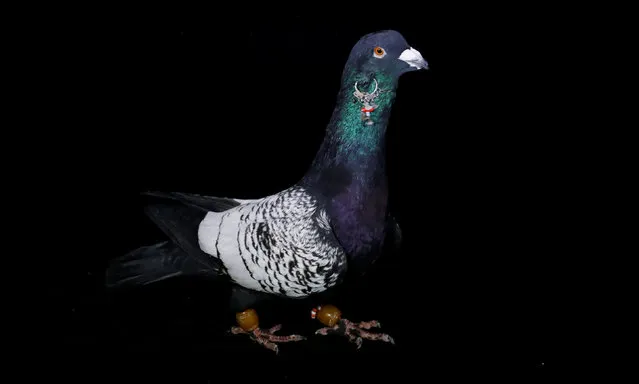
A pigeon, known as Siyah Kinifirli, with an approximate market value of 1000 Turkish Lira ($263), bred by 23-year-old Ismail Ozbek, is pictured in Sanliurfa, Turkey, December 23, 2016. As night-time approaches in Sanliurfa, southeastern Turkey, most of the alleyways of the city's old bazaar are emptying out of buyers and vendors, except for one. The bustle of daytime trading has died down, but on this little street, a stream of men carry cardboard boxes filled with pigeons to a cluster of three teahouses. Here, they sell the birds at Sanliurfa's famed auctions to a dedicated band of pigeon keepers and breeders, a pastime that has been thriving for hundreds of years across the region and over the nearby border into war-torn Syria. In a country where the minimum wage is about 1,400 Liras ($367) a month, enthusiasts regularly easily spend hundreds of dollars for one bird. “I once sold a pair of pigeons for 35,000 Turkish Lira”, says auctioneer Imam Dildas. “This is a passion, a hobby you cannot quit. I've been known to sell the fridge and my wife's gold bracelets to pay for pigeons”. (Photo by Umit Bektas/Reuters)

A pigeon, known as Siyah Kinifirli, with an approximate market value of 1000 Turkish Lira ($263), bred by 23-year-old Ismail Ozbek, is pictured in Sanliurfa, Turkey, December 23, 2016. As night-time approaches in Sanliurfa, southeastern Turkey, most of the alleyways of the city's old bazaar are emptying out of buyers and vendors, except for one. (Photo by Umit Bektas/Reuters)
Details
17 Jan 2017 12:05:00
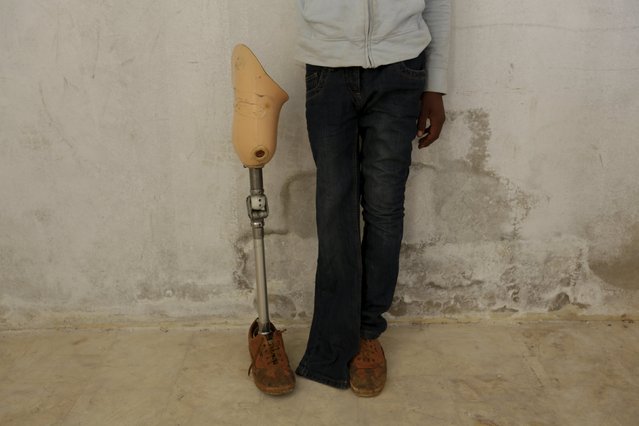
A young man with an amputated leg poses for a photograph standing by his broken artificial limb in the rebel-controlled area of Maaret al-Numan town in Idlib province, Syria March 20, 2016. (Photo by Khalil Ashawi/Reuters)

A young man with an amputated leg poses for a photograph standing by his broken artificial limb in the rebel-controlled area of Maaret al-Numan town in Idlib province, Syria March 20, 2016. Two university students forced to interrupt their studies have learnt to make and fit hundreds of new limbs in the past four years in opposition-held areas of Syria. A mobile clinic operating from a truck has gone some way to improve access to treatment. While most patients are between 15 and 45, the clinic also helps children and the elderly with replacement limbs. (Photo by Khalil Ashawi/Reuters)
Details
16 Apr 2016 12:03:00
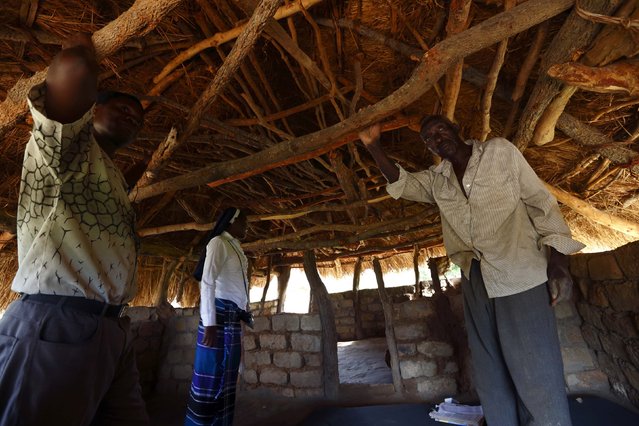
HIV-positive 71-year-old Sylverio Hachiploa (R) talks with caregivers Glandwel Muleya (L) and Sister Abigail Mwaka Mazuba (C) in his thatched hut during a visit by a home-based care team in the village of Nedwmba, south of the Chikuni Mission in the south of Zambia February 23, 2015. (Photo by Darrin Zammit Lupi/Reuters)

HIV-positive 71-year-old Sylverio Hachiploa (R) talks with caregivers Glandwel Muleya (L) and Sister Abigail Mwaka Mazuba (C) in his thatched hut during a visit by a home-based care team in the village of Nedwmba, south of the Chikuni Mission in the south of Zambia February 23, 2015. The caregivers in the Jesuit-run home-based care project at the Chikuni Mission run a capacity-building and empowerment project at the household level, offering training and assistance in crop-growing and animal rearing, as well as offering companionship, pastoral care and monitoring of the antiretroviral treatment compliance of HIV-AIDS patients. (Photo by Darrin Zammit Lupi/Reuters)
Details
25 Feb 2015 09:04:00
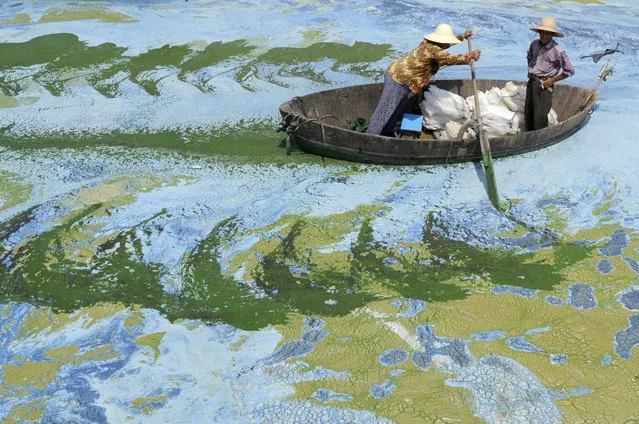
Fishermen row a boat in the algae-filled Chaohu Lake in Hefei, Anhui province, June 19, 2009. The country has invested 51 billion yuan ($7.4 billion) towards the construction of 2,712 projects for the treatment of eight rivers and lakes including Huaihe River, Haihe River, Liaohe River, Chaohu Lake, Dianchi Lake, Songhua River, the Three Gorges region of the Yangtze River and its upstream area, Xinhua News Agency reported. (Photo by Jianan Yu/Reuters)

Growing cities, overuse of fertilizers and factory wastewater have degraded China's water supplies to the extent that half the nation's rivers and lakes are severely polluted. China aims to spend $850 billion to improve filthy water supplies over the next decade, but even such huge outlays may do little to reverse damage caused by decades of pollution and overuse in Beijing's push for rapid economic growth. Photo: Fishermen row a boat in the algae-filled Chaohu Lake in Hefei, Anhui province, June 19, 2009. (Photo by Jianan Yu/Reuters)
Details
03 Aug 2014 08:01:00