Loading...
Done
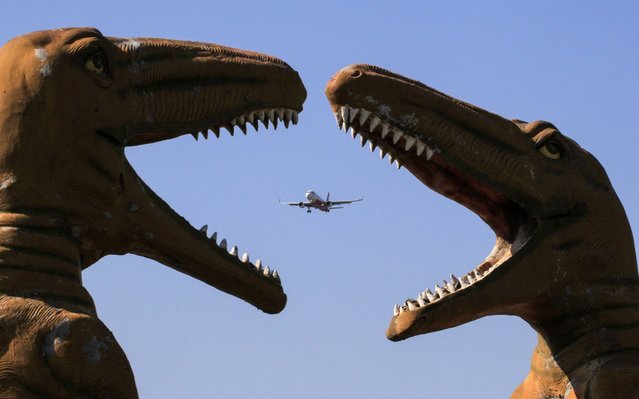
An aircraft flies past sculptures of dinosaurs at the “Valley of Animals” park in Chandigarh, India on November 9, 2019. (Photo by Vijay Mathur/AFP Photo)

An aircraft flies past sculptures of dinosaurs at the “Valley of Animals” park in Chandigarh, India on November 9, 2019. (Photo by Vijay Mathur/AFP Photo)
Details
11 Nov 2019 00:07:00
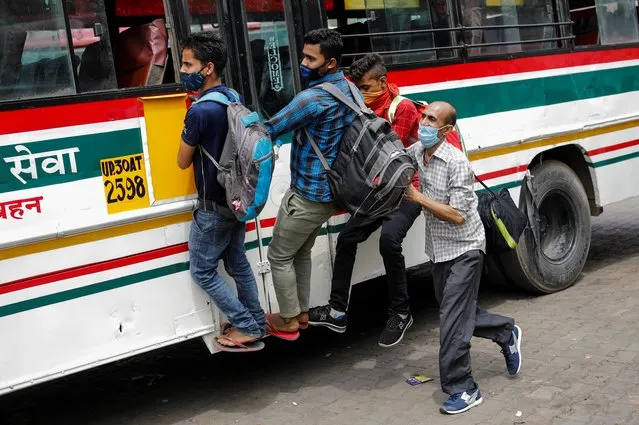
Migrant workers hang on to a door of a moving bus as they return to their villages after Delhi government ordered a six-day lockdown to limit the spread of the coronavirus disease (COVID-19), in Ghaziabad on the outskirts of New Delhi, India, April 20, 2021. (Photo by Adnan Abidi/Reuters)

Migrant workers hang on to a door of a moving bus as they return to their villages after Delhi government ordered a six-day lockdown to limit the spread of the coronavirus disease (COVID-19), in Ghaziabad on the outskirts of New Delhi, India, April 20, 2021. (Photo by Adnan Abidi/Reuters)
Details
26 Apr 2021 09:03:00
John Cox, far left, begins his recall campaign for California governor with “Tag”, a Kodiak brown bear, on Tuesday, May 4, 2021 in Sacramento. It was the first stop for his “Meet the Beast” bus tour. (Photo by Renee C. Byer/The Sacramento Bee via AP Photo)

John Cox, far left, begins his recall campaign for California governor with “Tag”, a Kodiak brown bear, on Tuesday, May 4, 2021 in Sacramento. It was the first stop for his “Meet the Beast” bus tour. (Photo by Renee C. Byer/The Sacramento Bee via AP Photo)
Details
10 May 2021 08:52:00
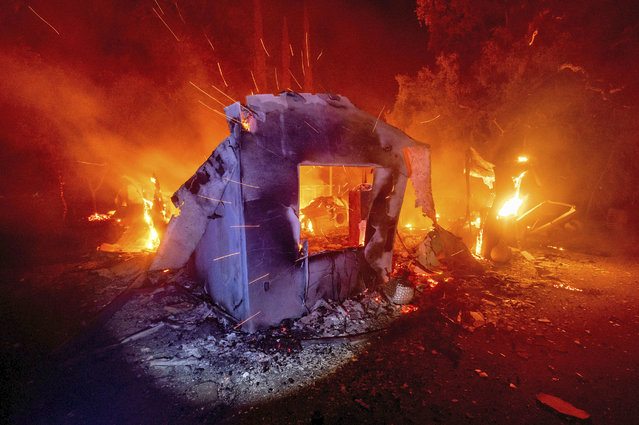
Flames from the LNU Lightning Complex fires consume a home in unincorporated Napa County, Calif., on Wednesday, August 19, 2020. Fire crews across the region scrambled to contain dozens of wildfires sparked by lightning strikes. (Photo by Noah Berger/AP Photo)

Flames from the LNU Lightning Complex fires consume a home in unincorporated Napa County, Calif., on Wednesday, August 19, 2020. Fire crews across the region scrambled to contain dozens of wildfires sparked by lightning strikes. (Photo by Noah Berger/AP Photo)
Details
03 Oct 2020 00:05:00


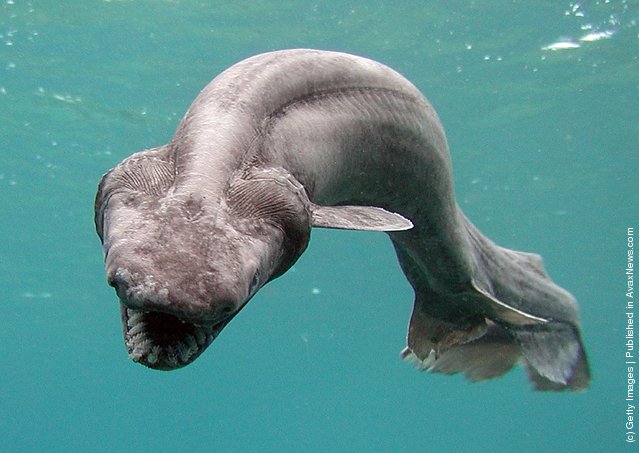
“The frilled shark (Chlamydoselachus anguineus) is one of two extant species of shark in the family Chlamydoselachidae, with a wide but patchy distribution in the Atlantic and Pacific Oceans. This uncommon species is found over the outer continental shelf and upper continental slope, generally near the bottom though there is evidence of substantial upward movements. It has been caught as deep as 1,570 m (5,150 ft), whereas in Suruga Bay, Japan it is most common at depths of 50–200 m (160–660 ft). Exhibiting several “primitive” features, the frilled shark has often been termed a «living fossil»”. – Wikipedia

Photo: A 1.6 meter long Frill shark swims in a tank after being found by a fisherman at a bay in Numazu, on January 21, 2007 in Numazu, Japan. The frill shark, also known as a Frilled shark usually lives in waters of a depth of 600 meters and so it is very rare that this shark is found alive at sea-level. It's body shape and the number of gill are similar to fossils of sharks which lived 350,000,000 years ago. (Photo by Awashima Marine Park/Getty Images)
Details
05 May 2011 10:01:00
U.S. Park Police work to keep people away from the area surrounding the Washington Monument after a 5.8 magnitude earthquake

U.S. Park Police work to keep people away from the area surrounding the Washington Monument after a 5.8 magnitude earthquake struck the east coast August 23, 2011 in Washington, DC. Police officers said that unidentified material had fallen off the Washington Monument as a result of the earthquake. All the monuments and buildings along the National Mall have been evacuated and closed. (Photo by Chip Somodevilla/Getty Images)
Details
24 Aug 2011 09:02:00
Activists protest from inside the Neptune fountain at Alexanderplatz during a demonstration against the Anti-Counterfeiting Trade Agreement (ACTA)

An activist in a Guy Fawkes mask adjusts a skull and crossbones flag during a demonstration against the Anti-Counterfeiting Trade Agreement (ACTA) on February 25, 2012 in Berlin, Germany. (Photo by Adam Berry/Getty Images)
Details
27 Feb 2012 11:44:00
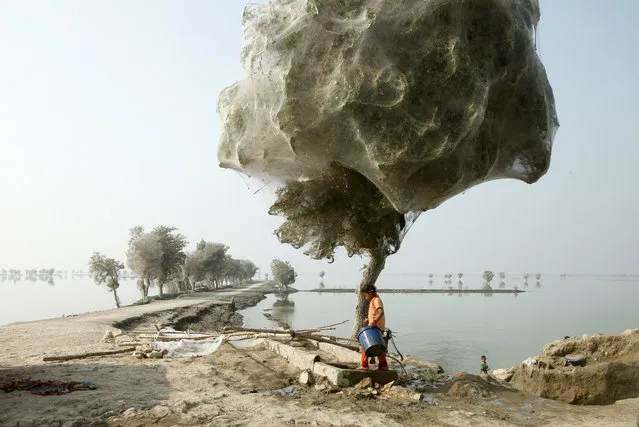
Spiderweb Cocooned Trees In Pakistan

An unexpected side-effect of the flooding in parts of Pakistan has been that millions of spiders climbed up into the trees to escape the rising flood waters. Because of the scale of the flooding and the fact that the water has taken so long to recede, many trees have become cocooned in spiders’ webs.
Details
15 May 2014 11:22:00