Loading...
Done
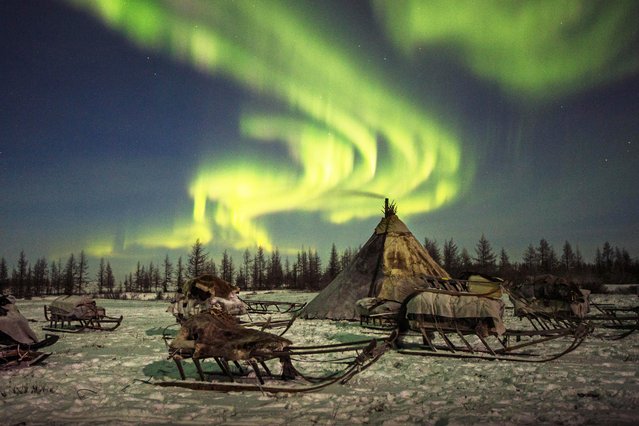
An empty camp is shown beneath a colourful sky in Siberia, December 2016. (Photo by Timothy Allen/Barcroft Productions)

A British photographer has captured life at the “edge of the world”. Timothy Allen, best known for his work on BBC's Human Planet, trekked through the freezing Siberian wilderness for 16 days as he joined part of an 800km migration of reindeer in the Yamal-Nenets region – a name that roughly translates to “edge of the world”. The stunning pictures feature the nomadic Nenets tribe, who drink blood to survive in -45°C temperatures. Timothy's epic journey, which will be revealed in an eight-minute documentary on Animal Planet USA, saw him travel across the bleak terrain of the frozen Ob River with the Nenets people in December last year. Here: An empty camp is shown beneath a colourful sky in Siberia, December 2016. (Photo by Timothy Allen/Barcroft Productions)
Details
19 Sep 2017 07:48:00
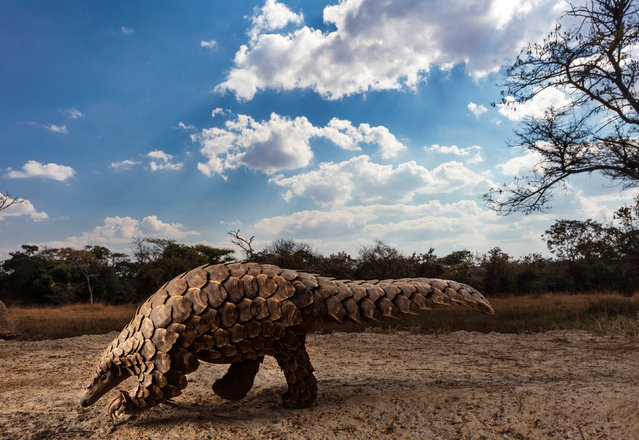
Pangolins in Crisis: Brent Stirton, South Africa; 1st place, Natural world and wildlife. “Pangolins are the world’s most illegally trafficked mammals, with an estimated one million trafficked to Asia in the last 10 years. Their scales are used in traditional Chinese and Vietnamese medicine, and their meat is sold as a high-priced delicacy. As a result, pangolins are listed as critically endangered and anyone who trades or consumes them is breaking the law. This body of work exposes the trade, while exploring aspects of illegality and celebrating the people who are trying to save these animals”. (Photo by Brent Stirton/Sony World Photography Awards 2020)

Pangolins in Crisis: Brent Stirton, South Africa; 1st place, Natural world and wildlife. “Pangolins are the world’s most illegally trafficked mammals, with an estimated one million trafficked to Asia in the last 10 years. Their scales are used in traditional Chinese and Vietnamese medicine, and their meat is sold as a high-priced delicacy. As a result, pangolins are listed as critically endangered and anyone who trades or consumes them is breaking the law. This body of work exposes the trade, while exploring aspects of illegality and celebrating the people who are trying to save these animals”. (Photo by Brent Stirton/Sony World Photography Awards 2020)
Details
11 Jun 2020 00:05:00
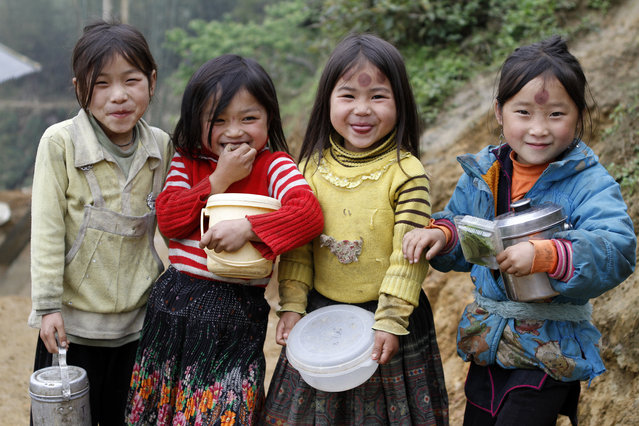
“Kids of Sapa”. Four little beautiful Hmong girls from Lao Chai Village, near Sapa, Vietnam. (Photo and caption by Felipe Hanower/National Geographic Traveler Photo Contest)

“Kids of Sapa”. Four little beautiful Hmong girls from Lao Chai Village, near Sapa, Vietnam. (Photo and caption by Felipe Hanower/National Geographic Traveler Photo Contest)
Details
15 Jul 2013 09:14:00
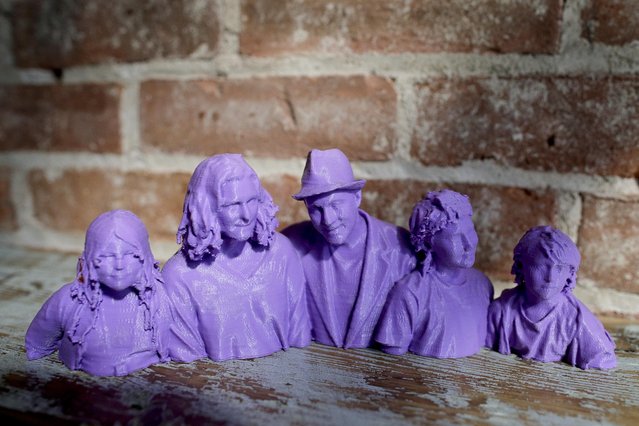
In this August 14, 2014 photo, a plastic bust statue of Kevin Micelli, center, and his family, made by a 3-D scanner and printer, sits on a shelf inside Micelli's coffee shop in New York. Micelli purchased the 3-D scanning and printing services at the Cubo toy store next door to his shop. With the old studio portrait supplanted by the selfie, 3-D scanning services provide a new reason for people to go to a store and stand stock-still in front of a camera. (Photo by Julie Jacobson/AP Photo)

“The advent of digital cameras and smartphones killed the traditional mall portrait studio, but 3-D printing has sparked a new trend. Overloaded with digital photos, statues may be moving in to fulfill our desire for portraits that stand out”. – Peter Svensson via The Associated Press. (Photo by Julie Jacobson/AP Photo)
Details
12 Oct 2014 12:28:00
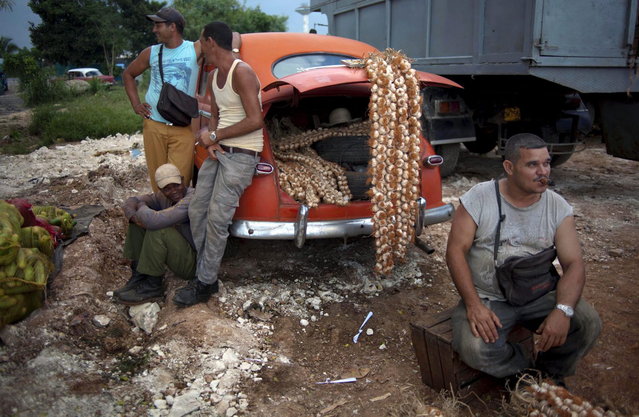
In this September 30, 2013 photo, farmers wait for customers next to their 1950s Chevrolet loaded with garlic for sale at the 114th Street Market on the outskirts of Havana, Cuba. The market s bustle is a result of economic reforms begun in 2010 by President Raul Castro, which includes relaxing rules on private farming. (Photo by Ramon Espinosa/AP Photo)

In this September 30, 2013 photo, farmers wait for customers next to their 1950s Chevrolet loaded with garlic for sale at the 114th Street Market on the outskirts of Havana, Cuba. The market s bustle is a result of economic reforms begun in 2010 by President Raul Castro, which includes relaxing rules on private farming. (Photo by Ramon Espinosa/AP Photo)
Details
02 Oct 2013 11:32:00
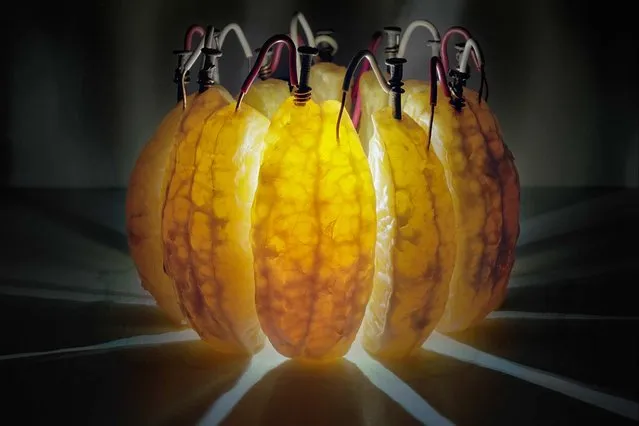
Wedges of an orange generate enough current and electrical juice – 3.5 volts – to power an LED. The fruit’s citric acid helps electrons flow from galvanized nails to copper wire in this 14-hour exposure. This image was published in September’s Visions of Earth, a trio of photos that appear in each issue of National Geographic. (Photo by Caleb Charland/National Geographic)

Wedges of an orange generate enough current and electrical juice – 3.5 volts – to power an LED. The fruit’s citric acid helps electrons flow from galvanized nails to copper wire in this 14-hour exposure. This image was published in September’s Visions of Earth, a trio of photos that appear in each issue of National Geographic. (Photo by Caleb Charland/National Geographic)
Details
06 Jan 2014 12:09:00
 This Teddy-Bear Toast Stamp

It looks like the cute teddybear-shaped food trend is continuing. A Japanese designer has come up with the most adorable way to enjoy toast. The clever invention is a toast stamp that seamlessly morphs your bread into a teddybear.
Details
03 Sep 2014 08:28:00
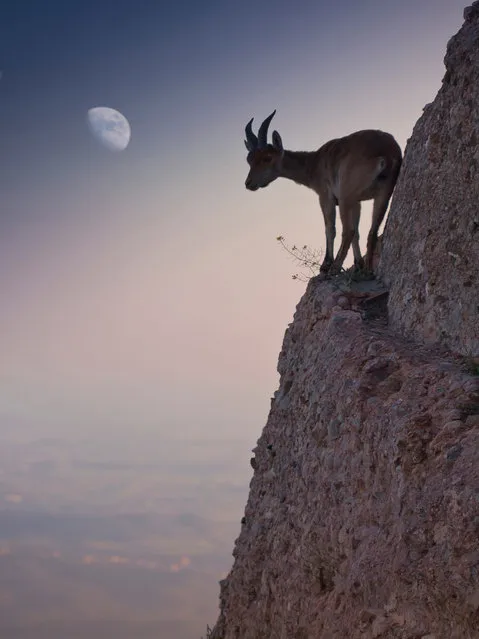
“For a bouquet of flowers”. Photographs made ​​in the last hours of the day. A goat is directed by a dangerous way to eat a small bouquet of flowers. Location: España, Barcelona, Montserrat. (Photo and caption by Renato Lopez Baldo/National Geographic Traveler Photo Contest)

“For a bouquet of flowers”. Photographs made ​​in the last hours of the day. A goat is directed by a dangerous way to eat a small bouquet of flowers. Location: España, Barcelona, Montserrat. (Photo and caption by Renato Lopez Baldo/National Geographic Traveler Photo Contest)

ATTENTION! All pictures are presented in high resolution. To see Hi-Res images – just TWICE click on any picture. In other words, click small picture – opens the BIG picture. Click BIG picture – opens VERY BIG picture.
Details
25 Jun 2013 12:51:00