A protester holds up a symbolic chain as the trial of ousted Egyptian president Hosni Mubarak continues on February 16, 2012 in Cairo, Egypt. (Photo by Carsten Koall/Getty Images)
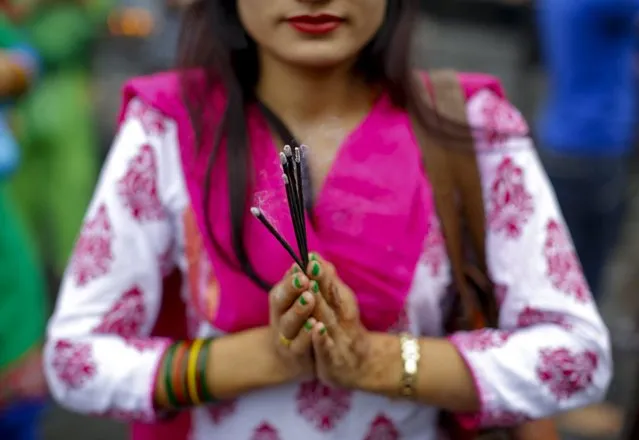
Nepalese Hindu women pray to worship Lord Shiva during the first day of the Sarwan Brata festival, the month of fasting, at the premises of Pashupati Temple in Kathmandu, Nepal, 18 July 2016. Thousands of married and single Nepalese Hindu women will gather in temples for each Monday of the Sawan month (spanning from 16 July to 16 August) to pray for a long and prosperous life of their husbands or for a chance to find a good one. (Photo by Narendra Shrestha/EPA)
Pedestrians and vehicles make their way past the Potala Palace early on a rainy morning in Lhasa, capital of the Tibet Autonomous Region in China, Saturday, September 19, 2015. Chinese officials have taken foreign journalists on a visit to the region, normally off-limits to them, weeks after Communist Party officials commemorated the 50th anniversary of the establishment of the Tibet Autonomous Region. (Photo by Aritz Parra/AP Photo)
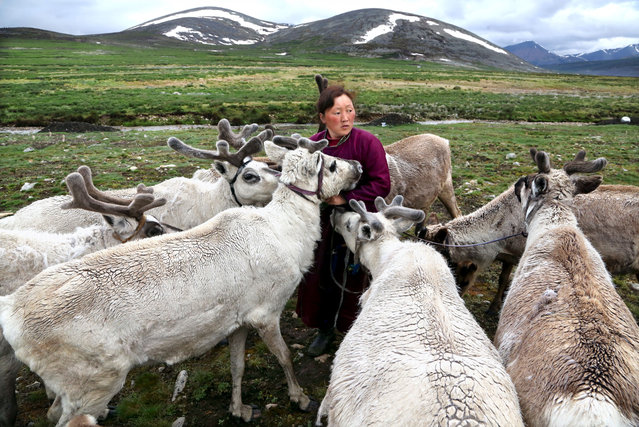
The Tsaatan people are one of the world’s last groups of nomadic reindeer herders and they live in Khövsgöl Aimag in northern Mongolia. They are originally from across the border in what is now the Tuva republic of Russia. (Photo by Pascal Mannaerts/Rex Feature/Shutterstock)
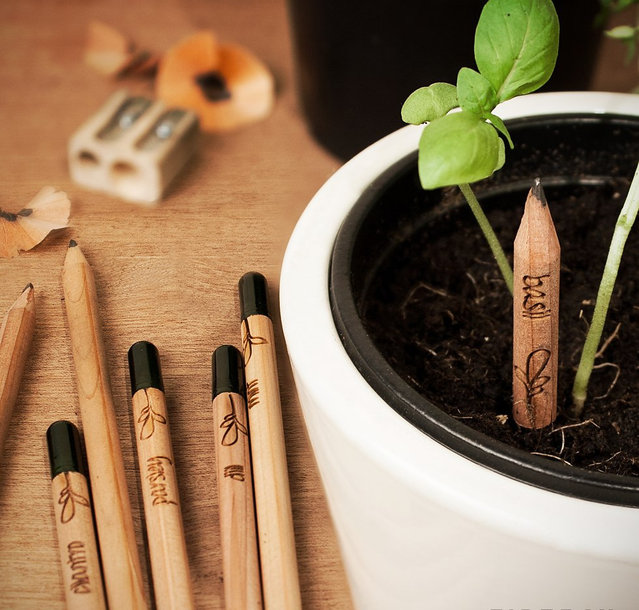
Sprout A Pencil That Grows is a very simple but excellent concept. We all know that as soon as a pencil gets down to the point where there’s only an inch or so left it’s pretty much useless. The Sprout lets you put that little stub to get use. The end of the Sprout has a seed capsule that is water activated, after you plant your pencil and water it a few times the capsule dissolves and the seed’s start germinating. The plants usually take about a week to sprout. The Sprout pencils come in a number of varieties including vegetables, herbs and flowers like rosemary, tomato, marigold, and many more.
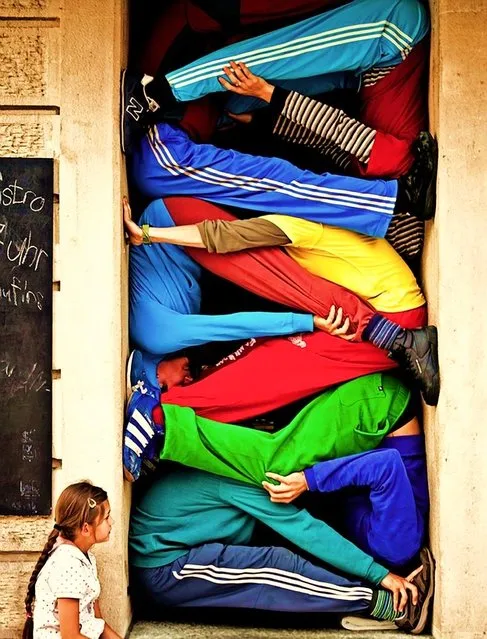
“Bodies in urban spaces” is a temporarily intervention in diversified urban architectural environments. The intention of “Bodies in urban spaces” is to point out the urban functional structure and to uncover the restricted movement possibilities and behavior as well as rules and limitations.
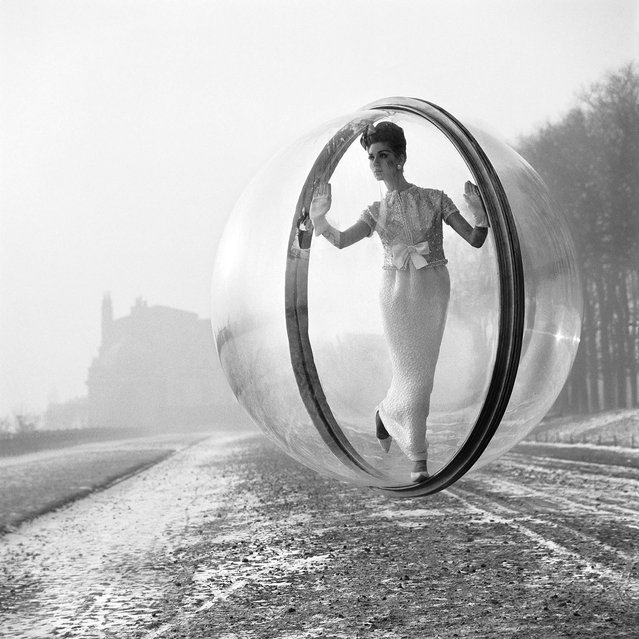
Born 1938 in New York, Melvin Sokolsky was a major figure in the revival of fashion photography from the 1960s. He was only 21 when he started working at Harper's Bazaar for which he produced the “Bubble” series of photographs depicting fashion models floating in giant clear plastic bubbles suspended in midair above the Seine river in Paris. Alongside his steady collaboration with Bazaar, he also worked for publications such as Vogue and the New York Times. Photo: “After Delvaux” – “Paris 1963” – Harper's Bazaar “Bubble” Spring Collection. (Photo by Melvin Sokolsky)