A woman with a hose tries to put out the fire during a wildfire in Santa Baia De Montes, northwestern Spain, Thursday, August 14, 2025. (Photo by Lalo R. Villar/AP Photo)
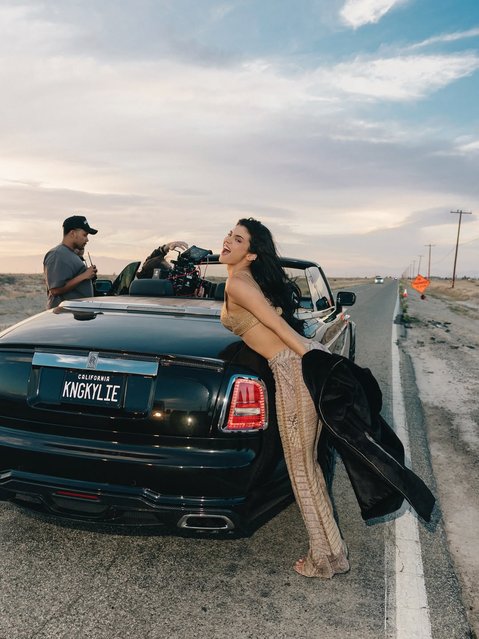
Kylie Jenner showed off her incredible figure in a skintight latex dress. The model posted photos on Instagram in the second decade of October 2025 from a recent photoshoot. (Photo by KylieJenner/Instagram)
American media personality and socialite Kylie Jenner in the second decade of October 2025 revives her alter ego King Kylie to switch lanes into the music industry, featuring on Terror Jr.’s song “Fourth Strike”. (Phoot by Kylie Jenner/Instagram)
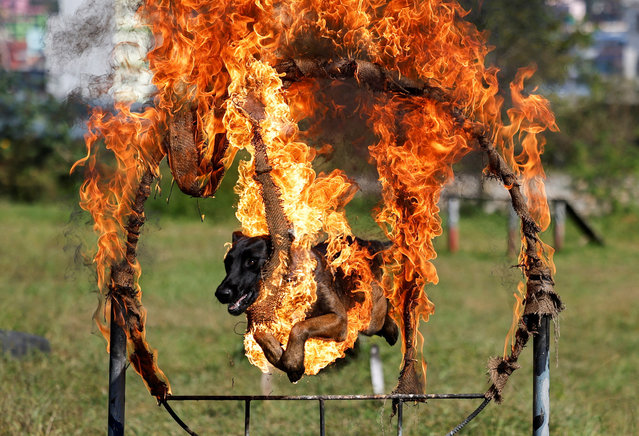
A dog belonging to the Armed Police Force jumps through a ring of fire while performing a trick during Kukur Tihar as part of Tihar, a term used in Nepal for Diwali, in Kathmandu, Nepal, on October 20, 2025. (Photo by Navesh Chitrakar/Reuters)
Sweden's Sweden's Henrik von Eckermann, riding King Edward, during the Equestrian Team Jumping finals, at the 2024 Summer Olympics, Friday, August 2, 2024, in Versailles, France. (Photo by Mosa'ab Elshamy/AP Photo)
Starting on Monday, August 12, Perseid meteors will streak across the summer sky for a couple of nights, offering casual stargazers and serious nighttime photographers a chance to capture a glimpse of the annual meteor shower. Photo: Photographer David Kingham created this composite image from 23 photos on August 12, 2012. (Photo by David Kingham)
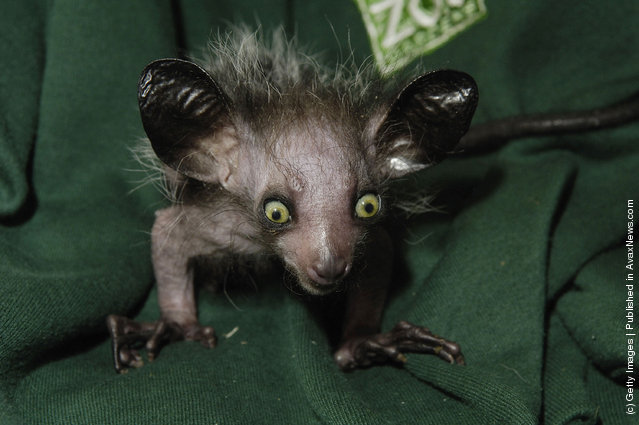
“The aye-aye (Daubentonia madagascariensis) is a lemur, a strepsirrhine primate native to Madagascar that combines rodent-like teeth and a special thin middle finger to fill the same ecological niche as a woodpecker. It is the world's largest nocturnal primate, and is characterized by its unusual method of finding food; it taps on trees to find grubs, then gnaws holes in the wood and inserts its narrow middle finger to pull the grubs out. The only other animal species known to find food in this way is the striped possum. From an ecological point of view the aye-aye fills the niche of a woodpecker as it is capable of penetrating wood to extract the invertebrates within”. – Wikipedia
Photo: In this handout image from Bristol Zoo is seen the first captive bred aye-aye in the UK named “Kintana” (meaning star in Malagasy) April 15, 2005 at Bristol Zoo Gardens, England. The zoo announced today only the second baby aye-aye to be hand-reared in the world (the first was in Jersey Zoo) and has now made his first public appearance since his birth on 11 February 2005. (Photo by Rob Cousins/Bristol Zoo via Getty Images)