Loading...
Done
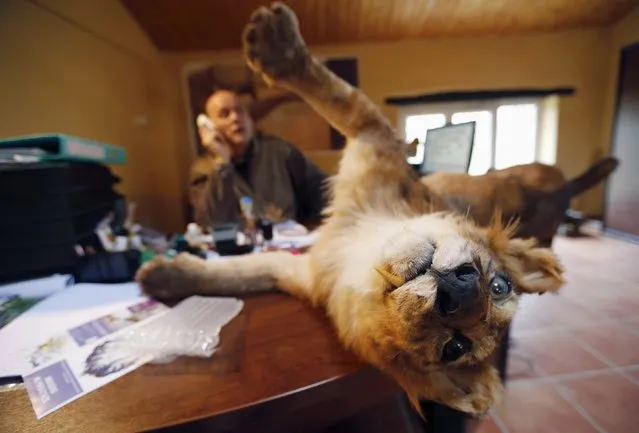
Belgian animal sculptor Emmanuel Janssens Casteels works at his desk next to a replica of a Smilodon, an extinct genus of machairodont felid, in his workshop in Prayssas December 3, 2014. Casteels' company OPHYS specializes in life-size reconstructions and the sculpting or moulding reproductions of animals and hyper-realist fossils. His reconstructions are exhibited in museums and theme parks. (Photo by Regis Duvignau/Reuters)

Belgian animal sculptor Emmanuel Janssens Casteels works at his desk next to a replica of a Smilodon, an extinct genus of machairodont felid, in his workshop in Prayssas December 3, 2014. Casteels' company OPHYS specializes in life-size reconstructions and the sculpting or moulding reproductions of animals and hyper-realist fossils. His reconstructions are exhibited in museums and theme parks. (Photo by Regis Duvignau/Reuters)
Details
05 Dec 2014 13:02:00
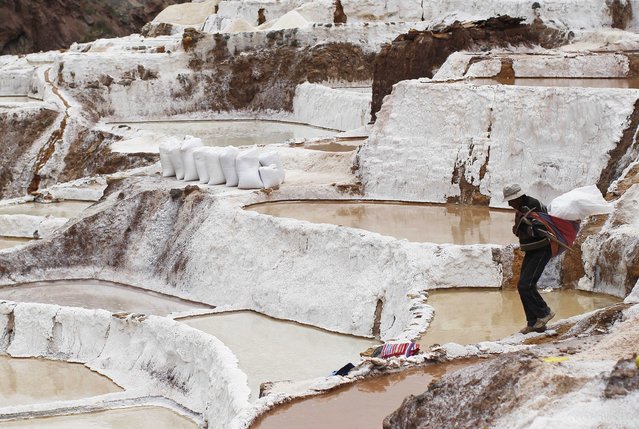
A worker carries a bag of salt after collecting it from a pond at the Maras mines in Cuzco December 3, 2014. Salt has been obtained in Maras since pre-Incan times by evaporating highly salty local subterranean stream water. The water is intricately channelled through constructions, flowing gradually down onto several hundred ancient terraced ponds. (Photo by Enrique Castro-Mendivil/Reuters)

A worker carries a bag of salt after collecting it from a pond at the Maras mines in Cuzco December 3, 2014. Salt has been obtained in Maras since pre-Incan times by evaporating highly salty local subterranean stream water. The water is intricately channelled through constructions, flowing gradually down onto several hundred ancient terraced ponds. From each pond, a local member of the mine cooperative can produce 150 to 200 kilos per month which can be sold in the markets at $0.34 per kilogram, according to miners. (Photo by Enrique Castro-Mendivil/Reuters)
Details
05 Dec 2014 13:36:00
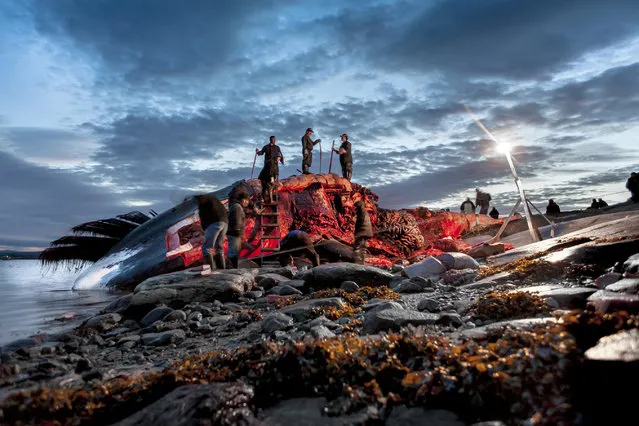
“Centuries ago, Inuit hunted the bowhead whale. At that time, whale hunting undoubtedly was part of a complex and very important ritual, if only because of the size of the catch. The position that the ancestors of today's Inuit occupied in the living world involved a relationship with the spirit that inhabited each animal but also their species”. (Photo by Robert Frechette/2014 Sony World Photography Awards)

“Centuries ago, Inuit hunted the bowhead whale. At that time, whale hunting undoubtedly was part of a complex and very important ritual, if only because of the size of the catch. The position that the ancestors of today's Inuit occupied in the living world involved a relationship with the spirit that inhabited each animal but also their species”. (Photo by Robert Frechette/2014 Sony World Photography Awards)
Details
16 Mar 2014 08:01:00
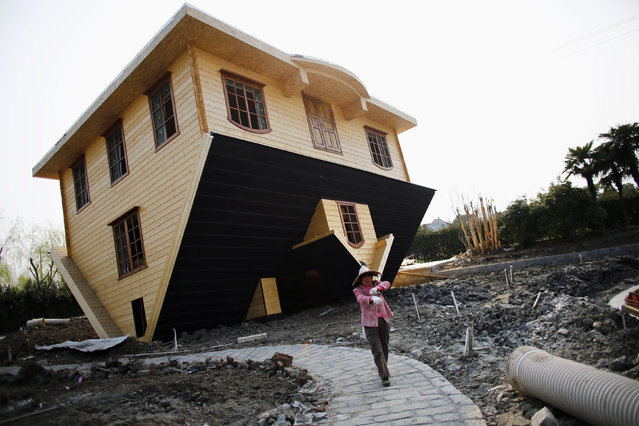
A laborer works at an upside-down house under construction at Fengjing Ancient Town, Jinshan District, south of Shanghai, March 17, 2014. Workers are putting the final touches on this eccentric tourist attraction built at the “China Folk Painting Village”. Furniture will also be placed upside down in the house, which is expected to open the public in April, according to local media. (Photo by Carlos Barria/Reuters)

A laborer works at an upside-down house under construction at Fengjing Ancient Town, Jinshan District, south of Shanghai, March 17, 2014. Workers are putting the final touches on this eccentric tourist attraction built at the “China Folk Painting Village”. Furniture will also be placed upside down in the house, which is expected to open the public in April, according to local media. (Photo by Carlos Barria/Reuters)
Details
21 Mar 2014 09:53:00
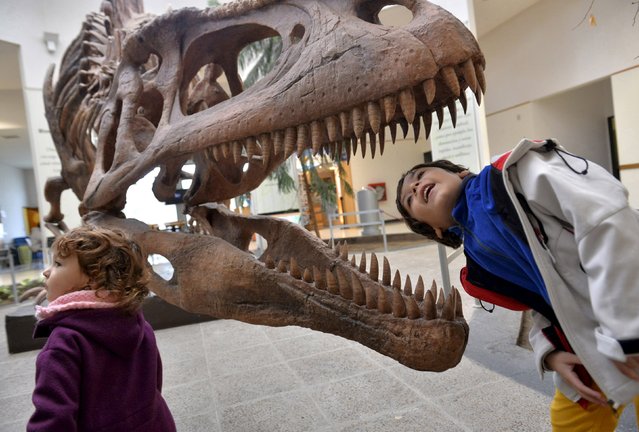
A boy looks inside the skull of a Tyrannosaurus Rex replica at the Egidio Feruglio Museum in Trelew, Argentina, in this May 18, 2014 file photograph. Scientists on July 28, 2015 unveiled a comprehensive analysis of the teeth of the group of carnivorous dinosaurs called theropods, which include the Tyrannosaurus Rex, detailing a unique serrated structure that let them chomp efficiently through the flesh and bones of large prey. (Photo by Maxi Jonas/Reuters)

A boy looks inside the skull of a Tyrannosaurus Rex replica at the Egidio Feruglio Museum in Trelew, Argentina, in this May 18, 2014 file photograph. Scientists on July 28, 2015 unveiled a comprehensive analysis of the teeth of the group of carnivorous dinosaurs called theropods, which include the Tyrannosaurus Rex, detailing a unique serrated structure that let them chomp efficiently through the flesh and bones of large prey. (Photo by Maxi Jonas/Reuters)
Details
29 Jul 2015 11:55:00
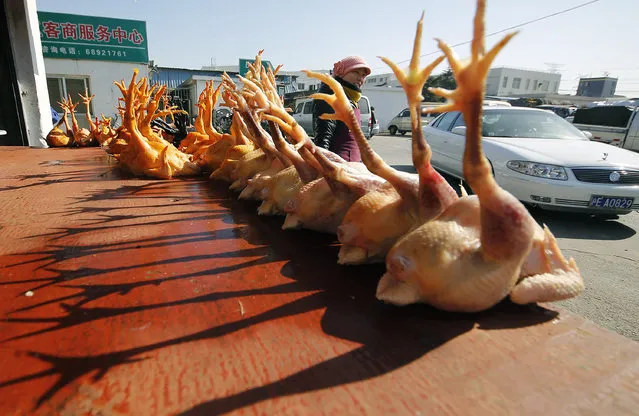
In this Tuesday January 21, 2014, file photo, slaughtered chickens are displayed for sale at a wholesale poultry market in Shanghai. The Chinese government on Tuesday, June 1, 2021, says a 41-year-old man has contracted what might be the world’s first human case of the H10N3 strain of bird flu, but the risk of large-scale spread is low. (Photo by AP Photo/File)

In this Tuesday January 21, 2014, file photo, slaughtered chickens are displayed for sale at a wholesale poultry market in Shanghai. The Chinese government on Tuesday, June 1, 2021, says a 41-year-old man has contracted what might be the w0orld’s first human case of the H10N3 strain of bird flu, but the risk of large-scale spread is low. (Photo by AP Photo/File)
Details
17 Jul 2021 08:51:00
In this January 31, 2014 file photo released by the United Nations Relief and Works Agency for Palestine Refugees in the Near East (UNRWA), shows residents of the besieged Palestinian camp of Yarmouk, queuing to receive food supplies, in Damascus, Syria. That year, the U.N. was able to deliver food to about five percent of people in besieged areas including Yarmouk, while today estimates show the organization is reaching less than one percent. (Photo by UNRWA via AP Photo)

In this January 31, 2014 file photo released by the United Nations Relief and Works Agency for Palestine Refugees in the Near East (UNRWA), shows residents of the besieged Palestinian camp of Yarmouk, queuing to receive food supplies, in Damascus, Syria. That year, the U.N. was able to deliver food to about five percent of people in besieged areas including Yarmouk, while today estimates show the organization is reaching less than one percent. (Photo by UNRWA via AP Photo)
Details
07 Feb 2016 06:36:00
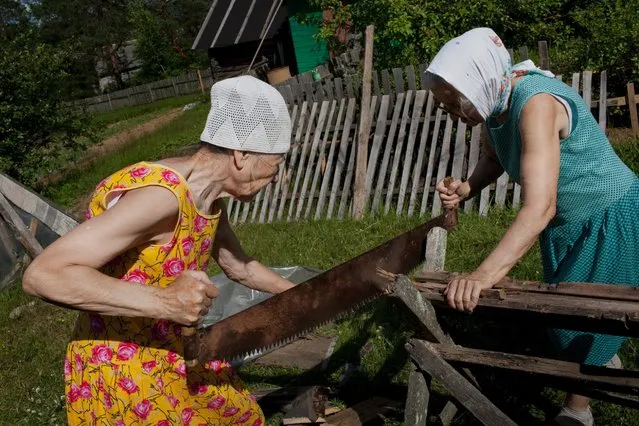
“Two-Handed Saw, 2014”. “Most of the neighbors have switched to power tools to run their households, the buzz of chain saws and weed-whackers overpowering the quieter sounds of country life, but my aunts hold on to the two-handed saw that's decades old, the sickle and scythe that need to be sharpened and polished after each use, the old axe that's becoming heavier each year. Each of these objects is familiar, holding memories of their brother, who succumbed to cancer a few years ago, of days before my grandfather lost his vision in the 50's, of busier days and longer futures”, Sablin told. (Photo by Nadia Sablin)

In northwest Russia, in a small village called Alekhovshchina, Nadia Sablin's aunts spend the warmer months together in the family home and live as the family has always lived, chopping wood to heat the house and making their own clothes. Sablin's book of photographs, “Aunties: The Seven Summers of Alevtina and Ludmila”, is published by Duke University Press. Here: “Two-Handed Saw, 2014”. (Photo by Nadia Sablin)
Details
25 Feb 2016 12:12:00