Loading...
Done
His own space suit, with oxygen tank, doesn't make Barney the monkey any happier as he and actor Adam West view the situation in their space capsule in Hollywood on January 24, 1964. Barney, a South American woolly monkey, is blasted into space with West, as an astronaut, in a new movie, “Robinson Crusoe on Mars”. (Photo by AP Photo)

His own space suit, with oxygen tank, doesn't make Barney the monkey any happier as he and actor Adam West view the situation in their space capsule in Hollywood on January 24, 1964. Barney, a South American woolly monkey, is blasted into space with West, as an astronaut, in a new movie, “Robinson Crusoe on Mars”. (Photo by AP Photo)
Details
26 Jan 2018 06:22:00
Carnival revellers dressed as “Peliqueiros” run along a street in the village of Laza, Spain February 11, 2018. “Peliqueiros”, or ancient tax collectors, pursued villagers through the streets ringing their cowbells and hitting villagers with their sticks. (Photo by Miguel Vidal/Reuters)

Carnival revellers dressed as “Peliqueiros” run along a street in the village of Laza, Spain February 11, 2018. “Peliqueiros”, or ancient tax collectors, pursued villagers through the streets ringing their cowbells and hitting villagers with their sticks. (Photo by Miguel Vidal/Reuters)
Details
12 Feb 2018 07:41:00
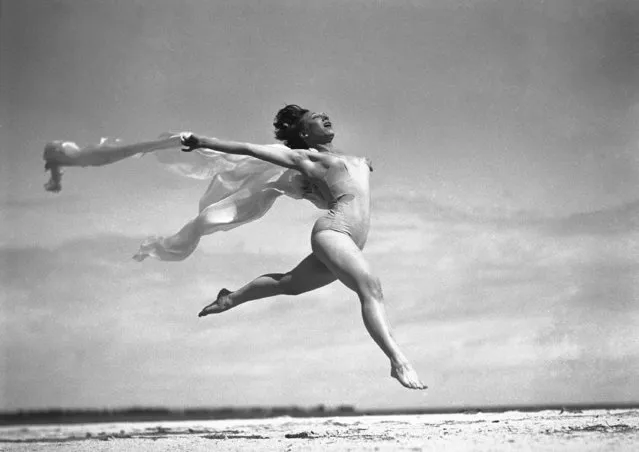
Sally Rand dances on a beach in St. Petersburg, Florida, February 17, 1936. (Photo by AP Photo)

Sally Rand dances on a beach in St. Petersburg, Florida, February 17, 1936. (Photo by AP Photo)
Details
26 Feb 2018 00:04:00
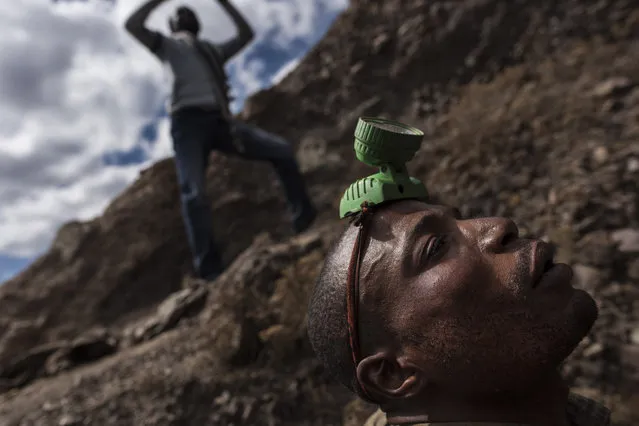
A “creuseur”, or digger, a plastic lantern on his head, readies to enter a copper and cobalt mine in Kawama, Democratic Republic of Congo on June 8, 2016. Cobalt is used in the batteries for electric cars and mobile phones. Working conditions are dangerous, often with no safety equipment or structural support for the tunnels. The diggers say they are paid on average US$2-3/day. (Photo by Michael Robinson Chavez/The Washington Post)

A “creuseur”, or digger, a plastic lantern on his head, readies to enter a copper and cobalt mine in Kawama, Democratic Republic of Congo on June 8, 2016. Cobalt is used in the batteries for electric cars and mobile phones. Working conditions are dangerous, often with no safety equipment or structural support for the tunnels. The diggers say they are paid on average US$2-3/day. (Photo by Michael Robinson Chavez/The Washington Post)
Details
30 Dec 2016 10:29:00
A model waits backstage during a show of the third bi-annual Budapest Central European Fashion Week in Budapest, Hungary, 30 March 2019. (Photo by Zoltan Balogh/EPA/EFE)

A model waits backstage during a show of the third bi-annual Budapest Central European Fashion Week in Budapest, Hungary, 30 March 2019. (Photo by Zoltan Balogh/EPA/EFE)
Details
06 Apr 2019 00:05:00
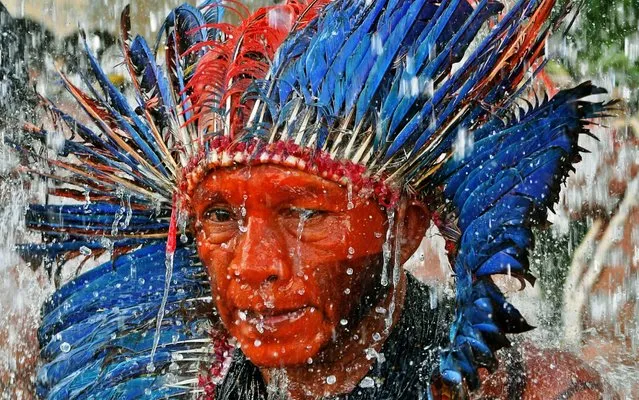
An Indigenous man stands under a water fountain outside a government building in Brasilia, on April 26, 2019, during the last day of a protest camp. Approximately 4,000 indigenous people from different tribes are taking part in protests during the Indigenous National Mobilization (MNI) week, a mobilization which seeks to tackle territorial rights' negotiations with the government. (Photo by Carl De Souza/AFP Photo)

An Indigenous man stands under a water fountain outside a government building in Brasilia, on April 26, 2019, during the last day of a protest camp. Approximately 4,000 indigenous people from different tribes are taking part in protests during the Indigenous National Mobilization (MNI) week, a mobilization which seeks to tackle territorial rights' negotiations with the government. (Photo by Carl De Souza/AFP Photo)
Details
29 Apr 2019 00:07:00
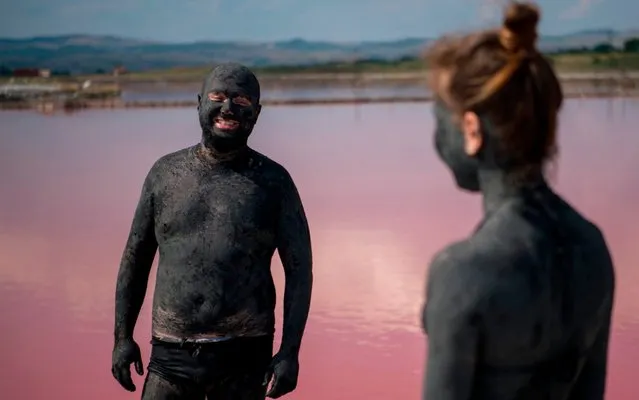
A couple covered in mud wait for it to dry at the Salt-works lakes near the Black Sea town of Burgas in Bulgaria on July 25, 2019. Thousands of tourists visit the red salt lakes for mud baths, which are believed to help the healing of muscular disorders and rheumatism. (Photo by Nikolay Doychinov/AFP Photo)

A couple covered in mud wait for it to dry at the Salt-works lakes near the Black Sea town of Burgas in Bulgaria on July 25, 2019. Thousands of tourists visit the red salt lakes for mud baths, which are believed to help the healing of muscular disorders and rheumatism. (Photo by Nikolay Doychinov/AFP Photo)
Details
28 Jul 2019 00:07:00
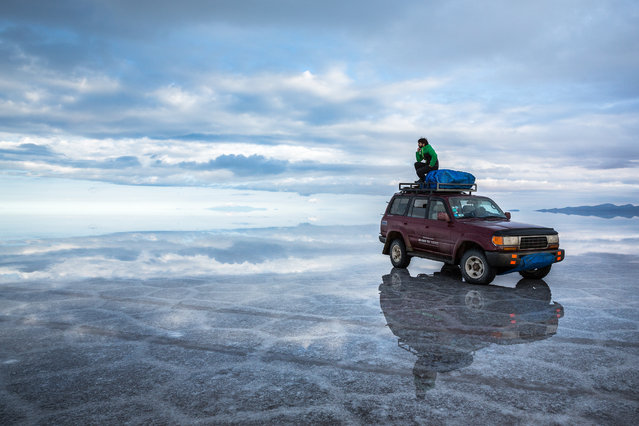
At 10,582 square kilometres, the Bolivian salt flats – otherwise known as Salar de Uyuni – are the largest on the planet and contain between 50 and 70% of the world’s lithium reserves. After exploring Chile and Argentina, photographer Joel Santos decided to travel to Bolivia in January 2017 to check the salt flats off his bucket list. With an electrical storm rolling in, Joel and his two travelling companions were the only souls left on the vast flats and captured the eerie flats without a person in sight. (Photo by Joel Santos/Barcroft Images)

At 10,582 square kilometres, the Bolivian salt flats – otherwise known as Salar de Uyuni – are the largest on the planet and contain between 50 and 70% of the world’s lithium reserves. After exploring Chile and Argentina, photographer Joel Santos decided to travel to Bolivia in January 2017 to check the salt flats off his bucket list. With an electrical storm rolling in, Joel and his two travelling companions were the only souls left on the vast flats and captured the eerie flats without a person in sight. (Photo by Joel Santos/Barcroft Images)
Details
12 Aug 2019 00:03:00