Loading...
Done
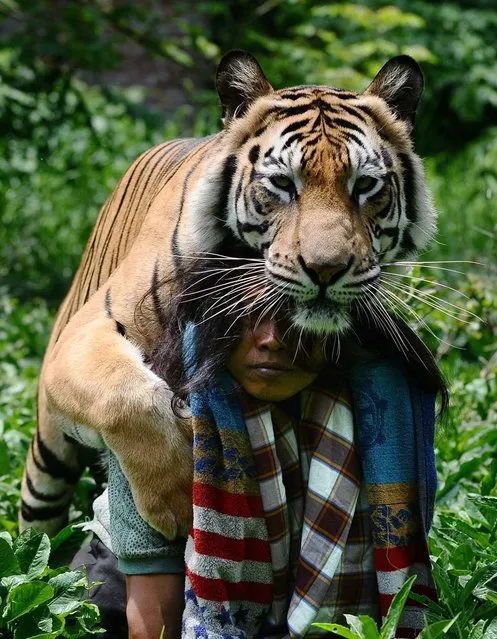
Tiger And Man Best Friends

Mulan Jamilah, a 6-year-old Bengal tiger and Abdullah Sholeh, 33, play in the garden beside their home on January 20, 2014 in Malang, Indonesia. Abdullah Sholeh of Malang, Indonesia is an Islamic student who has become best friend and a full-time nanny to the tiger.
Details
30 Aug 2014 09:04:00
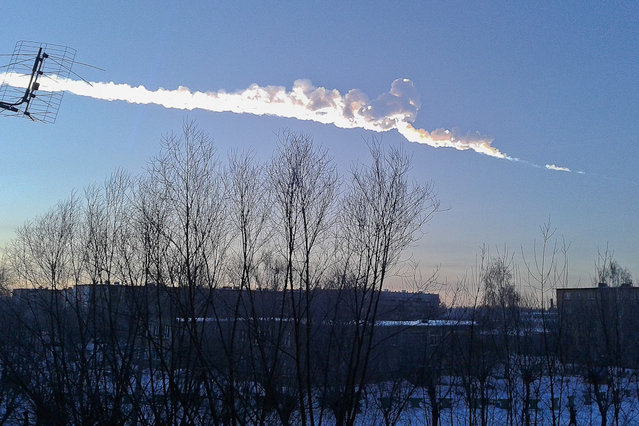
Meteor falls in Russia's Chelyabinsk region on February 15 , 2013. (Photo by Alexey Bulaew/RIA Nowosti)

“A meteor streaked across the sky above Russia's Ural Mountains on Friday morning, causing sharp explosions and injuring more than 500 people (20 had been hospitalized in serious condition), many of them hurt by broken glass. “There was panic. People had no idea what was happening. Everyone was going around to people's houses to check if they were OK”, said Sergey Hametov, a resident of Chelyabinsk, about 1500 kilometres (930 miles) east of Moscow, the biggest city in the affected region”. (Photo by Alexey Bulaew/RIA Nowosti)
Details
15 Feb 2013 12:04:00


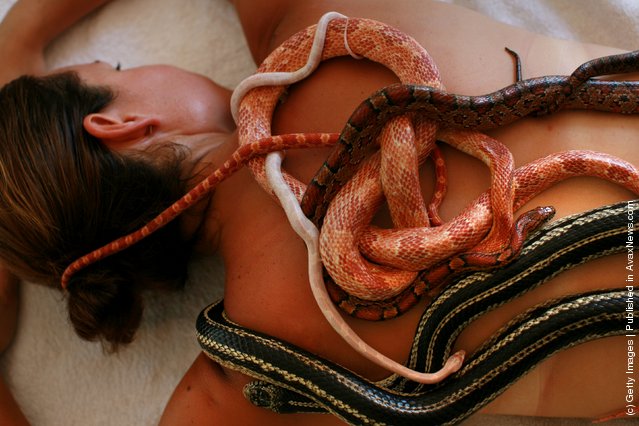
Meirav Stardinner receives a snake massage from Ada Barak at Barak's snake spa on September 11, 2008 in Talmei Elazar, Israel. Barack's income comes mostly from exhibiting her plants which eat everything from insects to small mammals. She discovered snakes' therapeutic value after letting people hold them after her act “Some people said that holding the snakes made them feel better, relaxed”, she says. “One old lady said it was soothing, like a cold compress”. Now she uses a combination of big snakes for deep massage and little ones for light massage, though all are non-venemous. (Photo by Uriel Sinai/Getty Images)
Details
07 May 2011 11:58:00


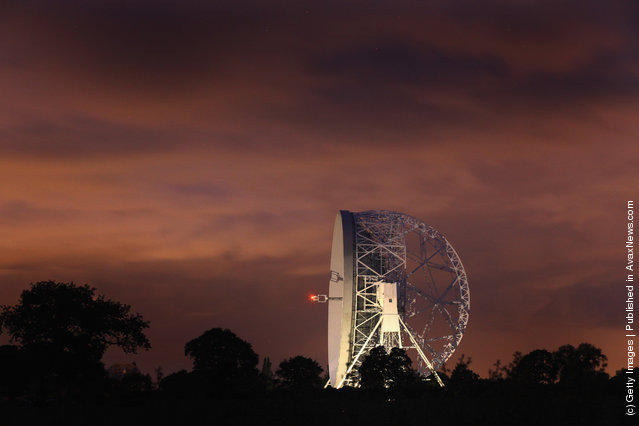
“The Lovell Telescope is a radio telescope at Jodrell Bank Observatory, near Goostrey, Cheshire in the north-west of England. When it was constructed in 1955, the telescope was the largest steerable dish radio telescope in the world at 76.2 m (250 ft) in diameter; it is now the third largest, after the Green Bank telescope in West Virginia, USA, and the Effelsberg telescope in Germany. It was originally known as the 250 ft (76 m) telescope or the Radio Telescope at Jodrell Bank, before becoming the Mark I telescope around 1961 when future telescopes (the Mark II, III, and IV) were being discussed. It was renamed to the Lovell Telescope in 1987 after Bernard Lovell, and became a Grade I listed building in 1988. The telescope forms part of the MERLIN and European VLBI Network arrays of radio telescopes”. – Wikipedia

Photo: The Lovell Telescope listens to the night sky for radio signals from space at Jodrell Bank on June 22, 2011 in Holmes Chapel, England. Jodrell Bank Centre for Astrophysics and it's world famous Lovell Telescope is on the shortlist of Britain's submission for Unesco World Heritage Site status. (Photo by Christopher Furlong/Getty Images)
Details
24 Jun 2011 09:34:00


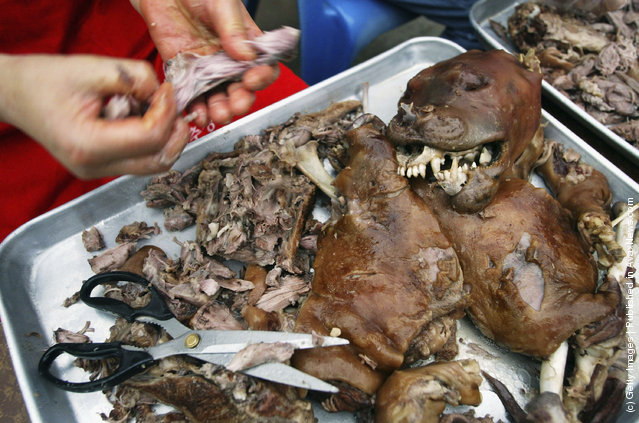
“Dog meat refers to edible parts and the flesh derived from (predominantly domestic) dogs. Human consumption of dog meat has been recorded in many parts of the world, including ancient China, ancient Mexico, and ancient Rome. According to contemporary reports, dog meat is consumed in a variety of countries such as Switzerland, China, Vietnam, the Philippines, and Korea. In addition, dog meat has also been used as survival food in times of war and/or other hardships”. – Wikipedia

Photo: A chef prepares dog meat at a restaurant on July 4, 2005 in Gwacheon, South Korea. Dog meat is a traditional dish in Korea dating back to the Samkuk period (period of the three kingdoms BC 57 – AD 668). Although many recipes existed historically for dog meat, now chefs only make soups, or dishes using boiled or roasted meat. Koreans traditionally eat dog meat on the hottest day of the summer, for it's reputed benefits of virility, invigoration and health. (Photo by Chung Sung-Jun/Getty Images)

Details
24 Jul 2011 13:21:00
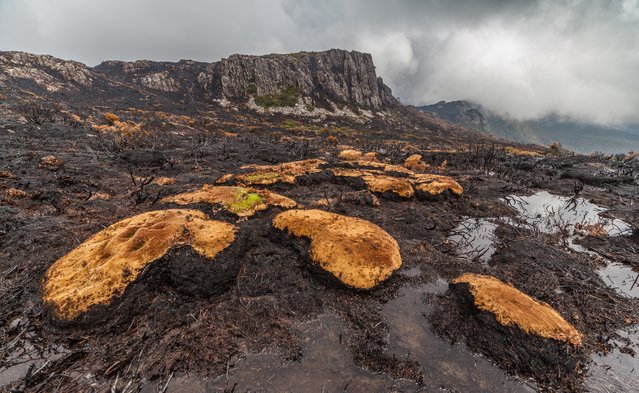
Pictures from Tasmania’s central plateau, shot by wilderness photographer Dan Broun, show the extraordinary damage wrought by more than a week of bushfires following lightning strikes in Australia’s southernmost state on January 13. 2016. The world heritage area was home to a range of unique alpine flora including pencil pines, king billy pines and cushion plants, some more than 1,000 years old. (Photo by Dan Broun)

Pictures from Tasmania’s central plateau, shot by wilderness photographer Dan Broun, show the extraordinary damage wrought by more than a week of bushfires following lightning strikes in Australia’s southernmost state on January 13. 2016. The world heritage area was home to a range of unique alpine flora including pencil pines, king billy pines and cushion plants, some more than 1,000 years old. Now more than 10,000ha of land has been incinerated, and ecologist say that, unlike eucalyptus trees, the ancient flora will not recover. (Photo by Dan Broun)
Details
02 Feb 2016 13:56:00
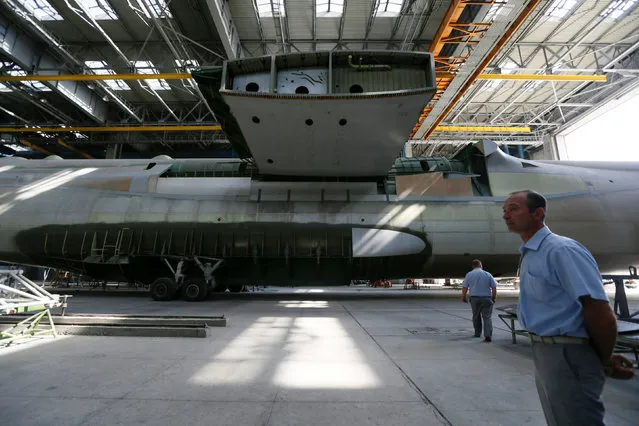
Employees stand near an airframe for the second Antonov-225 Mriya plane at Antonov aircraft plant in Kiev, Ukraine, September 7, 2016. Ukraine hopes to attract $500 million of investment from China to complete an updated version of the world's biggest aircraft, the Antonov-225 Mriya, the president of manufacturer Antonov said on Wednesday. The Antonov-225 is a cargo plane designed as part of the former Soviet Union's space programme. The only one completed is still in use and can carry up to 250 tonnes up to 4,000 km (2,485 miles). Work to manufacture a second plane was started in 1988 and never completed, but Antonov has now found a potential investor in the Aerospace Industry Corporation of China (AICC). (Photo by Valentyn Ogirenko/Reuters)

Employees stand near an airframe for the second Antonov-225 Mriya plane at Antonov aircraft plant in Kiev, Ukraine, September 7, 2016. Ukraine hopes to attract $500 million of investment from China to complete an updated version of the world's biggest aircraft, the Antonov-225 Mriya, the president of manufacturer Antonov said on Wednesday. (Photo by Valentyn Ogirenko/Reuters)
Details
08 Sep 2016 10:07:00
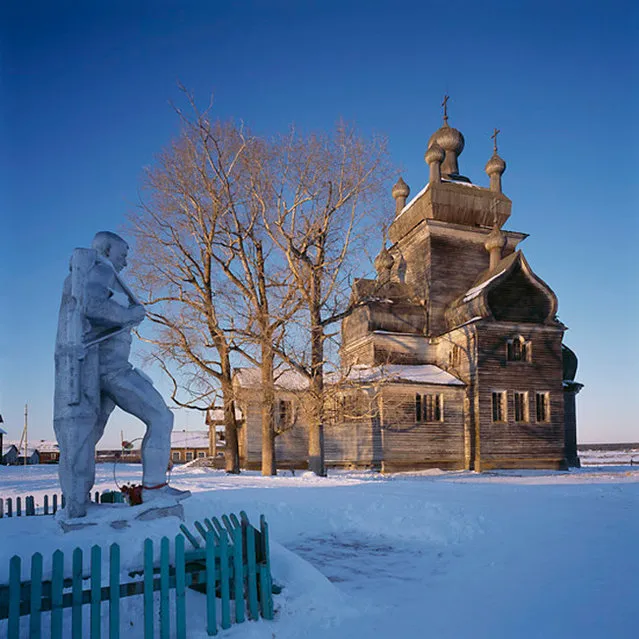
Wooden Churches - Travelling In The Russian North By Richard Davies Part 2

While communism, collectivism, worms, dry rot and casual looting failed to destroy the majestic wooden churches of Russia, it may be ordinary neglect that finally does them in. Dwindled now to several hundred remaining examples, these glories of vernacular architecture lie scattered amid the vastness of the world’s largest country. Just over a decade ago, Richard Davies, a British architectural photographer, struck out on a mission to record the fragile and poetic structures. Austerely beautiful and haunting, “Wooden Churches: Traveling in the Russian North” (White Sea Publishing; $132) is the result. Covering thousands of miles, Mr. Davies described how he and the writer Matilda Moreton tracked down the survivors from among the thousands of onion-domed structures built after Prince Vladimir converted to Christianity in 988.

See also: Wooden Churches Part1
Details
28 Nov 2013 12:13:00