Loading...
Done
A young woman takes pictures of the city with her mobile phone, from the glass-floor observation platform, in the Oriental Pearl Tower, in the financial district of Shanghai, on May 9, 2019. (Photo by Hector Retamal/AFP Photo)

A young woman takes pictures of the city with her mobile phone, from the glass-floor observation platform, in the Oriental Pearl Tower, in the financial district of Shanghai, on May 9, 2019. (Photo by Hector Retamal/AFP Photo)
Details
16 May 2019 00:05:00
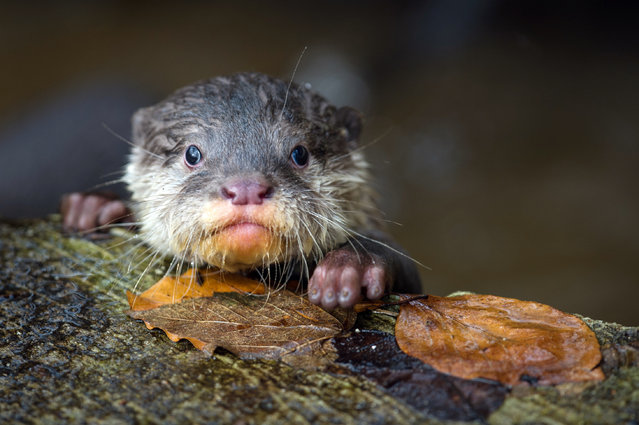
A young oriental small-clawed otter at the zoo in Neumuenster, Germany, March 5, 2014. The six young otters (one male, five female) were born on December 7, 2013. (Photo by Maja Hitij/EPA)

A young oriental small-clawed otter at the zoo in Neumuenster, Germany, March 5, 2014. The six young otters (one male, five female) were born on December 7, 2013. (Photo by Maja Hitij/EPA)
Details
08 Mar 2014 11:28:00
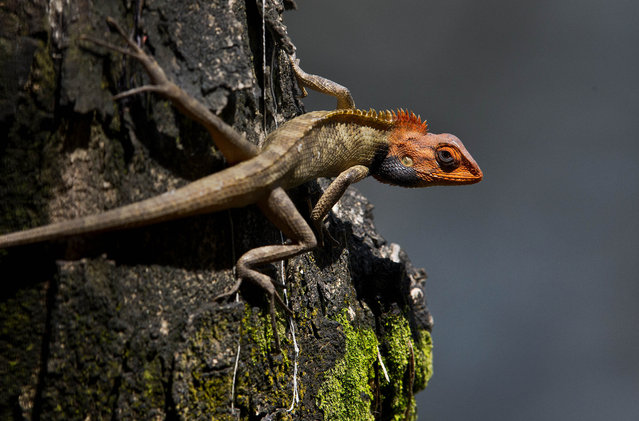
An Oriental Garden Lizard sits on a tree in Gauhati, India, Tuesday, April 16, 2019. During the breeding season, the male lizard's head and throat turn a bright color. (Photo by Anupam Nath/AP Photo)

An Oriental Garden Lizard sits on a tree in Gauhati, India, Tuesday, April 16, 2019. During the breeding season, the male lizard's head and throat turn a bright color. (Photo by Anupam Nath/AP Photo)
Details
21 Apr 2019 00:03:00
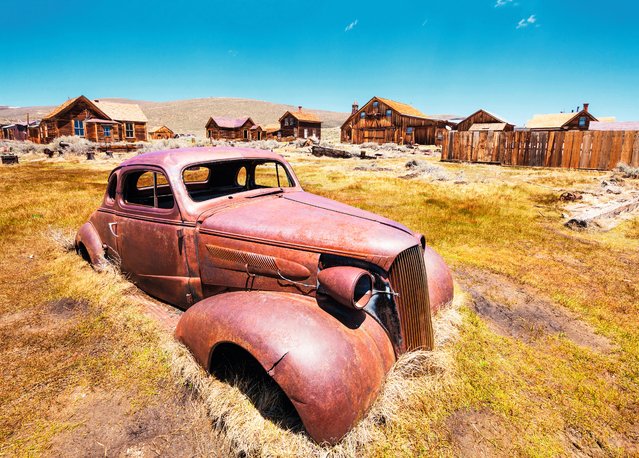
Bodie, Mono County, California. Gold was discovered at Bodie in 1859 (just after the initial California gold rush) and it went from mining camp to boomtown. Its decline began in 1880, when word spread of new boomtowns elsewhere. The Standard Consolidated Mine closed in 1913, and four years later the Bodie Railway was abandoned. By 1940 the population was down to 40. Today, Bodie is maintained in a state of arrested decay as a visitor attraction. (Photo by Alamy Stock Photo)

Kieron Connolly’s new book of photographs of more than 100 once-busy and often elegant buildings gives an idea of how the world might look if humankind disappeared. Here: Bodie, Mono County, California. Gold was discovered at Bodie in 1859 (just after the initial California gold rush) and it went from mining camp to boomtown. Its decline began in 1880, when word spread of new boomtowns elsewhere. The Standard Consolidated Mine closed in 1913, and four years later the Bodie Railway was abandoned. By 1940 the population was down to 40. Today, Bodie is maintained in a state of arrested decay as a visitor attraction. (Photo by Alamy Stock Photo)
Details
07 Sep 2016 09:50:00
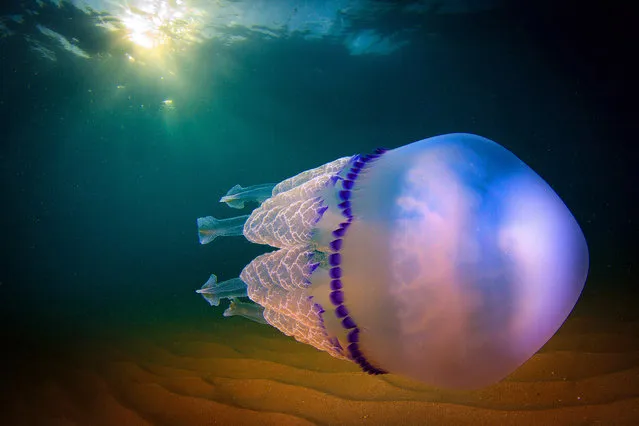
The incredible detail in each photo is thanks to Jordi Benitez Castells, years of experience taking photos while diving. Jordi, 40, from El Vendrell, Spain, was in Catalunya when he took the photos and managed to get the snaps at about three metres below the surface in most cases. While he works full-time in a bank, Jordi dons his wetsuit out of hours to go diving and uses a Canon 7D to get his shots. Here: One of the beautiful jellyfish. (Photo by Jordi Benitez/Caters News)

The incredible detail in each photo is thanks to Jordi Benitez Castells, years of experience taking photos while diving. Jordi, 40, from El Vendrell, Spain, was in Catalunya when he took the photos and managed to get the snaps at about three metres below the surface in most cases. While he works full-time in a bank, Jordi dons his wetsuit out of hours to go diving and uses a Canon 7D to get his shots. Here: One of the beautiful jellyfish. (Photo by Jordi Benitez/Caters News)
Details
08 Mar 2016 13:13:00
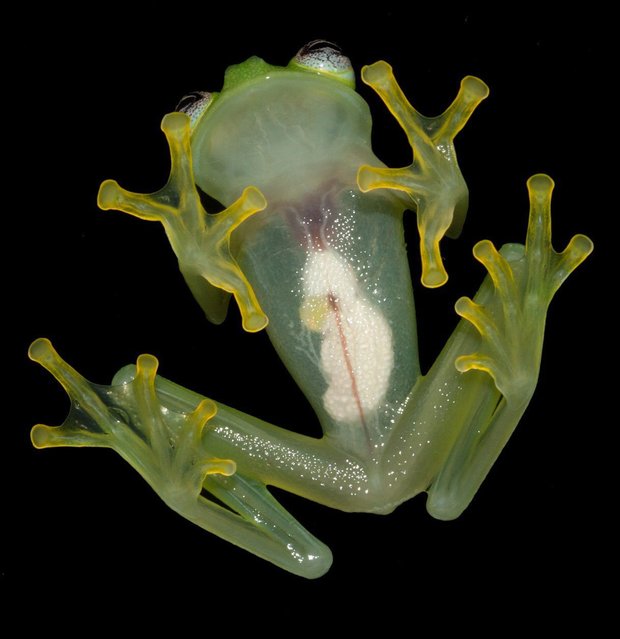
A handout photograph provided by Brian Kubicki of Costa Rican Amphibian Research Center on 26 April 2016 shows a “Crystal frog”, Hyalinobatrachium dianae (H. diane). This frog was discovered by US biologist Brian Kubicki and Costa Ricans Stanley Salazar and Robert Puschendorf in a rainy forest of Costa Rican caribbean after 40 years without notice of any new example of this kind. (Photo by Brian Kubicki/EPA/Costa Rican Amphibian Research Center)

A handout photograph provided by Brian Kubicki of Costa Rican Amphibian Research Center on 26 April 2016 shows a “Crystal frog”, Hyalinobatrachium dianae (H. diane). This frog was discovered by US biologist Brian Kubicki and Costa Ricans Stanley Salazar and Robert Puschendorf in a rainy forest of Costa Rican caribbean after 40 years without notice of any new example of this kind. (Photo by Brian Kubicki/EPA/Costa Rican Amphibian Research Center)
Details
02 May 2015 15:23:00
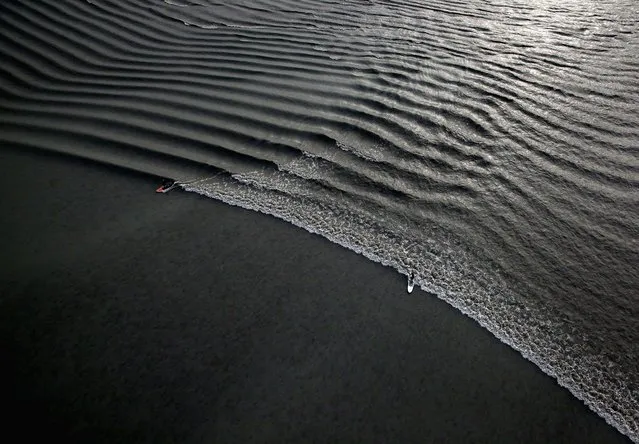
A group of surfers ride the Bore Tide at Turnagain Arm on July 15, 2014 in Anchorage, Alaska. Alaskas most famous Bore Tide, occurs in a spot on the outside of Anchorage in the lower arm of the Cook Inlet, Turnagain Arm, where wave heights can reach 6-10 feet tall, move at 10-15 mph and the water temperature stays around 40 degrees farenheit. This years Supermoon substantially increased the size of the normal wave and made it a destination for surfers. (Photo by Streeter Lecka/Getty Images)

A group of surfers ride the Bore Tide at Turnagain Arm on July 15, 2014 in Anchorage, Alaska. Alaskas most famous Bore Tide, occurs in a spot on the outside of Anchorage in the lower arm of the Cook Inlet, Turnagain Arm, where wave heights can reach 6-10 feet tall, move at 10-15 mph and the water temperature stays around 40 degrees farenheit. This years Supermoon substantially increased the size of the normal wave and made it a destination for surfers. (Photo by Streeter Lecka/Getty Images)
Details
05 Aug 2014 12:08:00
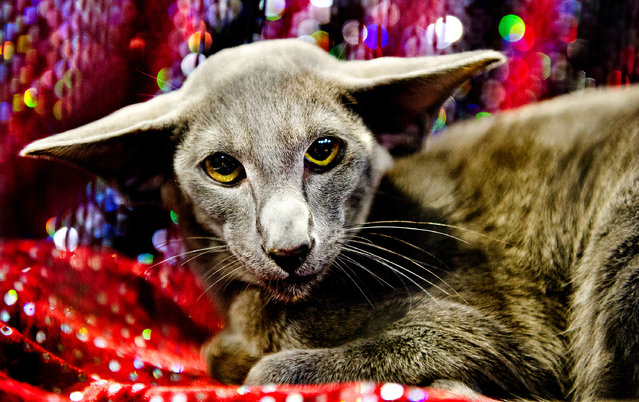
Pashtan Wagner, a Blue Oriental Cat participates in the GCCF Supreme Cat Show at National Exhibition Centre on October 28, 2017 in Birmingham, England. (Photo by Shirlaine Forrest/WireImage)

Pashtan Wagner, a Blue Oriental Cat participates in the GCCF Supreme Cat Show at National Exhibition Centre on October 28, 2017 in Birmingham, England. (Photo by Shirlaine Forrest/WireImage)
Details
01 Nov 2017 08:54:00