Loading...
Done
Cologne Zoo

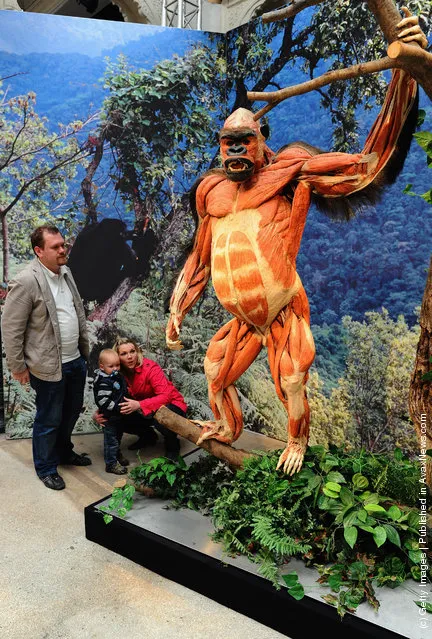
Visitors look at a plastinated gorilla on the opening day at the Body World Animals exhibition at the Cologne Zoo on April 15, 2011 in Cologne, Germany. The exhibition is by Gunther von Hagens, who uses a special process to preserve real bodies, whether animal or human, in order to display the inner organs, muscles and other physical elements. The exhibition will be open to the public until September 30.
Details
15 Apr 2011 17:16:00


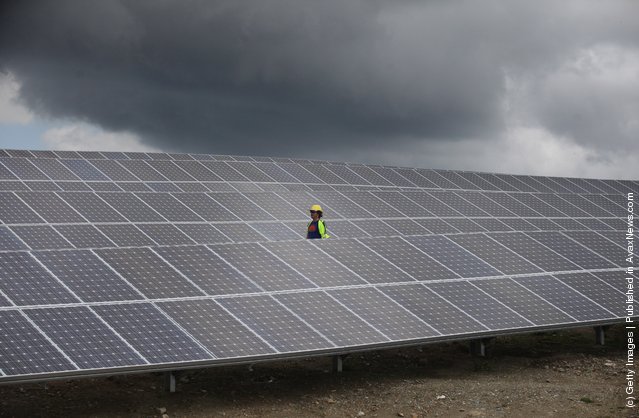
Jason Arnold, project manager from solarcentury walks between lines of solar panels erected at Weighbridge, Wheal Jane, Baldhu on July 7, 2011 near Truro, England. A ceremony was held today to mark the connection of the 1.4kw solar farm, which on a 6.2 acre plot is the first in the South West and biggest in the UK to date, using 5,680 panels. (Photo by Matt Cardy/Getty Images)
Details
08 Jul 2011 10:01:00


Yoga instructor Sarah Henry leads a class during a paddleboard yoga session at Adventure Sports Miami on July 10, 2011 in Miami, Florida. The paddle board is said to give the body's core more of a workout then in a gym since the platform is unstable and one must use the muscles to remain balanced on the board. (Photo by Joe Raedle/Getty Images)
Details
11 Jul 2011 11:11:00
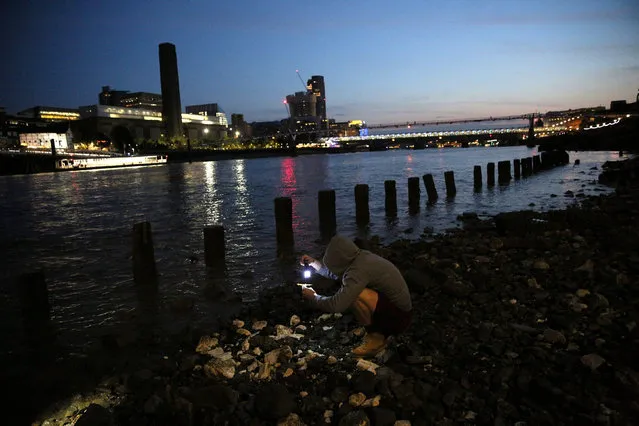
A mudlark uses a torch to look for items on the bank of the River Thames in London, Britain June 06, 2016. Mudlarking is believed to trace its origins to the 18th and 19th century, when scavengers searched the Thames' shores for items to sell. These days, history and archaeology fans are the ones hoping to find old relics such as coins, ceramics, artifacts or everyday items from across centuries. They wait for the low tide and then scour specific areas of exposed shores. "If you're in a field you could be out all day long, with the river you're restricted to about two or three hours," mudlark Nick Stevens said. While many just use the naked eye for their searches, others rely on metal detectors for which a permit from the Port of London Authority is needed. Digging also requires consent. (Photo by Neil Hall/Reuters)

A mudlark uses a torch to look for items on the bank of the River Thames in London, Britain June 06, 2016. Mudlarking is believed to trace its origins to the 18th and 19th century, when scavengers searched the Thames' shores for items to sell. These days, history and archaeology fans are the ones hoping to find old relics such as coins, ceramics, artifacts or everyday items from across centuries. their finds with the Portable Antiquities Scheme. Any item over 300 years old must be recorded. (Photo by Neil Hall/Reuters)
Details
27 Aug 2016 10:43:00
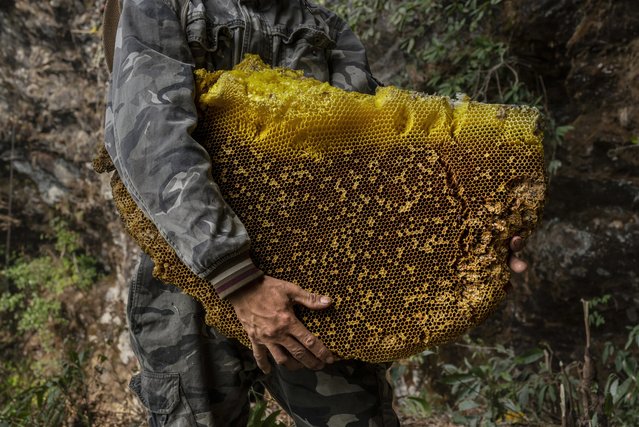
A Chinese ethnic Lisu honey hunter holds a large piece of wax from a hive while gathering wild cliff honey in a gorge on May 10, 2019 near Mangshi, in Dehong prefecture, Yunnan province China. (Photo by Kevin Frayer/Getty Images)

A Chinese ethnic Lisu honey hunter holds a large piece of wax from a hive while gathering wild cliff honey in a gorge on May 10, 2019 near Mangshi, in Dehong prefecture, Yunnan province China. (Photo by Kevin Frayer/Getty Images)
Details
08 Jun 2019 00:01:00
A South Korean soldier wear North Korea's military uniform, acting as North Korean soldier during an anti-terror and anti-chemical drill session

A South Korean soldier wear North Korea's military uniform, acting as North Korean soldier during an anti-terror and anti-chemical drill session held as part of the 2011 Ulchi Freedom Guardian (UFG) event on August 17, 2011 in Seoul, South Korea. The 11-day UGC, which features drills including the handling of chemical and biological attacks, is a regular joint exercise between US and South Korean troops to prepare for potential emergencies on the Korean Peninsula. (Photo by Chung Sung-Jun/Getty Images)
Details
18 Aug 2011 11:27:00


A Galapagos Tortoise shell is used as a foot rest at Heathrow Airport's Animal Reception Centre on January 25, 2011 in London, England. Many animals pass through the centre's doors ranging from exotic animals such as snow leopards and elephants, snakes and crocodiles, to the more common such as cats and dogs. In 2010 alone the centre processed approximately 10,500 cats and dogs, 1,300 birds, 105,000 day old chicks, 246,000 reptiles, 230 horses and 29 million fish. Most animals are part of zoo transfer schemes, the pet trade, or are pets in transit. (Photo by Dan Kitwood/Getty Images)
Details
21 Mar 2011 12:30:00
A chef cooks raw dog meat at a restaurant in Gwacheon, South Korea

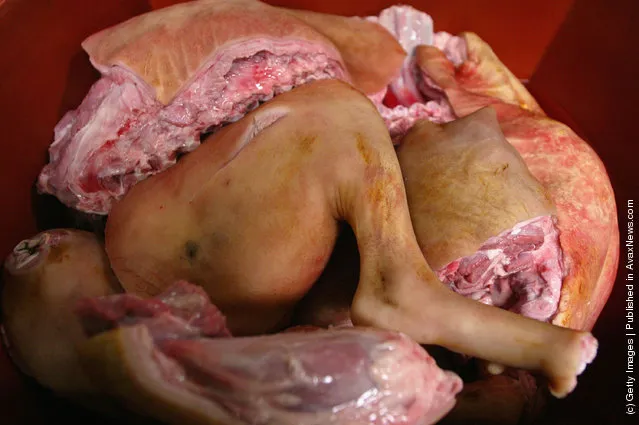
A chef cooks raw dog meat at a restaurant on July 5, 2005 in Gwacheon, South Korea. Dog meat is a traditional dish in Korea dating back to the Samkuk period (period of the three kingdoms BC 57 – AD 668). Although many recipes existed historically for dog meat, now chefs only make soups, or dishes using boiled or roasted meat. Koreans traditionally eat dog meat on the hottest day of the summer, for it's reputed benefits of virility, invigoration and health. (Photo by Chung Sung-Jun/Getty Images)
Details
21 Feb 2012 12:54:00