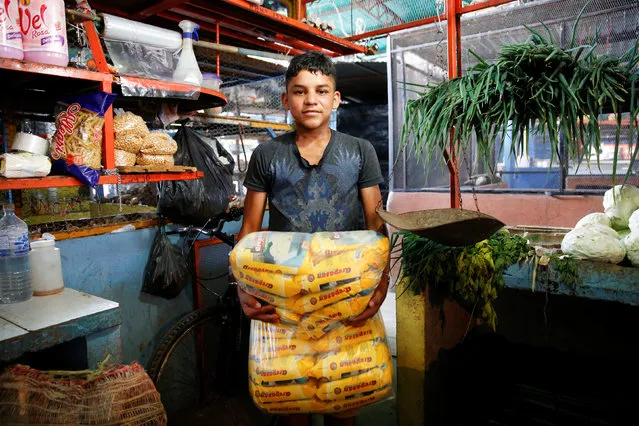
Carlos Cure holds packets of corn flour made in Colombia as he poses for a picture at a stall that sells food and staple items at a market in La Fria, Venezuela, June 2, 2016. (Photo by Carlos Garcia Rawlins/Reuters)
A human rainbow is created at a BASEOrlando coordinated event, “Orlando Strong Body Paint”, on Friday, June 17, 2016 in Orlando, Fl. The group created the rainbow, composed of volunteers numbering the same as that of the victims of the Pulse shooting, as a visual reminder of the amount of lives lost. (Photos by Amanda Voisard/The Washington Post)
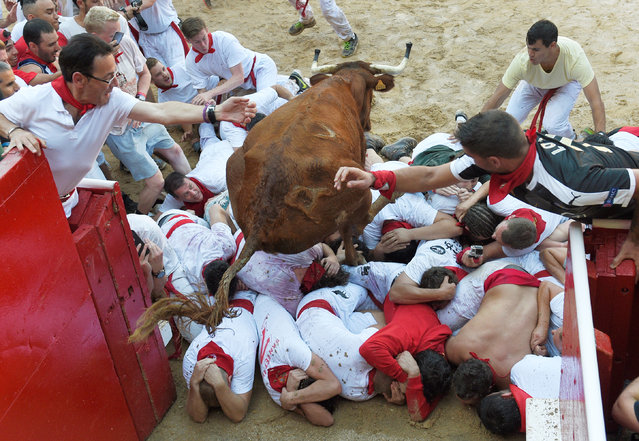
A wild cow jumps over revelers in the bullring after the first running of the bulls at the San Fermin festival in Pamplona, northern Spain, July 7, 2016. (Photo by Eloy Alonso/Reuters)
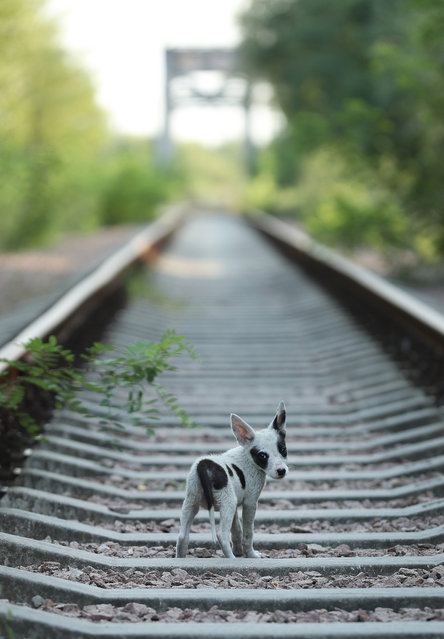
A stray puppy walks along abandoned train tracks near the Chernobyl nuclear power plant on August 19, 2017 near Chornobyl, Ukraine. An estimated 900 stray dogs live in the exclusion zone, many of them likely the descendants of dogs left behind following the mass evacuation of residents in the aftermath of the 1986 nuclear disaster at Chernobyl. (Photo by Sean Gallup/Getty Images)
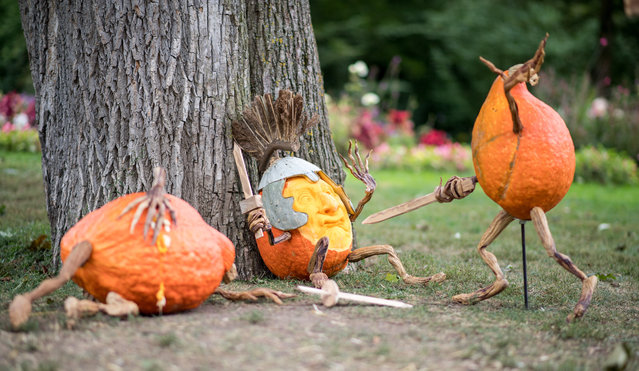
Carved pumpkins designed by US pumpkin artist Ray Villafane are pictured during a pumpkin exhibition in Ludwigsburg, southern Germany, on September 8, 2017. (Photo by Sebastian Gollnow/AFP Photo/DPA)
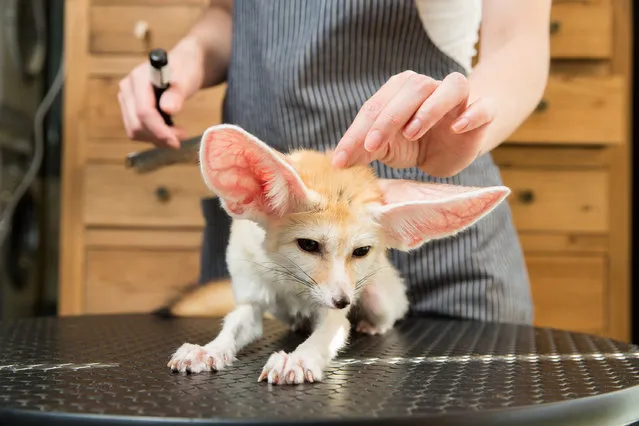
A dramatic rise in owning exotic pets in China is fuelling global demand for threatened species. The growing trade in alligators, snakes, monkeys, crocodiles and spiders is directly linked to species loss in some of the world’s most threatened ecosystems. Here: A fennec fox (Vulpes zerda) is groomed in a pet store in central Beijing. Native to the Sahara in North Africa, the species became a popular pet after being depicted as a character in Disney’s 2016 animated movie Zootopia. Individuals can cost between $2,000–$3,000. (Photo by Sean Gallagher/The Guardian)