Loading...
Done
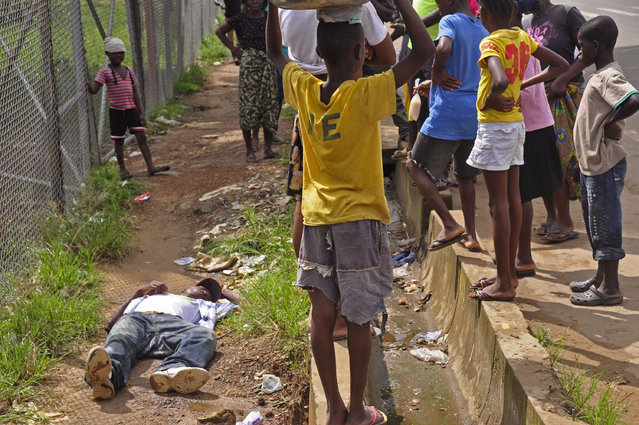
Children surround a man, left, that fell down while walking on a street suspected of having contracted the Ebola virus in the city of Monrovia, Liberia, Tuesday, August 19, 2014. The World Health Organization says the outbreak has killed more than 1,200 people, while authorities struggle to contain its spread and treat the sick. (Photo by Abbas Dulleh/AP Photo)

Children surround a man, left, that fell down while walking on a street suspected of having contracted the Ebola virus in the city of Monrovia, Liberia, Tuesday, August 19, 2014. The World Health Organization says the outbreak has killed more than 1,200 people, while authorities struggle to contain its spread and treat the sick. (Photo by Abbas Dulleh/AP Photo)
Details
21 Aug 2014 09:50:00
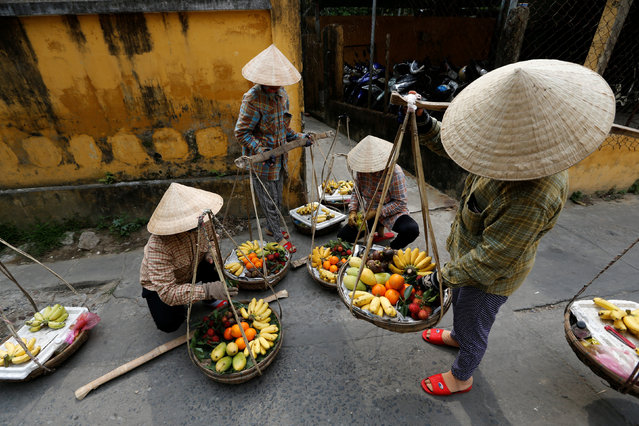
Women wearing traditional hats, known as a non la, sell fruits in Hoi An, Vietnam April 4, 2016. (Photo by Jorge Silva/Reuters)

Women wearing traditional hats, known as a non la, sell fruits in Hoi An, Vietnam April 4, 2016. The non la hats are made of readily available materials such as palm leaves, tree bark and bamboo and are visible everywhere in the city, a UNESCO World Heritage site. Hoi An's history as a busy trading port is evident throughout its architecture, a mix of eras and styles, with traditional wooden Vietnamese houses, Chinese temples and French colonial buildings. (Photo by Jorge Silva/Reuters)
Details
11 May 2016 11:32:00
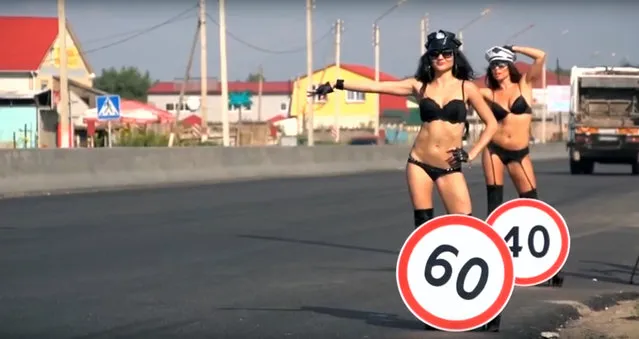
Half-naked girls against speed driving in Nizhny, Novgorod Region, Russia on September 5, 2016. Russian drivers are getting quite an eyeful in a bid to make them slow down thanks to topless women flashing speed limit signs at an accident blackspot. A trial of the road safety campaign demonstrated that it helped lower the speed of traffic near a  pedestrian crossing in Severny village. (Photo by YouTube)

Half-naked girls against speed driving in Nizhny, Novgorod Region, Russia on September 5, 2016. Russian drivers are getting quite an eyeful in a bid to make them slow down thanks to topless women flashing speed limit signs at an accident blackspot. A trial of the road safety campaign demonstrated that it helped lower the speed of traffic near a pedestrian crossing in Severny village. (Photo by YouTube)
Details
06 Sep 2016 10:45:00
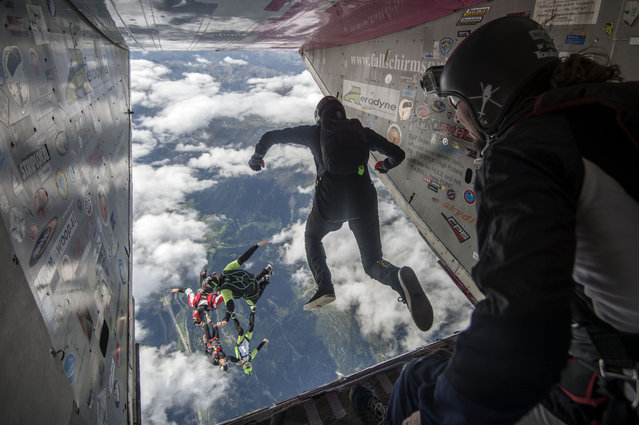
Athletes in action during the international parachuting competition Mountain Gravity in Quinto, Switzerland, 27 August 2015. Some 200 participants from all over the world are expected to jump at the event running from 22 to 30 August 2015. (Photo by Samuel Golay/EPA)

Athletes in action during the international parachuting competition Mountain Gravity in Quinto, Switzerland, 27 August 2015. Some 200 participants from all over the world are expected to jump at the event running from 22 to 30 August 2015. (Photo by Samuel Golay/EPA)
Details
28 Aug 2015 12:28:00
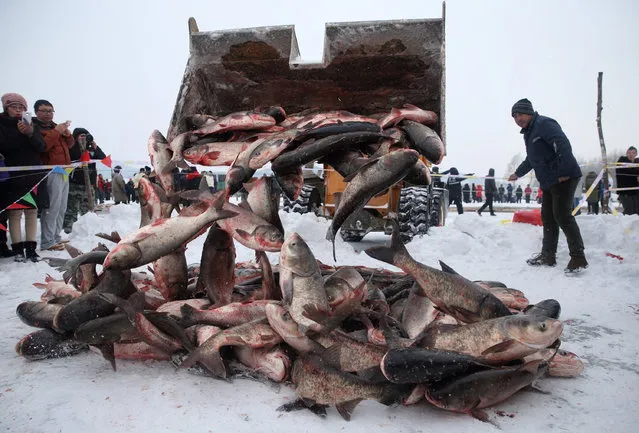
People participate in a winter fishing event in Changchun, Jilin province, China, December 25, 2016. Picture taken December 25, 2016. (Photo by Reuters/Stringer)

People participate in a winter fishing event in Changchun, Jilin province, China, December 25, 2016. Picture taken December 25, 2016. (Photo by Reuters/Stringer)
Details
27 Dec 2016 10:21:00
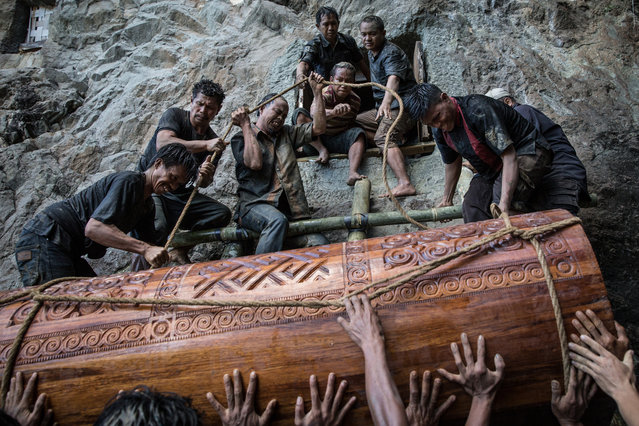
It is said that Torajans are people who “live to die”. For this Indonesian ethnic group, funerals are such extravagant events that they sometimes attract tourists. Families can postpone burials years (and the deceased are considered sick and hosted at home until the funeral) until the family can raise enough money and gather as many relatives as possible. And then it’s a jubilant multiday social event with a parade, dances and animal sacrifices. Agung Parameswara photographed these funerary practices when he traveled to South Sulawesi province, where the Torajans live. But often, their funeral isn’t the last time the dead are seen. In August, crypts are opened, coffins are slid back out and bodies delicately unsheathed. This tender ritual is known as Ma’Nene, which is customarily performed every few years. (Photo by Agung Parameswara/The Washington Post)

It is said that Torajans are people who “live to die”. For this Indonesian ethnic group, funerals are such extravagant events that they sometimes attract tourists. Families can postpone burials years (and the deceased are considered sick and hosted at home until the funeral) until the family can raise enough money and gather as many relatives as possible. And then it’s a jubilant multiday social event with a parade, dances and animal sacrifices. Agung Parameswara photographed these funerary practices when he traveled to South Sulawesi province, where the Torajans live. (Photo by Agung Parameswara/The Washington Post)
Details
06 Oct 2016 09:15:00
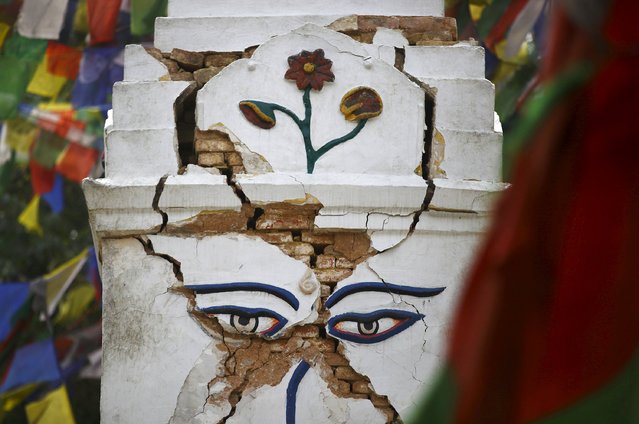
Cracks are seen on one of the shrines at Swoyambhunath Stupa, a UNESCO world heritage site, after Saturday's earthquake in Kathmandu, Nepal April 28, 2015. (Photo by Navesh Chitrakar/Reuters)

Cracks are seen on one of the shrines at Swoyambhunath Stupa, a UNESCO world heritage site, after Saturday's earthquake in Kathmandu, Nepal April 28, 2015. (Photo by Navesh Chitrakar/Reuters)
Details
29 Apr 2015 06:38:00
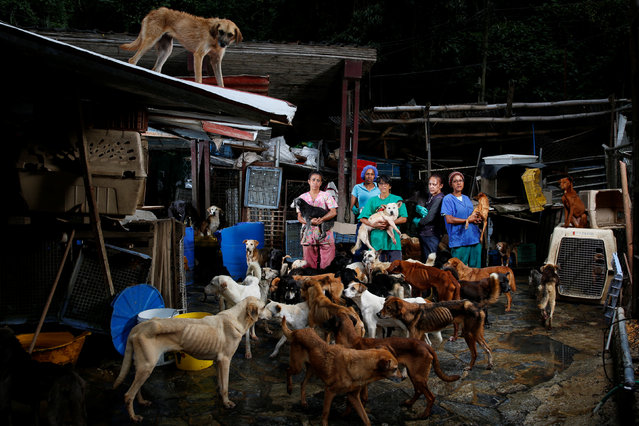
(L-R) Maria Silva, Milena Cortes, Maria Arteaga, Jackeline Bastidas and Gissy Abello pose for a picture at the Famproa dogs shelter where they work, in Los Teques, Venezuela, August 25, 2016. Venezuelans struggling to feed their families let alone their pets are dumping animals on the streets, in parks and at makeshift homes overrun with scrawny animals amid an economic crisis. An hour from Caracas in Los Teques, hundreds of dogs bark and run around the streets scavenging for food outside a makeshift shelter. People come by every few hours to hand over scrawny dogs which are fed by volunteers every day. Venezuela is undergoing a major economic and social crisis, with shortages of basic foods and medicines. Triple digit inflation is hitting everybody hard, including those who own pets. (Photo by Carlos Garcia Rawlins/Reuters)

(L-R) Maria Silva, Milena Cortes, Maria Arteaga, Jackeline Bastidas and Gissy Abello pose for a picture at the Famproa dogs shelter where they work, in Los Teques, Venezuela, August 25, 2016. Venezuelans struggling to feed their families let alone their pets are dumping animals on the streets, in parks and at makeshift homes overrun with scrawny animals amid an economic crisis. An hour from Caracas in Los Teques, hundreds of dogs bark and run around the streets scavenging for food outside a makeshift shelter. (Photo by Carlos Garcia Rawlins/Reuters)
Details
08 Sep 2016 10:01:00