Loading...
Done
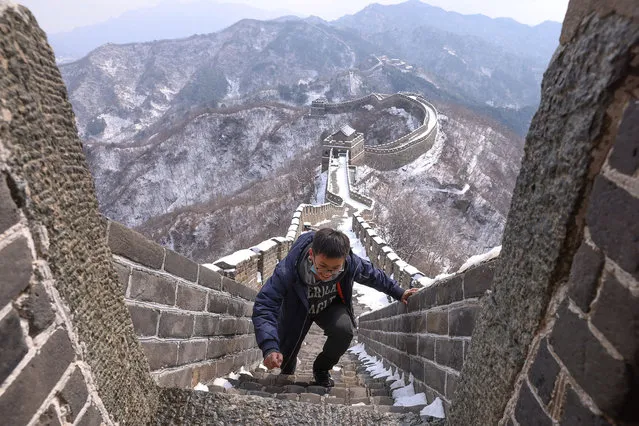
A Chinese tourist visits the Mutianyu Great Wall covered in snow on February 23, 2021 in Beijing, China. Affected by the new coronavirus (COVID-19), the number of visitors to Mutianyu Great Wall in 2020 dropped by about 60%. (Photo by Lintao Zhang/Getty Images)

A Chinese tourist visits the Mutianyu Great Wall covered in snow on February 23, 2021 in Beijing, China. Affected by the new coronavirus (COVID-19), the number of visitors to Mutianyu Great Wall in 2020 dropped by about 60%. (Photo by Lintao Zhang/Getty Images)
Details
17 Jan 2022 08:19:00
A woman poses for a photo in the tourist area surrounding Houhai Lake during Chinese National Day holidays in Beijing, China, October 2, 2020. (Photo by Thomas Peter/Reuters)

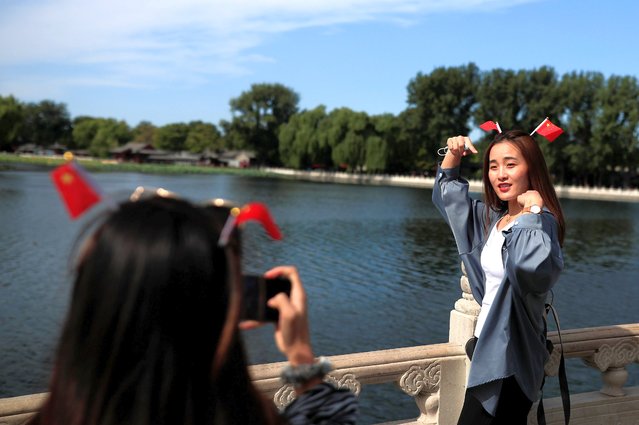
A woman poses for a photo in the tourist area surrounding Houhai Lake during Chinese National Day holidays in Beijing, China, October 2, 2020. China is celebrating its national day marking the 71st anniversary of the People's Republic of China and the Mid-autumn Festival for a week beginning on October 1st. (Photo by Thomas Peter/Reuters)
Details
07 Oct 2020 00:05:00
This picture taken on February 1, 2015 shows participants competing in a tofu (beancurd) wrestling competition in Fogang county, south China's Guangdong province. Participants, mostly women, fight it out in an inflatable pool which is filled with nearly two tons of fresh milk and tofu, in a promotion to attract tourists for the upcoming Chinese Lunar New Year holiday. (Photo by AFP Photo/Stringer)

This picture taken on February 1, 2015 shows participants competing in a tofu (beancurd) wrestling competition in Fogang county, south China's Guangdong province. Participants, mostly women, fight it out in an inflatable pool which is filled with nearly two tons of fresh milk and tofu, in a promotion to attract tourists for the upcoming Chinese Lunar New Year holiday. The upcoming Chinese lunar new year of the sheep, which will fall on February 19 this year, marks the biggest festival of the year in China as hundreds of millions of people journey across the country to celebrate the season with their families. (Photo by AFP Photo/Stringer)

Details
07 Feb 2015 14:44:00
A young girl plays on the glass bottom platform of the Oriental Pear TV Tower as she travels with her family on the second day of the Chinese Lunar New Year holiday, also known as Spring Festival, in Shanghai, China on February 18, 2018. Some 287 million tourists travelled in China during the first four days of the week-long Chinese Lunar New Year holiday, up 11.1 percent from the same period last year, new data showed Sunday (18 February 2018). Tourism revenue rose 11.6 percent to 352.7 billion yuan (55.61 billion U.S. dollars) in the four days, the China National Tourism Administration (CNTA) said. On Sunday alone, some 73 million tourist trips were made across the country, up 15.3 percent, while tourism revenue rose 16.6 percent to 94.4 billion yuan. (Photo by Imaginechina/Rex Features/Shutterstock)

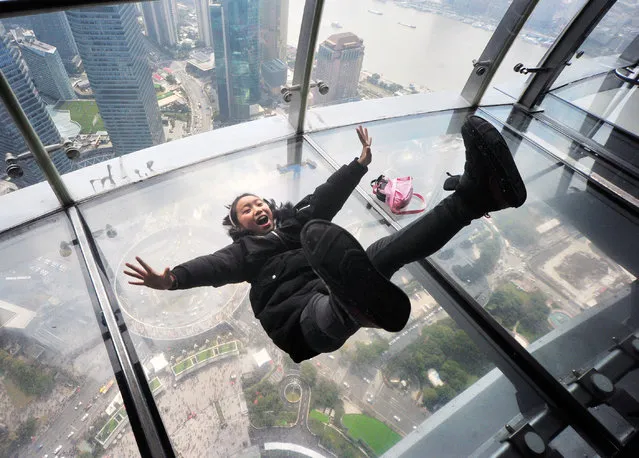
A young girl plays on the glass bottom platform of the Oriental Pear TV Tower as she travels with her family on the second day of the Chinese Lunar New Year holiday, also known as Spring Festival, in Shanghai, China on February 18, 2018. Some 287 million tourists travelled in China during the first four days of the week-long Chinese Lunar New Year holiday, up 11.1 percent from the same period last year, new data showed Sunday. (Photo by Imaginechina/Rex Features/Shutterstock)
Details
21 Feb 2018 00:03:00
Ethnic “Kam” (also known as Dong) women get ready for a traditional wedding ritual known as the “steal the chicken at the drum tower” in a minority Dong village in southwestern Chinese city of Congjiang, Guizhou province, China January 29, 2017. The ceremony held in the ethnic Kam minority village of Gantuan in Guizhou province is based on a tradition dating back some 500 years that was revived and modified in the 1990s for villagers and tourists. (Photo by Tyrone Siu/Reuters)

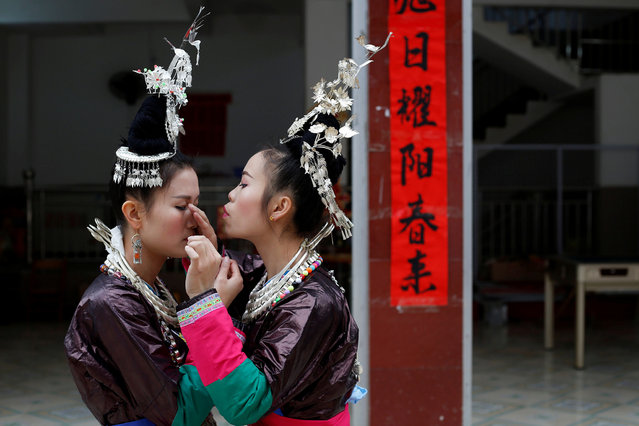
Ethnic “Kam” (also known as Dong) women get ready for a traditional wedding ritual known as the “steal the chicken at the drum tower” in a minority Dong village in southwestern Chinese city of Congjiang, Guizhou province, China January 29, 2017. The ceremony held in the ethnic Kam minority village of Gantuan in Guizhou province is based on a tradition dating back some 500 years that was revived and modified in the 1990s for villagers and tourists. (Photo by Tyrone Siu/Reuters)
Details
03 Feb 2017 07:57:00
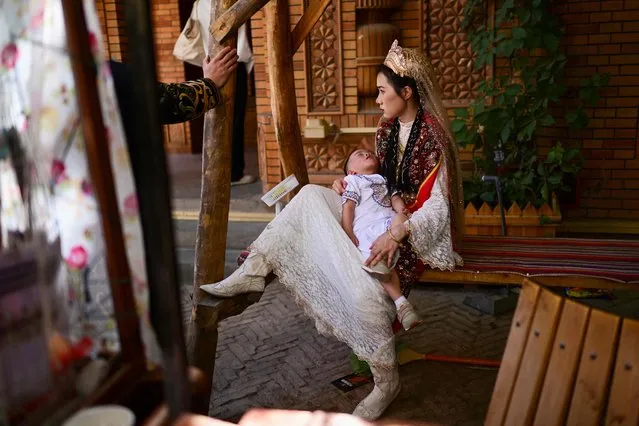
This photo taken on July 13, 2023 shows a woman wearing traditional Uyghur attire posing for photos in the Old Kashgar tourist area in China's northwestern Xinjiang region. Chinese travellers throng the bazaars of old Kashgar, munching mutton kebabs and soaking up heavily commodified Uyghur culture – part of a government push to remould troubled Xinjiang into a tourism paradise. (Photo by Pedro Pardo/AFP Photo)

This photo taken on July 13, 2023 shows a woman wearing traditional Uyghur attire posing for photos in the Old Kashgar tourist area in China's northwestern Xinjiang region. Chinese travellers throng the bazaars of old Kashgar, munching mutton kebabs and soaking up heavily commodified Uyghur culture – part of a government push to remould troubled Xinjiang into a tourism paradise. (Photo by Pedro Pardo/AFP Photo)
Details
27 Sep 2023 02:44:00
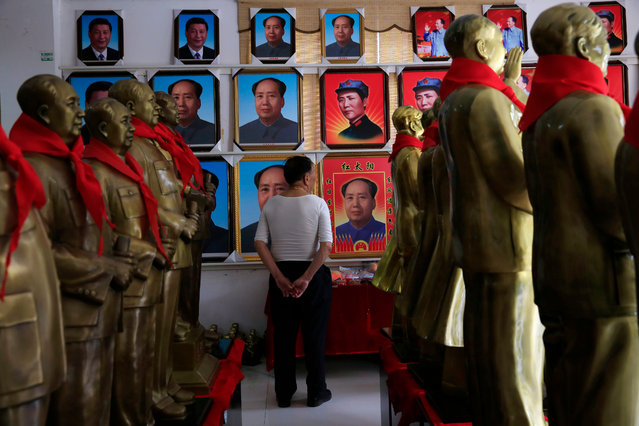
A visitor looks at portraits of Mao Zedong amid his statues on display at a wholesale souvenir store in Shaoshan, Hunan Province in central China, 28 April 2016. Shaoshan is the hometown of former Communist leader Mao Zedong, popularly known as Chairman Mao. Thousands of visitors descend on this small Chinese town burrowed in the hills of Central China's Hunan province to pay homage to the “Great Helmsman” everyday. (Photo by How Hwee Young/EPA)

A visitor looks at portraits of Mao Zedong amid his statues on display at a wholesale souvenir store in Shaoshan, Hunan Province in central China, 28 April 2016. Shaoshan is the hometown of former Communist leader Mao Zedong, popularly known as Chairman Mao. Thousands of visitors descend on this small Chinese town burrowed in the hills of Central China's Hunan province to pay homage to the “Great Helmsman” everyday. It is one of the core sites of the “Red Tourism” industry, where communist party cadres and ordinary Chinese tourists alike seek to relive the experiences and rekindle the spirit of the revolutionaries. (Photo by How Hwee Young/EPA)
Details
08 May 2016 11:19:00
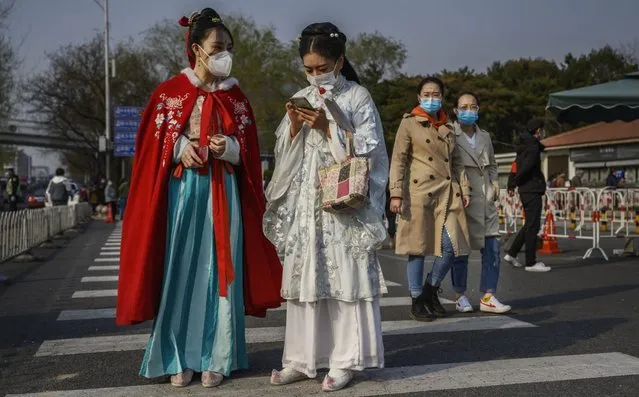
Chinese women wear protective masks as they are dressed in traditional clothing from the Qing Dynasty era outside a park on March 29, 2020 in Beijing, China. A limited section of the iconic tourist site was re-opened to the public this week allowing a smaller number of visitors to reserve tickets online in advance and to enter after passing health screening. With the pandemic hitting hard across the world, China recorded its first day with no new domestic cases of the coronavirus last week, since the government imposed sweeping measures to keep the disease from spreading. For two months, millions of people across China have been restricted in how they move from their homes, while other cities have been locked down in ways that appeared severe at the time but are now being replicated in other countries trying to contain the virus. Officials believe the worst appears to be over in China, though there are concerns of another wave of infections as the government attempts to reboot the worlds second largest economy. In Beijing, it is mandatory to wear masks outdoors, retail stores operate on reduced hours, restaurants employ social distancing among patrons, and tourist attractions at risk of drawing large crowds remain closed. Monitoring and enforcement of virus-related measures and the quarantine of anyone arriving to Beijing is carried out by neighborhood committees and a network of Communist Party volunteers who wear red arm bands. A primary concern for Chinese authorities remains the arrival of flights from Europe and elsewhere, given the exposure of passengers in regions now regarded as hotbeds for transmission. Since January, China has recorded more than 81,000 cases of COVID-19 and at least 3200 deaths, mostly in and around the city of Wuhan, in central Hubei province, where the outbreak first started. (Photo by Kevin Frayer/Getty Images)

Chinese women wear protective masks as they are dressed in traditional clothing from the Qing Dynasty era outside a park on March 29, 2020 in Beijing, China. A limited section of the iconic tourist site was re-opened to the public this week allowing a smaller number of visitors to reserve tickets online in advance and to enter after passing health screening. (Photo by Kevin Frayer/Getty Images)
Details
01 Apr 2020 00:05:00