Loading...
Done
Kaleidoscopic Crystal Floor By Suzan Drummen

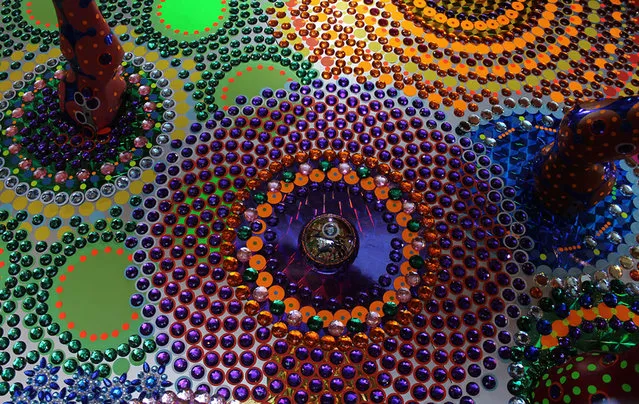
Dutch artist Suzan Drummen‘s large-scale floor installations are mesmerizing and complex circular patterns made out of mirrors and brightly colored glass. The fractal-like arrangements feature ornate and elaborate circles growing exponentially out of each other and vibrant rings of spiraling colors winding into the surface of the floor. They are composed of crystals, chromed metal, precious stones, mirrors and optical glass. A sensory experience, and visually stimulating, the glittering installations play with the architecture of the space — climbing up walls and sweeping across the surfaces — examining the idea of illusion and optical effects.
Details
27 May 2015 08:18:00
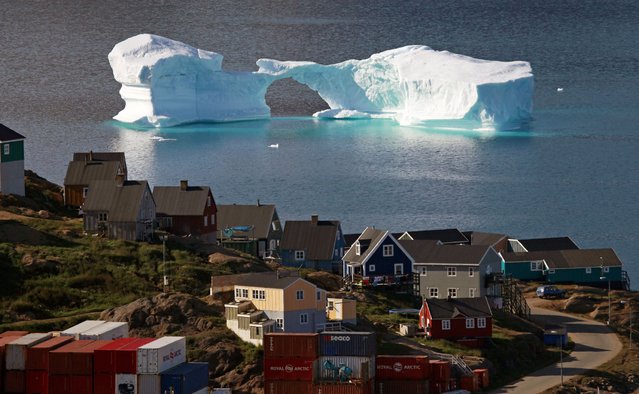
File photo of an iceberg floating near a harbour in the town of Kulusuk, east Greenland August 1, 2009. The United Nations 19th Climate Change Conference (COP19) will take place November 11-22, 2013 in Warsaw. The main goal of the talks with almost almost 200 nations assembled, is to lay the foundation for the new global climate agreement, aiming at further emission reduction, which is to be signed in 2015 in Paris and be launched in 2020. (Photo by Bob Strong/Reuters)

It's taken roughly five months, but a massive iceberg has separated from Antarctica's Pine Island Glacier. According to NASA's Earth Observatory, the estimated size of this iceberg, named B-31, is around 660 square kilometres (33 km long by 20 km wide) – a city-sized block of ice that has slowly migrated away from the continent, and is now floating out to sea. Take a look at some massive icebergs afloat in the oceans. Photo: File photo of an iceberg floating near a harbour in the town of Kulusuk, east Greenland August 1, 2009. (Photo by Bob Strong/Reuters)
Details
27 Apr 2014 07:47:00
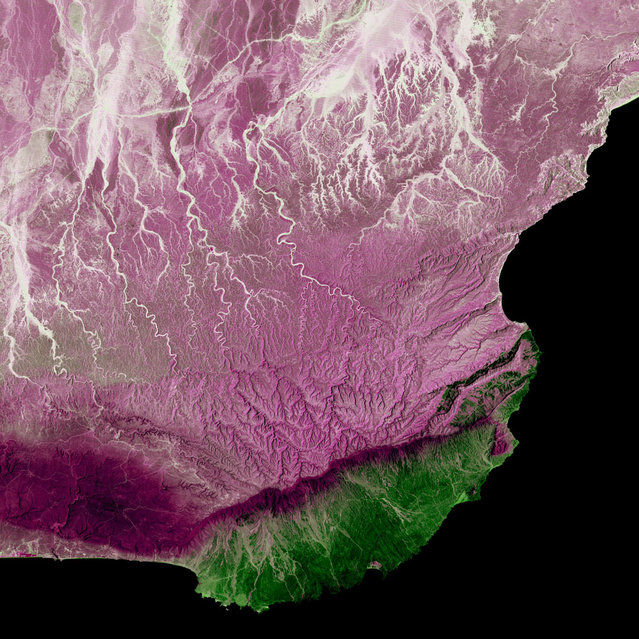
Dhofar Region, Oman. Much of Oman is desert, but the Arabian Sea coast in the Dhofar region represents a startling difference in climate. This coastal region catches the monsoon rains, or khareef, during the summer months. Drenching rains fall primarily on the mountainous ridge that separates the lush, fertile areas along the coast from the arid interior, recharging streams, waterfalls and springs that provide plentiful water supplies in the fertile lowlands for the remainder of the year. Image taken by Landsat 5 on April 2, 2005. (Photo by USGS/NASA)

Dhofar Region, Oman. Much of Oman is desert, but the Arabian Sea coast in the Dhofar region represents a startling difference in climate. This coastal region catches the monsoon rains, or khareef, during the summer months. Drenching rains fall primarily on the mountainous ridge that separates the lush, fertile areas along the coast from the arid interior, recharging streams, waterfalls and springs that provide plentiful water supplies in the fertile lowlands for the remainder of the year. Image taken by Landsat 5 on April 2, 2005. (Photo by USGS/NASA)
Details
25 Dec 2012 11:13:00
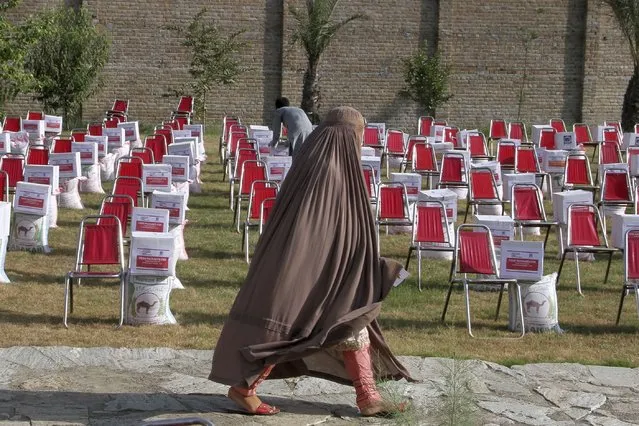
A woman from a flood affected area arrives to receive food and other items distributed by the religious charity group Al-Khidmat Foundation Pakistan, in Shabqadar near Peshawar, Pakistan, Tuesday, September 13, 2022. The death toll from three months of record-breaking floods in Pakistan rose to over 1,400, officials said Tuesday, as the minister for climate warned the prolonged monsoon rains will continue lashing this impoverished nation in the coming weeks. (Photo by Muhammad Sajjad/AP Photo)

A woman from a flood affected area arrives to receive food and other items distributed by the religious charity group Al-Khidmat Foundation Pakistan, in Shabqadar near Peshawar, Pakistan, Tuesday, September 13, 2022. The death toll from three months of record-breaking floods in Pakistan rose to over 1,400, officials said Tuesday, as the minister for climate warned the prolonged monsoon rains will continue lashing this impoverished nation in the coming weeks. (Photo by Muhammad Sajjad/AP Photo)
Details
23 Sep 2022 04:33:00
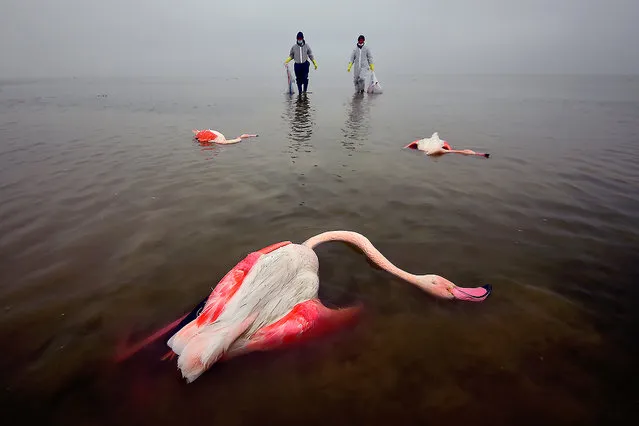
Grand title winner: Environmental photographer of the year. The Bitter Death Of Birds by Mehdi Mohebi Pour. This photo shows the efforts of the environmental forces to collect the bodies and prevent the spread of this disease. The Miankaleh wetland is being destroyed by changes in the climate and it is my duty as a photographer to highlight these problems and create a record for history. I want to prevent the complete destruction of the wetland and the potential environmental disaster by showing the issues and threats to these beautiful natural places. (Photo by Mehdi Mohebi Pour/Environmental Photographer of the Year)

Grand title winner: Environmental photographer of the year. The Bitter Death Of Birds by Mehdi Mohebi Pour. This photo shows the efforts of the environmental forces to collect the bodies and prevent the spread of this disease. The Miankaleh wetland is being destroyed by changes in the climate and it is my duty as a photographer to highlight these problems and create a record for history. I want to prevent the complete destruction of the wetland and the potential environmental disaster by showing the issues and threats to these beautiful natural places. (Photo by Mehdi Mohebi Pour/Environmental Photographer of the Year)
Details
05 Dec 2022 04:27:00
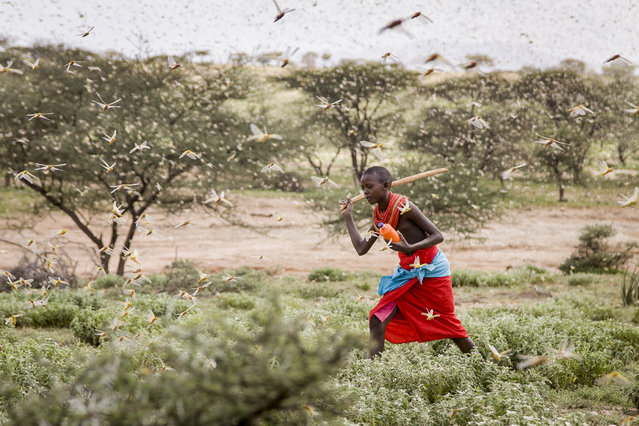
In this photo taken Thursday, January 16, 2020, a Samburu boy uses a wooden stick to try to swat a swarm of desert locusts filling the air, as he herds his camel near the village of Sissia, in Samburu county, Kenya. The most serious outbreak of desert locusts in 25 years is spreading across East Africa and posing an unprecedented threat to food security in some of the world's most vulnerable countries, authorities say, with unusual climate conditions partly to blame. (Photo by Patrick Ngugi/AP Photo)

In this photo taken Thursday, January 16, 2020, a Samburu boy uses a wooden stick to try to swat a swarm of desert locusts filling the air, as he herds his camel near the village of Sissia, in Samburu county, Kenya. The most serious outbreak of desert locusts in 25 years is spreading across East Africa and posing an unprecedented threat to food security in some of the world's most vulnerable countries, authorities say, with unusual climate conditions partly to blame. (Photo by Patrick Ngugi/AP Photo)
Details
19 Jan 2020 00:07:00
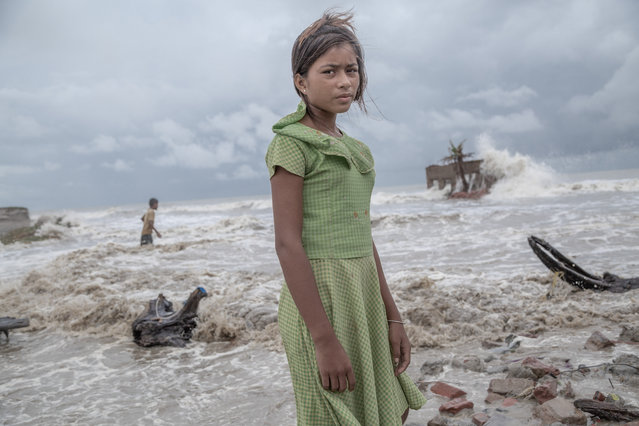
A girl, standing before her tea shop, which is completely ruined by sea water in Frazerganj, Sundarbans, India on August 18, 2020. After Cyclone Aila struck the Sundarbans in 2009, it became clear that frequent cyclonic events will turn the residents of Sundarbans into climate refugees. Within May 5, 2019 – May 25, 2021, Sundarbans faced cyclones- Fani, Bulbul, Amphan & Yaas – each devastating enough to justify the fear of mass displacement. (Photo by Supratim Bhattacharjee/Mangrove Photography Awards)

A girl, standing before her tea shop, which is completely ruined by sea water in Frazerganj, Sundarbans, India on August 18, 2020. After Cyclone Aila struck the Sundarbans in 2009, it became clear that frequent cyclonic events will turn the residents of Sundarbans into climate refugees. Within May 5, 2019 – May 25, 2021, Sundarbans faced cyclones- Fani, Bulbul, Amphan & Yaas – each devastating enough to justify the fear of mass displacement. (Photo by Supratim Bhattacharjee/Mangrove Photography Awards)
Details
26 Sep 2024 03:06:00
Paul Villinskis By Butterflies Art

Paul Villinski is a professional visual artist who has created studio and large-scale artworks for more than three decades. Villinski was born in York, Maine, USA, in 1960, son of an Air Force navigator. He has lived and worked in New York City since 1982. A scenic route through the educational system included stops at Phillips Exeter Academy and the Massachusetts College of Art, and a BFA with honors from the Cooper Union for the Advancement of Science and Art in 1984. He lives with his partner, the painter Amy Park, and their son, Lark, in their studios in Long Island City, NY.
Details
02 Mar 2013 12:24:00