Loading...
Done
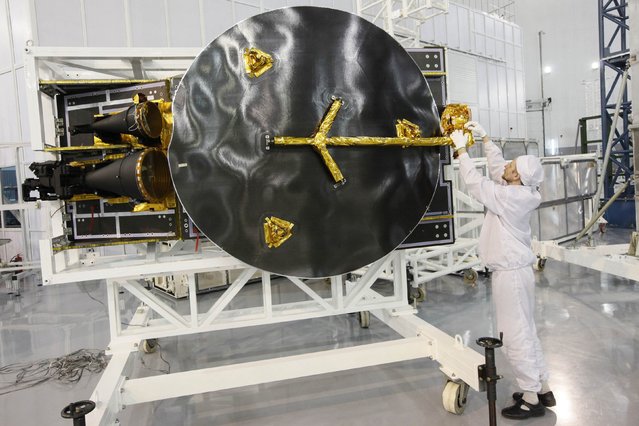
Engineer Mikhail Venin works on an antenna for the Express AM8 new generation geostationary telecommunications heavy satellite at the large-sized transformed mechanical systems centre of the Reshetnev Information Satellite Systems company in the Siberian town of Zheleznogorsk April 2, 2014. (Photo by Ilya Naymushin/Reuters)

Engineer Mikhail Venin works on an antenna for the Express AM8 new generation geostationary telecommunications heavy satellite at the large-sized transformed mechanical systems centre of the Reshetnev Information Satellite Systems company in the Siberian town of Zheleznogorsk April 2, 2014. The Express AM6 is a new generation satellite providing services including Russian governmental and presidential mobile communication, digital television and broadcasting, according to the Reshetnev company representatives. (Photo by Ilya Naymushin/Reuters)
Details
05 May 2014 09:18:00


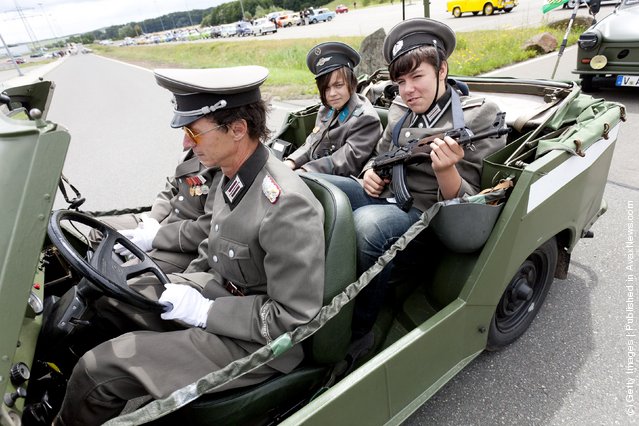
“The Trabant is a car that was produced by former East German auto maker VEB Sachsenring Automobilwerke Zwickau in Zwickau, Sachsen. It was the most common vehicle in East Germany, and was also exported to countries both inside and outside the communist bloc. The main selling points was that it had room for four adults and luggage in a compact, light and durable shell and that it was fast (when introduced) and durable. With its mediocre performance, smoky two-stroke engine, and production shortages, the Trabant is often cited as an example of the disadvantages of centralized planning; on the other hand, it is regarded with derisive affection as a symbol of the failed former East Germany and of the fall of communism (in former West Germany, as many East Germans streamed into West Berlin and West Germany in their Trabants after the opening of the Berlin Wall in 1989). It was in production without any significant changes for nearly 30 years with 3,096,099 Trabants produced in total”. – Wikipedia

Photo: Enthusiasts weared in uniforms of the former eastern german army trive in a military Trabant car as fans and owners of East German-era Trabant cars gather at the 2011 International Trabantfahrer Treffen (International Trabant Drivers Meeting) on June 26, 2011 in Zwickau, Germany. The Trabant, also known as the Trabi, was among the main cars produced in communist East Germany and built by VEB Sachsenring Automobilwerke in Zwickau for 30 years until 1989. Today the car has cult status for many followers and one company, IndiKar, is even seeking to revive the brand in a modern, electric version. (Photo by Carsten Koall/Getty Images)

Details
27 Jun 2011 12:21:00
Male members of the Zeleziar folk dance group whip and water the local girls dressed in traditional clothing, during Easter in Bociar, Slovakia on April 1, 2024. Boys and younger men visit the houses of young girls, whip them with fresh-cut decorated wickers and sprinkle water on them. By tradition, the whipping should give the girls strength, health, and abundance throughout the whole year. (Photo by Robert Nemeti/Anadolu via Getty Images)

Male members of the Zeleziar folk dance group whip and water the local girls dressed in traditional clothing, during Easter in Bociar, Slovakia on April 1, 2024. Boys and younger men visit the houses of young girls, whip them with fresh-cut decorated wickers and sprinkle water on them. By tradition, the whipping should give the girls strength, health, and abundance throughout the whole year. (Photo by Robert Nemeti/Anadolu via Getty Images)
Details
18 Aug 2025 03:18:00
A news reporter doing a stand up near a sea wall in Cedar Key, Fla., is covered by an unexpected wave as Hurricane Hermine nears the Florida coast, Thursday, September 1, 2016. Hurricane Hermine gained new strength Thursday evening and roared ever closer to Florida's Gulf Coast, where rough surf began smashing against docks and boathouses and people braced for the first direct hit on the state from a hurricane in over a decade. (Photo by John Raoux/AP Photo)

A news reporter doing a stand up near a sea wall in Cedar Key, Fla., is covered by an unexpected wave as Hurricane Hermine nears the Florida coast, Thursday, September 1, 2016. Hurricane Hermine gained new strength Thursday evening and roared ever closer to Florida's Gulf Coast, where rough surf began smashing against docks and boathouses and people braced for the first direct hit on the state from a hurricane in over a decade. (Photo by John Raoux/AP Photo)
Details
02 Sep 2016 13:17:00
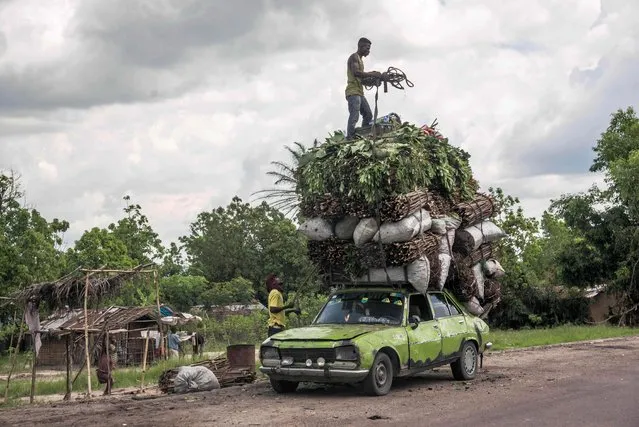
Vegetables, wood and charcoal are loaded onto the roof of a battered Peugeot on November 7, 2018 in Matadi, Democratic Republic of the Congo. From the port of Matadi to the capital Kinshasa, a 350 km road crosses the south-west of the Democratic Republic of Congo. (Photo by Junior D. Kannah/AFP Photo)

Vegetables, wood and charcoal are loaded onto the roof of a battered Peugeot on November 7, 2018 in Matadi, Democratic Republic of the Congo. From the port of Matadi to the capital Kinshasa, a 350 km road crosses the south-west of the Democratic Republic of Congo. (Photo by Junior D. Kannah/AFP Photo)
Details
07 Jan 2019 00:01:00
A woman runs through a sea foam, as a seasonal cold front moved over the Cape Peninsula, following a week of severe weather and flooding in Cape Town, South Africa on June 19, 2023. (Photo by Nic Bothma/Reuters)

A woman runs through a sea foam, as a seasonal cold front moved over the Cape Peninsula, following a week of severe weather and flooding in Cape Town, South Africa on June 19, 2023. (Photo by Nic Bothma/Reuters)
Details
08 Jul 2023 02:34:00
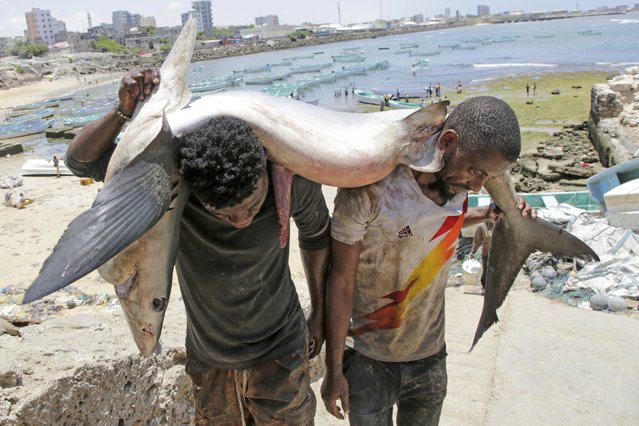
Fishermen carry a tuna fish to the market in Mogadishu, Somalia, April 2, 2025. (Photo by Farah Abdi Warsameh/AP Photo)

Fishermen carry a tuna fish to the market in Mogadishu, Somalia, April 2, 2025. (Photo by Farah Abdi Warsameh/AP Photo)
Details
10 Apr 2025 03:02:00
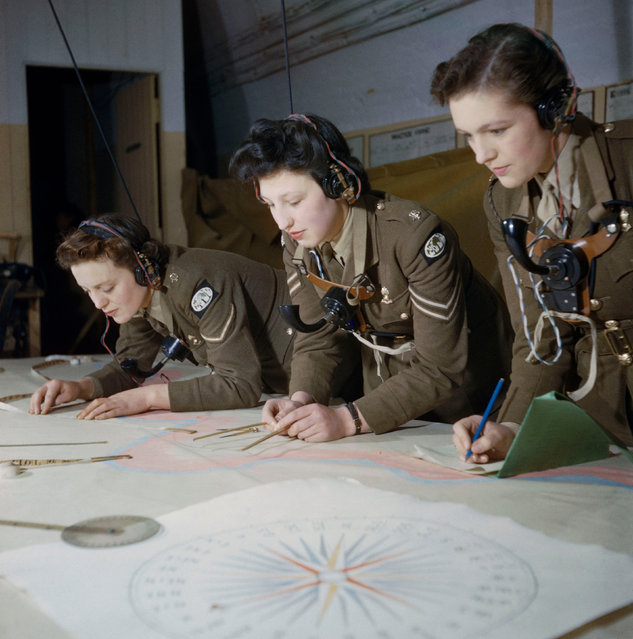
Auxiliary Territorial Service (ATS) plotters at work at Coastal Artillery Headquarters in Dover, December 1942. (Photo by Ted Dearberg/IWM/PA Wire)

Auxiliary Territorial Service (ATS) plotters at work at Coastal Artillery Headquarters in Dover, December 1942. The Auxiliary Territorial Service was the women's branch of the British Army during the Second World War. It was formed on 9 September 1938, initially as a women's voluntary service, and existed until 1 February 1949, when it was merged into the Women's Royal Army Corps. The ATS had its roots in the Women's Auxiliary Army Corps (WAAC), which was formed in 1917 as a voluntary service. During the First World War its members served in a number of jobs including clerks, cooks, telephonists and waitresses. The WAAC was disbanded after four years in 1921. (Photo by Ted Dearberg/IWM/PA Wire)
Details
13 Jul 2017 07:52:00