Loading...
Done
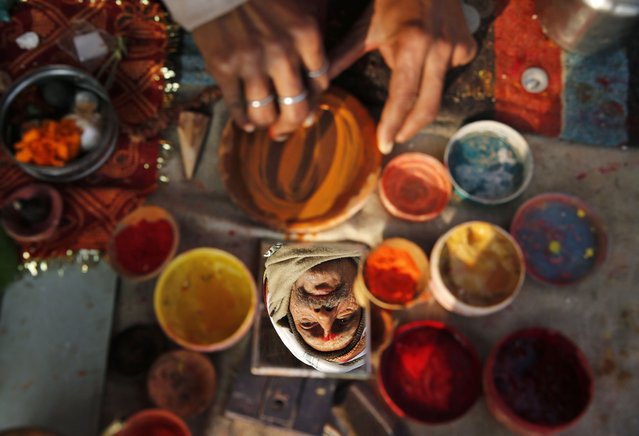
A Hindu holy man is reflected on a mirror as he prepares a bowl of vermillion powder for devotees near “Sangam”, the confluence of holy rivers of Ganges, Yamuna and the mythical Saraswati, during the annual traditional fair of Magh Mela in Allahabad, in the northern Indian state of Uttar Pradesh, India, Tuesday, January 6, 2015. (Photo by Rajesh Kumar Singh/AP Photo)

A Hindu holy man is reflected on a mirror as he prepares a bowl of vermillion powder for devotees near “Sangam”, the confluence of holy rivers of Ganges, Yamuna and the mythical Saraswati, during the annual traditional fair of Magh Mela in Allahabad, in the northern Indian state of Uttar Pradesh, India, Tuesday, January 6, 2015. Hundreds of thousands of devout Hindus are expected to take holy dips at the confluence during the astronomically auspicious period of over 45 days celebrated as Magh Mela. (Photo by Rajesh Kumar Singh/AP Photo)
Details
07 Jan 2015 13:41:00


“Kumbh Mela is a mass Hindu pilgrimage in which Hindus gather at the Ganges river. The normal Kumbh Mela is celebrated every 3 years, the Ardh (half) Kumbh Mela is celebrated every six years at Haridwar and Prayag, the Purna (complete) Kumbh takes place every twelve years, at four places (Prayag (Allahabad), Haridwar, Ujjain, and Nashik). The Maha (great) Kumbh Mela which comes after 12 “Purna Kumbh Melas”, or 144 years, is held at Allahabad.

The last Ardh Kumbh Mela was held over a period of 45 days beginning in January 2007, more than 70 million Hindu pilgrims took part in the Ardh Kumbh Mela at Prayag, and on January 15, the most auspicious day of the festival of Makar Sankranti, more than 5 million participated. The previous Maha Kumbh Mela, held in 2001, was attended by around 60 million people, making it at the time the largest gathering anywhere in the world in recorded history”. – Wikipedia

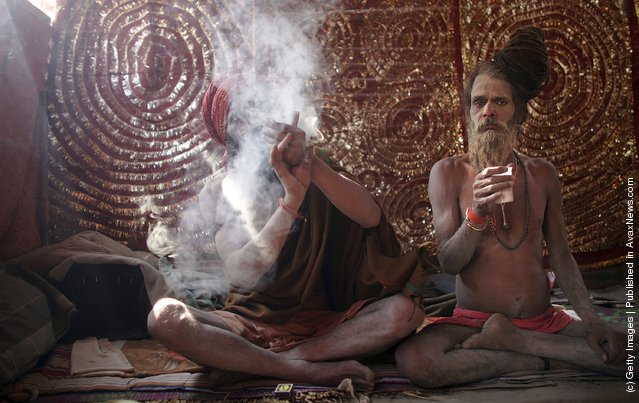
Photo: Sadhus (holy men) smoke at their camp near the ritual site at Sangam, the confluence of the Ganges, Yamuna and mythical Saraswati rivers during the Ardh Kumbh Mela festival (Half Pitcher festival) January 18, 2007 in Allahabad, India. Millions of Hindu pilgrims have flocked to the largest religious gathering in the world which lasts for 45 days in northern India. The festival commemorates the mythical conflict between gods and demons over a pitcher filled with the “nectar of immortality”. Devotees believe that taking a holy dip in the Ganges at this time washes away their sins and paves the path to salvation. (Photo by Mario Tama/Getty Images)

Details
30 Jun 2011 10:27:00
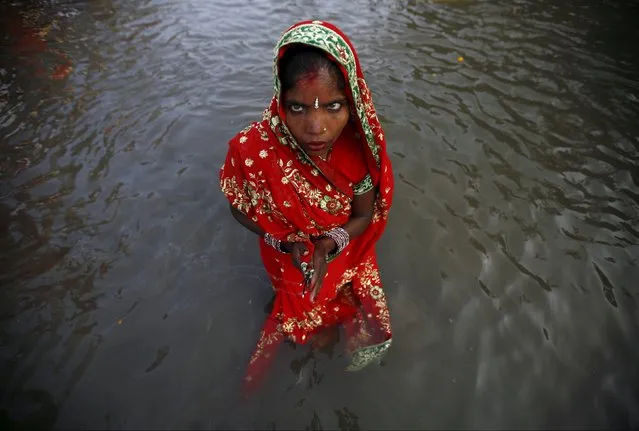
A devotee offers prayers to the setting sun during the "Chhat" festival at Bagmati river in Kathmandu, Nepal November 17, 2015. (Photo by Navesh Chitrakar/Reuters)

A devotee offers prayers to the setting sun during the "Chhat" festival at Bagmati river in Kathmandu, Nepal November 17, 2015. Hindus in Nepal celebrate "Chhat", a four-day festival that honours the sun god, by praying at sunrise and sunset, and seek blessings for one's family by giving offerings. (Photo by Navesh Chitrakar/Reuters)
Details
19 Nov 2015 08:01:00
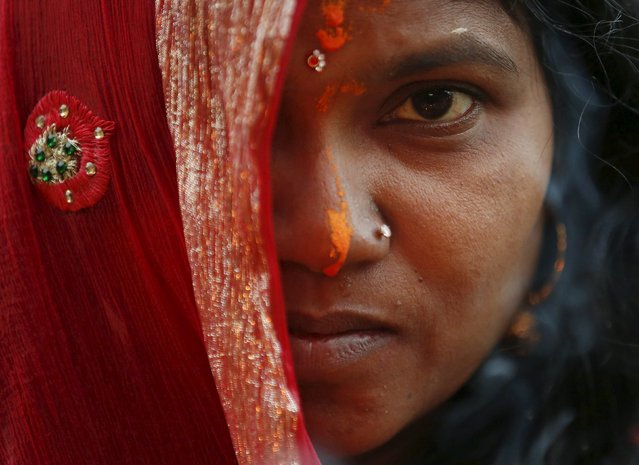
A face of a devotee covered with her cloth is pictured as she offers prayers to the rising sun during the "Chhat" festival in Kathmandu, Nepal November 18, 2015. (Photo by Navesh Chitrakar/Reuters)

A face of a devotee covered with her cloth is pictured as she offers prayers to the rising sun during the "Chhat" festival in Kathmandu, Nepal November 18, 2015. Hindus in Nepal celebrate "Chhat", a four-day festival that honours the sun god by praying at sunrise and sunset and seeking blessings for ones family by giving offerings. (Photo by Navesh Chitrakar/Reuters)
Details
20 Nov 2015 08:00:00
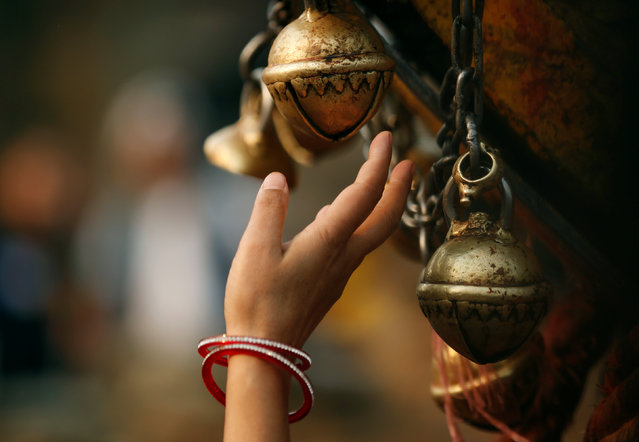
A hand of a devotee is pictured as she rings a bell while offering prayers to the chariot of God Bhairab during the Bisket festival in Bhaktapur, Nepal, April 13, 2016. (Photo by Navesh Chitrakar/Reuters)

A hand of a devotee is pictured as she rings a bell while offering prayers to the chariot of God Bhairab during the Bisket festival in Bhaktapur, Nepal, April 13, 2016. During the festival, also regarded as Nepalese New Year, images of the Hindu god Bhairava and his female counterpart Bhadrakali are enshrined in two large chariots and pulled to an open square after which rituals and festivities are performed. (Photo by Navesh Chitrakar/Reuters)
Details
15 Apr 2016 11:20:00
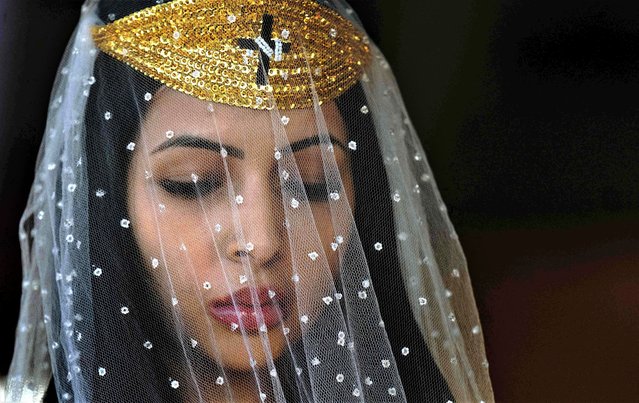
A Nymph or female devotee of the Vale do Amanhecer religious community, prays at their temple complex in Vale do Amanhecer (Sunrise Valley), a community on the outskirts of Planaltina, 50 km from the Brazilian capital, Brasilia, on April 29, 2023. This eclectic community holds its most important ritual of the year on Labour Day to honour the mediums who communicate with good and bad spirits. The group combines a range of religious practices, including Christian and Hindu, with symbols borrowed from the Incas and Mayans, as well as a belief in extraterrestrial life and intergalactic travel. The religion claims hundred temples throughout Brazil, Portugal and other countries. (Photo by Carl de Souza/AFP Photo)

A Nymph or female devotee of the Vale do Amanhecer religious community, prays at their temple complex in Vale do Amanhecer (Sunrise Valley), a community on the outskirts of Planaltina, 50 km from the Brazilian capital, Brasilia, on April 29, 2023. This eclectic community holds its most important ritual of the year on Labour Day to honour the mediums who communicate with good and bad spirits. The group combines a range of religious practices, including Christian and Hindu, with symbols borrowed from the Incas and Mayans, as well as a belief in extraterrestrial life and intergalactic travel. The religion claims hundred temples throughout Brazil, Portugal and other countries. (Photo by Carl de Souza/AFP Photo)
Details
08 Aug 2024 05:51:00
A Hindu devotee offers prayers at the Sangam, the confluence of three rivers – the Ganges, the Yamuna and the mythical Saraswati, to take a ritualistic bath during Makar Sankranti festival that falls during the annual traditional fair of Magh Mela festival, one of the most sacred pilgrimages in Hinduism, in Prayagraj, India. Friday, January 14, 2022. (Photo by Rajesh Kumar Singh/AP Photo)

A Hindu devotee offers prayers at the Sangam, the confluence of three rivers – the Ganges, the Yamuna and the mythical Saraswati, to take a ritualistic bath during Makar Sankranti festival that falls during the annual traditional fair of Magh Mela festival, one of the most sacred pilgrimages in Hinduism, in Prayagraj, India. Friday, January 14, 2022. (Photo by Rajesh Kumar Singh/AP Photo)
Details
26 Jan 2022 07:40:00
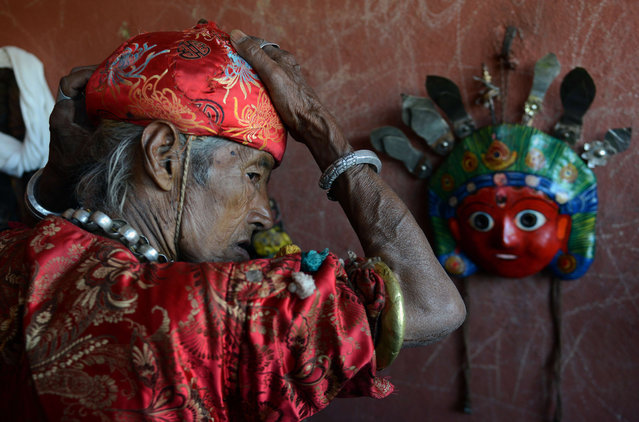
A Nepalese Hindu devotee dresses as a deity as he prepares to participate in festivities at the Shikali Temple during celebrations for the Shikali Jatra festival in the village of Khokana, on the outskirts of Kathmandu, on October 19, 2015. Local villagers, who normally do not celebrate the country's most famous festival of Dashain, celebrate the Shikali Jatra each year. (Photo by Prakash Mathema/AFP Photo)

A Nepalese Hindu devotee dresses as a deity as he prepares to participate in festivities at the Shikali Temple during celebrations for the Shikali Jatra festival in the village of Khokana, on the outskirts of Kathmandu, on October 19, 2015. Local villagers, who normally do not celebrate the country's most famous festival of Dashain, celebrate the Shikali Jatra each year. (Photo by Prakash Mathema/AFP Photo)
Details
22 Oct 2015 08:04:00